When Is Dussehra 2026: Date, Time, Significance And Vijayadashami Muhurat
Dussehra 2026 Date, Vijayadashami Muhurat: Dussehra, also known as Vijayadashami, will be celebrated on Tuesday, October 20, 2026. The festival marks the victory of good over evil and is associated with Lord Rama’s victo
लेखक Nibandh Vinod··8K पढ़े गए
When Is Dussehra 2026: Date, Time, Significance And Vijayadashami Muhurat
Dussehra 2026 Date, Vijayadashami Muhurat: Dussehra, also known as Vijayadashami, will be celebrated on Tuesday, October 20, 2026. The festival marks the victory of good over evil and is associated with Lord Rama’s victory over Ravana as well as Goddess Durga’s triumph over Mahishasura.
According to Drik Panchang, Dashami Tithi begins at 12:50 PM on October 20 and ends at 2:11 PM on October 21, 2026.
Kolkata Bengal Vijayadashami: Wednesday, October 21
Kolkata Aparahna Puja: 12:30 PM to 2:49 PM
Why does the Dussehra date differ in some regions?
The apparent difference between October 20 and October 21 is primarily a matter of regional observance and the local panchang calculation.
Read More: When Is Mahalaya 2026? Date, City-wise Timings, Significance And Rituals
In most parts of India, Vijayadashami will be celebrated on October 20.
In Bengal, however, Bijoya Dashami is observed on Wednesday, October 21, following the regional Durga Puja calendar.
What is the Vijay Muhurat on Dussehra 2026?
Vijay Muhurat is traditionally considered an auspicious period for performing certain Dussehra-related rituals and activities.
New Delhi: 1:59 PM–2:45 PM on October 20
Mumbai: 2:19 PM–3:06 PM on October 20
Kolkata: 1:17 PM–2:03 PM on October 20
Why is Dussehra celebrated?
Dussehra carries multiple religious and cultural meanings across India.
Lord Rama’s victory over Ravana
Vijayadashami commemorates Lord Rama’s victory over Ravana, the demon king. The episode is remembered as a triumph of dharma over adharma.
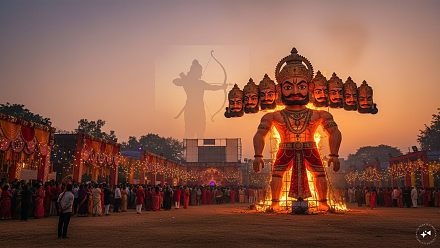
This is why large effigies of Ravana, along with those of Meghnad and Kumbhakarna, are traditionally burnt during Dussehra celebrations.
Read More: Durga Puja 2026 Calendar: Dates, Schedule, Sandhi Puja Time And Significance
Goddess Durga’s victory over Mahishasura
Vijayadashami is also connected with Goddess Durga’s victory over Mahishasura, the buffalo demon.
In eastern India, particularly Bengal, Odisha and Assam, the day is closely associated with the conclusion of Durga Puja and the farewell to Goddess Durga.
The two traditions give Dussehra a broader significance: the triumph of righteousness, courage and divine power over evil.
Dussehra 2026: Major rituals and traditions
Dussehra celebrations differ from one region to another, but several traditions are widely associated with Vijayadashami.
Ravana Dahan
In many North Indian cities, Ravana, Meghnad and Kumbhakarna effigies are burnt during the evening. Large public gatherings are organised around the spectacle, which symbolically represents the destruction of evil.
Shastra Puja and Ayudha Puja
Dussehra is also associated with the worship of tools, weapons, machinery, books and other instruments connected with one’s work.
Known as Shastra Puja or Ayudha Puja in different traditions, the ritual reflects the belief that tools of work should be respected and used responsibly.
Shami Puja
Shami Puja is another traditional Dussehra observance. The Shami tree has a special place in several regional traditions, and worshipping it on Vijayadashami is associated with auspiciousness and victory.
Apta leaf tradition
In parts of Maharashtra and other regions, Apta leaves are traditionally exchanged during Dussehra as a symbolic representation of gold. The practice is associated with prosperity, goodwill and the sharing of auspicious wishes.
Mysuru Dasara
Karnataka’s Mysuru Dasara is among the country’s most prominent regional celebrations. The festival is known for its royal heritage, cultural programmes and the celebrated Jumbo Savari procession.
Durga Visarjan and Sindoor Khela
In Bengal, Vijayadashami marks the concluding phase of Durga Puja. Devotees bid farewell to Goddess Durga before the idols are taken for immersion.
Sindoor Khela, traditionally associated with married women, is another prominent Bijoya Dashami custom.
Dussehra Puja Thali: What items are needed?
A traditional Dussehra puja arrangement can include the following items:
Kumkum or roli
Haldi
Chandan
Akshat or unbroken rice
Clean water or Ganga Jal
Flowers
Shami or Apta leaves, depending on regional tradition
Sacred red thread or Mouli
Oil or ghee diya
Dhoop or incense
Camphor
Puja bell
Aarti plate
Seasonal fruits
Coconut
Traditional sweets such as ladoo, halwa or kheer
Other regional prasad
Dussehra 2026 in Kolkata: Date and rituals
For Kolkata and Bengal, there is an important regional distinction.
Bijoya Dashami will be observed on Wednesday, October 21, 2026. Drik Panchang lists Kolkata’s Aparahna Puja time from 12:30 PM to 2:49 PM on October 21.
The underlying Dashami Tithi, however, begins at 12:50 PM on October 20 and ends at 2:11 PM on October 21.
Bijoya Dashami: Wednesday, October 21, 2026
Aparahna Puja: 12:30 PM–2:49 PM
Dashami Tithi begins: 12:50 PM, October 20
Dashami Tithi ends: 2:11 PM, October 21
October 20 Vijay Muhurat in Kolkata: 1:17 PM–2:03 PM
Bijoya Dashami rituals in Kolkata
Darpan Bisarjan: Darpan Bisarjan is associated with the concluding rituals of Durga Puja and symbolises the Goddess’s departure.
Sindoor Khela: Sindoor Khela is traditionally performed by married women during the farewell to Goddess Durga. Women offer sindoor to the Goddess and to one another as part of the Bijoya Dashami observance.
Durga Visarjan: The clay idols of Goddess Durga and the other deities are taken in processions for immersion in water bodies. In Kolkata, immersion processions form a major part of the final day of Durga Puja.
What makes Dussehra 2026 significant?
Dussehra is more than a single religious story. Across India’s diverse traditions, Vijayadashami represents the broader idea that dharma ultimately prevails over adharma.
For devotees, it is a day associated with prayer, victory, renewal and auspicious beginnings. For communities, it is also a major cultural occasion marked by public celebrations, processions, performances and family gatherings.
Some traditions also consider Vijayadashami an auspicious occasion for beginning new activities, worshipping tools of work, purchasing certain items or initiating learning. Such practices vary according to community and family custom.