Parineeti Chopra Calls Out The “Babysitting” Double Standard: 'Fathers Are Applauded, Mothers Are Expected To Cope'
Parineeti Chopra is calling out a parenting double standard that many mothers will recognise: why is a father praised for doing something that is simply part of being a parent, while a mother is expected to carry the res
लेखक Swati Chaturvedi··18K पढ़े गए
Parineeti Chopra Calls Out The “Babysitting” Double Standard: 'Fathers Are Applauded, Mothers Are Expected To Cope'
Parineeti Chopra is calling out a parenting double standard that many mothers will recognise: why is a father praised for doing something that is simply part of being a parent, while a mother is expected to carry the responsibility without question?
During a recent interaction with Hauterrfly, the actor spoke candidly about the way society continues to frame fathers as occasional caregivers rather than equal parents. Chopra argued that fathers often receive praise for taking care of their own children, while mothers are expected to treat childcare as their default responsibility, even when they are exhausted and in need of support.
“There is a huge problem in the world, in society where fathers are seen as occasional babysitters, and they are applauded for it,” Chopra said. She pointed out that when mothers ask for something as basic as rest, it can instead be dismissed as a demand for “materialistic pleasure.”
Her larger point was about the invisible cost of motherhood, particularly the expectation that women should seamlessly absorb the physical, emotional and practical responsibilities that come with having a child.
“It is horrible for that mother who is exhausted, hormonally crashing, who has the responsibility of this child suddenly in her life,” she said, adding that women can find themselves losing parts of their identity, career and financial independence after becoming mothers.
For Parineeti, parenting should be a 50-50 job
Chopra’s comments are particularly relevant given how openly she has spoken about navigating motherhood herself.
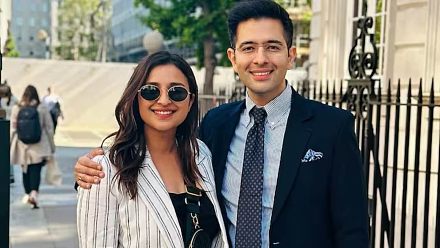
The actor and husband Raghav Chadha welcomed their son, Neer, in October 2025. Since then, Chopra has been candid about everything from returning to work and experiencing intense “mom guilt” to the importance of maintaining her career after becoming a mother.
Earlier this year, she explained that she and Chadha have consciously tried to make parenting a shared responsibility. “Today, I’m at work, so Raghav is with the baby and when Raghav is at work then I’m with the baby,” she said, describing their approach as 50-50.
For Chopra, that balance isn’t about keeping a literal scorecard. It is about ensuring that their son grows up seeing both parents actively involved in his life.
She has also described Chadha as an exceptionally supportive partner, particularly when she feels overwhelmed, saying that he encourages her to prioritise her work, rest and wellbeing when necessary.
Motherhood shouldn’t mean losing yourself
Chopra’s latest comments also echo a larger conversation she has been having publicly about the realities of becoming a mother.
In recent weeks, she has spoken about the emotional difficulty of returning to work after her son’s birth. Recalling her first work trip away from Neer, she described experiencing what she called “crippling physical pain” and said she spent hours crying because of the separation.
At the same time, she has been vocal about refusing to accept the idea that motherhood should put her career on pause.
Speaking about her return to acting, Chopra said she had not experienced filmmakers treating motherhood as a reason to offer her different or lesser opportunities. She also praised actors including Alia Bhatt, Deepika Padukone and Priyanka Chopra for helping challenge the old assumption that women have to choose between motherhood and ambitious careers.
“I would hate to stop working just because I became a mom,” she said, arguing that having a child should not erase everything else a woman is.
And then there is the pressure on mothers to “bounce back”
Chopra has also recently pushed back against another expectation placed disproportionately on women: how quickly they should recover physically after childbirth.
Speaking about the criticism directed at new mothers over their changing bodies, she questioned why women are expected to immediately “bounce back” after creating a human being. She specifically came to Katrina Kaif’s defence after the actor faced online trolling over her post-pregnancy appearance, calling such commentary deeply insensitive.
Taken together, Chopra’s comments paint a broader picture of what she believes modern motherhood should look like, not a woman’s complete surrender of her identity, but a partnership in which both parents show up.
And perhaps that is the real issue behind her “babysitting” comment. A father spending time alone with his child isn’t babysitting. A mother asking for an afternoon to herself isn’t selfish. And taking care of a child shouldn’t be treated as an extraordinary act simply because the parent happens to be the father.
For Chopra, the conversation is ultimately about making room for mothers to remain people beyond motherhood, with careers, ambitions, identities, financial independence and, yes, the occasional need to simply sit down and rest.