I have been thinking about this for a while. Not because books are disappearing. They aren’t. People still buy books, bookshops are still around, e-readers are popular and we probably have access to more things to read t
लेखक Anjan Ghosh··25K पढ़े गए
Are We Slowly Losing The Habit Of Reading?
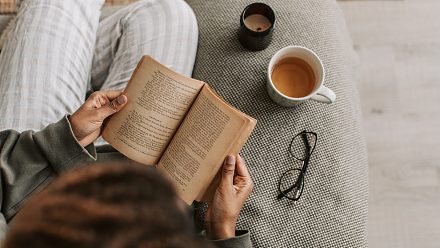
I have been thinking about this for a while. Not because books are disappearing. They aren’t. People still buy books, bookshops are still around, e-readers are popular and we probably have access to more things to read today than ever before. But I sometimes wonder whether we are slowly losing the patience to actually read them.
I should admit something before going any further. I was never really into reading books myself. It started only about a year and a half ago, and I’m slowly developing the habit of reading anything and everything that interests me. And now I sometimes think I wasted so many years by not reading.
Look around and you’ll understand why reading has such tough competition today. News becomes a short video. A product review becomes a Reel. A recipe becomes a sixty-second video. Travel stories become quick montages with music. Even something that would once have been explained in an article is now often somebody talking to a camera.
I understand why. Video is easy. You press play and it comes to you. Reading needs a little more effort. You have to pay attention, imagine things and, these days, resist the temptation to check your phone every few minutes.
Image: Canva
I’m guilty of it too. There are evenings when I will happily spend twenty minutes scrolling through short videos yet somehow feel I don’t have time to read ten pages of a book. Makes no sense, I know. But somehow scrolling never feels like it takes time. Reading does.
Our phones have also changed how quickly we expect information. If something doesn’t interest us within a few seconds, we swipe and something else appears. A book doesn’t work that way. It may take twenty pages to introduce a character or set up a story. Sometimes nothing particularly exciting happens for several pages. You have to stay with it.
And maybe that’s becoming a little harder for us.
Is short-form content affecting our attention?
This was the part I became curious about. It’s very easy for someone from my generation to look at younger people constantly staring at their phones and complain that they have no attention span. I’m sure every generation has found something wrong with the next one.
But there is now some research worth looking at.
A 2025 analysis published in Psychological Bulletin brought together 71 studies involving more than 98,000 people. It found that greater use of short-form video was associated with poorer cognitive performance, particularly attention and what researchers call inhibitory control. Put simply, that’s our ability to stay focused and resist distractions. The results were seen across both younger and adult groups. IFP NYU
That doesn’t mean watching Reels or YouTube Shorts is damaging our brains. The research doesn’t prove that, and I don’t think we should turn every study into another reason to panic about technology. A lot of this research shows an association, not cause and effect. People who already find it difficult to concentrate may simply be more attracted to short videos. Or too much short-form content may be making concentration harder. We don’t know enough yet.
Another study published in JAMA Network Open in 2026 looked at smartphone use among 79 young people aged 11 to 18. They spent an average of about 2.2 hours of the school day on their phones and checked them around 64 times during school hours. More frequent checking was associated with poorer cognitive control. Again, the study found an association. It didn’t prove that the phones caused it. JAMA Network
Sixty-four times during a school day is a lot. Then again, before I start judging teenagers, I’m not entirely sure I want to know my own number.
And this is where I think the subject becomes bigger than books. If we get used to something new appearing every few seconds, what happens when life doesn’t work that way? A classroom doesn’t. A long meeting certainly doesn’t. Neither does learning something difficult or sitting through a conversation that doesn’t come with a skip button.
Reading works differently
There is some interesting research on reading too. Researchers from Cambridge, Warwick and Fudan University looked at data from more than 10,000 young adolescents in the US. Children who started reading for pleasure relatively early tended to perform better on cognitive tests and academically. They also showed better attention and fewer behavioral and mental-health problems later. Cambridge University Press
Again, I wouldn’t read that as proof that giving a child a pile of books will automatically make everything better. There are many other factors involved. But it does make the relationship between reading and attention interesting.
I’m discovering some of this rather late myself. My reading has no particular pattern, which is probably why I’m enjoying it. It could be a short poem, a few lines of Mirza Ghalib, Jim Corbett’s Omnibus, Arthur Hailey’s Airport, Dandy Smith’s The Wrong Daughter, Shiva: Ultimate Outlaw or Toshikazu Kawaguchi’s Before the Coffee Gets Cold series, among many others. If something catches my interest, I read it.
Perhaps that’s one mistake we make when talking about reading. It doesn’t always have to mean sitting with a serious 500-page classic because somebody says everyone should read it. Read whatever you enjoy.
Reading also makes you do some of the work yourself. You imagine the place, the person and the voice. You can stop, go back a page or sit for a moment thinking about something you just read. The book isn’t in a hurry.
That doesn’t make video bad. Far from it. Some things are much easier to understand when you can see them. I have learnt plenty from YouTube, and I certainly wouldn’t want to learn how to repair something complicated by reading three pages of instructions when somebody can show me in five minutes.
My concern is more about what happens when almost everything starts becoming short video. We get used to information arriving quickly and in small doses. If it doesn’t interest us immediately, we move on.
And this isn’t only about children. Adults are doing exactly the same thing. We read headlines instead of articles, watch clips instead of full interviews, read WhatsApp forwards instead of the original story and increasingly depend on summaries because apparently even the summary has become too long.
I think what we may be losing is the habit of sitting with one thing for some time. Even when I’m reading something interesting, the urge to check the phone sometimes appears for absolutely no reason.
Image: Canva
The phone has also practically killed boredom. The moment we have nothing to do, out it comes. Waiting for someone? Phone. Sitting in a cab? Phone. Five minutes before a meeting? Phone.
I’m not sure that’s always a good thing. Sometimes doing nothing for a while wasn’t so bad.
Maybe we make reading too serious
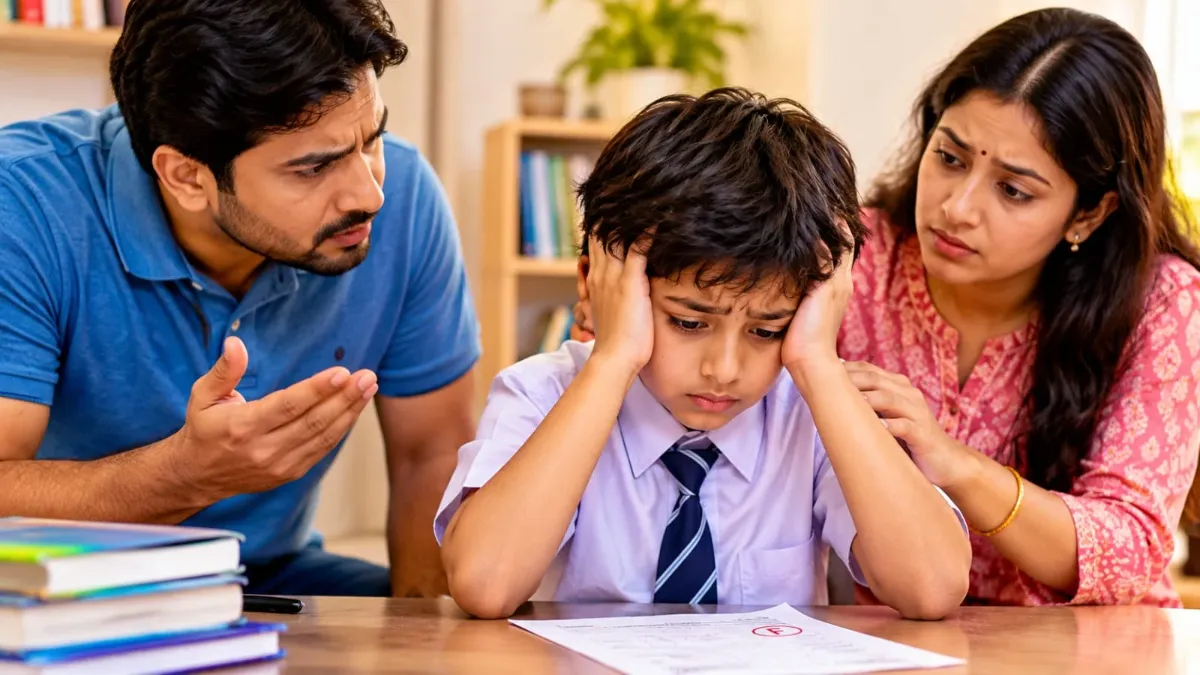
I don’t think the answer is forcing children to read because “reading is good for you”. That sounds suspiciously like what we were told about vegetables.
Maybe we simply need to help them find something they enjoy.
And it doesn’t have to be a novel. I still read comics. Tintin, Asterix, Amar Chitra Katha. They activate the child within me, and I see absolutely nothing wrong with that.
If a comic gets someone interested in reading, that’s good enough for me.
I don’t think we need to declare war on screens either. Technology isn’t the enemy of reading. A phone can carry hundreds of books. An e-reader can hold an entire library. Audiobooks have made books accessible to people who may not have the time or inclination to sit down and read.
The problem is simply that reading now has a lot more competition. A book sitting on the table has to compete with a device containing films, music, games, messages, news, social media and practically every distraction ever invented. That’s not a fair fight.
Maybe we just need to make a little room for reading again. Ten pages of a book. A long article instead of twenty headlines. A poem. A comic. Crime, history, fiction, biography, whatever works. I don’t think what we read matters as much as actually enjoying the time spent reading.
And perhaps children seeing adults read helps too. It’s difficult to convince a child that books are wonderful when every adult in the room is staring at a phone.
I’m hardly in a position to lecture anyone about reading. I started properly only about a year and a half ago. But now that I have, I’m beginning to realise how much I missed all these years.
I don’t think books are going anywhere. I’m more curious about whether we are losing the patience to read them.