US Midterm Elections 2026: Ohio, Alaska Races Put Trump's Senate Majority To Test
With the November 3 US midterm elections approaching, President Donald Trump is campaigning in states that supported him in 2024 but have become increasingly competitive in the battle for control of Congress. Rising ener
Ni Vani Mehrotra··95K nabasa
US Midterm Elections 2026: Ohio, Alaska Races Put Trump's Senate Majority To Test
With the November 3 US midterm elections approaching, President Donald Trump is campaigning in states that supported him in 2024 but have become increasingly competitive in the battle for control of Congress. Rising energy prices, the economic fallout of the Iran war and concerns over trade policy are adding pressure to Republican candidates defending Senate seats.
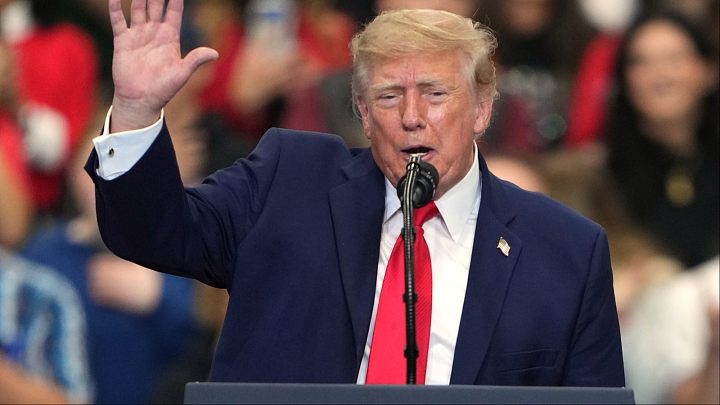
Trump’s recent campaign stops in Ohio and Alaska underscore the importance Republicans attach to retaining seats in states where Democrats see opportunities to make gains.
The contests involving Republican Senator Jon Husted in Ohio and Senator Dan Sullivan in Alaska have attracted particular attention, with Democrats Sherrod Brown and Mary Peltola seeking to unseat them.
In a report published on October 14, Reuters suggested the President’s campaign in Alaska came as voters grappled with high fuel costs and dissatisfaction over the conflict in the Middle East. Polls have shown Peltola either level with or ahead of Sullivan, although the race remains competitive.
The stakes extend beyond individual Senate contests.
Republicans currently hold a 53-47 majority, and the results will help determine how much legislative and political room Trump has during the final two years of his presidency.
Ohio And Alaska Emerge As Critical Contests
Ohio has become a focal point for both parties as Brown attempts a political comeback against Husted, who was appointed to the Senate after Vice President JD Vance left the chamber.
The Associated Press reported that former president Barack Obama is scheduled to campaign in Cleveland on October 24 with Brown and Democratic gubernatorial candidate Amy Acton. The visit is part of an expanded effort by Obama to support Democratic candidates in closely contested races ahead of Election Day.
In a campaign video cited by AP, Obama said, “This race is going to be close. It could determine which party controls the Senate and whether Ohioans can count on the people in Washington to be fighting for you.”
Brown, a three-term former senator, was defeated by Republican Bernie Moreno in 2024. Democrats have now recruited him to challenge Husted in a state Trump carried by a double-digit margin in the presidential election.
The contest has attracted substantial campaign spending from both sides.
In Alaska, Sullivan faces Peltola, who represented the state in the House of Representatives from 2022 to 2025 and was the first Alaska Native woman elected to Congress.
Reuters reported on October 14 that Trump travelled to Wasilla to campaign for Sullivan as the Republican incumbent faced a close contest. The President won Alaska by approximately 14 percentage points in 2024, but higher energy costs have become a significant concern in the state.
Sullivan acknowledged the pressure that fuel prices are placing on residents but defended his party’s position on energy policy.
“The conflict in the Middle East is temporary,” he said, according to Reuters.
He added that the “true forever war” was what he described as national Democrats’ opposition to Alaska’s oil and gas industry.
Trump, meanwhile, told supporters that the Iran war would “end very soon and prices will come tumbling down,” Reuters reported.
The remarks reflect the competing arguments at the centre of the campaign – Republicans are defending the administration’s agenda, while Democrats are seeking to connect the economic pressures facing households with its policy decisions.
The Cost Of Living Becomes A Campaign Issue
In Ohio, the impact of rising expenses is particularly visible among households dealing with fuel bills, healthcare costs and uncertainty over employment.
An AFP report published this month described the experience of Denise Barber, a 68-year-old retired former steelworker from Ohio’s Mahoning Valley.
Barber said rising petrol prices and family healthcare expenses had made it difficult to manage on a fixed income.
“I’m hoping that somebody can undo some of the things that this President has caused, like this Iran war,” Barber told AFP.
The report said Barber had attended a town hall where residents raised concerns about hospital closures, reductions in health programmes and the rising cost of living. She also described the financial strain of driving her husband to medical appointments.
“The price of gas driving up there is outrageous,” Barber told AFP, adding that the expenses made life difficult on a fixed income.
These concerns are relevant to the Senate contest because Democrats are attempting to persuade voters that the administration’s policies have increased the financial pressure on households.
Republicans, however, continue to argue for their approach to energy production and the economy.
AFP also reported that Ohio manufacturers were facing higher costs linked to tariffs and the Iran war.
Doug Rende, chief executive of aluminium products manufacturer Shapes Unlimited, described the effect of tariffs on his business.
“This year alone, it’s upwards of $4.5 million to $5 million in additional costs,” Rende told AFP, referring to the additional expenses his company had incurred.
Rende’s account illustrates how the economic debate extends beyond household spending to manufacturers dealing with import duties, transportation costs and uncertainty over trade.
Democrats Need Gains Without Losing Their Own Seats
The Senate arithmetic leaves little room for either party to lose ground in states it currently holds.
Republicans have a 53-seat majority, while Democrats need a net gain of four seats to reach 51, assuming they retain their existing seats.
Two independents caucus with Democrats, but a 50-50 Senate would leave Republicans with the advantage because the vice president can break a tie.
Reuters’ October 12 analysis identified several contests that could influence the outcome, including races in North Carolina, Maine, Ohio and Alaska.
The agency also highlighted Democratic-held seats in Georgia, Michigan and New Hampshire, where Republican gains could complicate the opposition party’s path to a majority.
In North Carolina, former Democratic governor Roy Cooper is challenging Republican Michael Whatley for an open seat. In Maine, Democrat Troy Jackson is running against Republican Senator Susan Collins.
Democrats are also defending their position in Georgia, where Senator Jon Ossoff is seeking re-election against Republican Representative Mike Collins.
In Michigan, Democrat Abdul El-Sayed is contesting an open seat against former Republican Representative Mike Rogers.
New Hampshire has another open-seat contest, with Democratic Representative Chris Pappas facing former senator John Sununu.
Reuters reported that campaign fundraising and spending have varied considerably across these races.
In Michigan, for example, Republican spending has exceeded Democratic spending, while Ossoff has built a substantial fundraising advantage in Georgia.
The result is a complicated electoral map – Democrats must gain seats in states that have backed Trump while protecting their existing Senate representation.
Iowa And Texas Add To The Republican Defence
Iowa and Texas are further examples of states where Democrats are trying to compete despite Trump’s strong performance in the 2024 presidential election.
In Iowa, Republican Representative Ashley Hinson is running against Democratic state Representative Josh Turek for the open seat being vacated by Senator Joni Ernst.
Reuters reported that Hinson had called for an “immediate end” to the Iran war in a social media post, arguing that residents should not have to bear its costs at petrol pumps and checkout counters.
Hinson has also opposed Democratic resolutions seeking to end the conflict, illustrating the political complications the issue poses for Republican candidates.
In Texas, Democrat James Talarico is challenging Republican Attorney General Ken Paxton. Reuters reported that Republicans had committed substantial resources to defending the seat after Paxton won the party’s primary runoff against Senator John Cornyn.
Texas has not elected a Democrat to statewide office since 1994.
A competitive contest would therefore carry significance beyond the individual Senate seat, although the state’s recent electoral history remains an important factor.
What The Election Could Mean For Trump’s Final Two Years
Trump’s decision to campaign in Republican-leaning states reflects the importance of turning out his existing supporters as well as defending candidates facing competitive races.
Reuters reported that the President’s recent campaign schedule included stops in Ohio and Alaska, alongside other states where Republicans are trying to retain control of Congress.
The agency quoted University of Virginia Centre for Politics director Larry Sabato as saying Trump’s travel appeared to have strategic objectives.
“His staff is putting him in places where he’s likely to be able to draw a friendly crowd to the rally,” Sabato told Reuters.
The campaign visits also give the president an opportunity to reinforce his message on immigration, energy and the economy while supporting Republican candidates.
If Republicans retain the Senate, Trump will continue to have a chamber controlled by his party, strengthening his position on legislation and appointments.
A Democratic takeover would give the opposition greater influence over the Senate’s agenda and increase the potential for congressional scrutiny of the administration.
The outcome will depend on more than one race. Ohio and Alaska have drawn attention because of their competitive contests and the President’s direct involvement, while North Carolina, Maine, Iowa and Texas could also influence the final balance.
As voters weigh economic conditions, foreign policy and the candidates on their ballots, the November 3 results will offer an indication of how Trump’s second-term agenda is playing across the country, and determine the political environment in which he enters the final two years of his presidency.