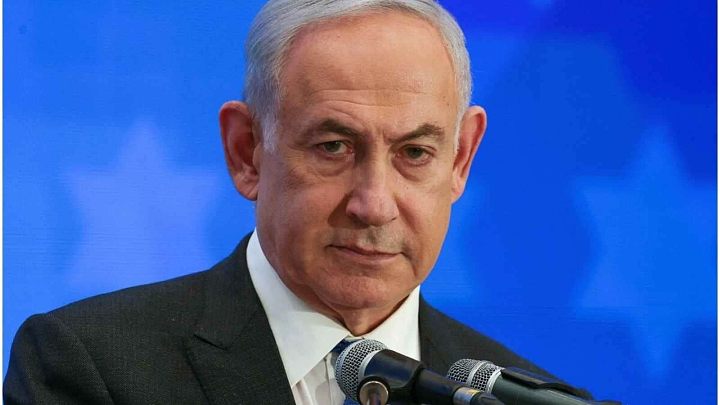
Netanyahu's Next Move? Israel Election Throws Up Coalition Deadlock | 10 Things To Know
Israel is in a tense round of coalition negotiations after the October 27 election left neither the bloc led by incumbent Prime Minister Benjamin Netanyahu nor the opposition grouping led by Gadi Eisenkot with enough sea
Ni Mallika Soni··59K nabasa
Netanyahu's Next Move? Israel Election Throws Up Coalition Deadlock | 10 Things To Know
Israel is in a tense round of coalition negotiations after the October 27 election left neither the bloc led by incumbent Prime Minister Benjamin Netanyahu nor the opposition grouping led by Gadi Eisenkot with enough seats to form a government on its own. The official results are due to be published on November 4 but the numbers released by Israel’s Central Election Committee already point to a difficult government-formation process.
The election, the first since Israel’s war on Gaza and other regional conflicts began in 2023, recorded a voter turnout of 77.9%- the highest since 1999.
Here are 10 things to know about the results and what happens next.
1. How Many Seats Have Netanyahu And Eisenkot’s Blocs Won?
The Netanyahu-aligned bloc secured 53 seats in the 120-member Knesset, while the bloc led by Gadi Eisenkot has won 48. A majority requires at least 61 seats, leaving both sides short of the numbers needed to govern independently.
2. Why Are Arab Parties Key To Government Formation?
Israel’s Arab parties- the Joint List, an alliance of Hadash, Ta’al and Balad and Ra’am- secured a combined 19 seats, a record for them. Their support, whether from within a coalition or from outside, could prove decisive in the negotiations.
3. When Will Official Results Be Declared?
The final results are scheduled to be published on November 4 in Reshumot, Israel’s official gazette. President Isaac Herzog is then expected to begin consultations with parties that have won seats in the Knesset.
4. What Happens After Results Are Published?
Representatives of the elected parties will meet Herzog and recommend a candidate for prime minister. The president will then assign the task of forming a government to the lawmaker he believes has the strongest chance of securing the necessary support. The candidate need not be the leader of the largest party.
5. What Is Deadline To Form A Government?
The first candidate will have 28 days to put together a government. Herzog can extend this period by another 14 days. If the candidate fails, the president can give another lawmaker a chance, with the second candidate getting 28 days but no extension.
If that attempt also fails, Knesset members get a final 21-day window to recommend another candidate, who then has 14 days to form a government. If all efforts fail, the Knesset is dissolved and fresh elections are called.
6. Could Netanyahu Form A Unity Government?
One possibility is a unity government led by Netanyahu, with Likud joining hands with centrist and centre-right parties such as Yashar, B’Yachad and Yisrael Beytenu. However, this would require Netanyahu to part ways with some of his existing allies, while opposition leaders would have to reconsider their pledges not to serve under him.
7. Could Netanyahu And Eisenkot Share Prime Minister’s Office?
Another proposal involves Netanyahu and Eisenkot taking turns as prime minister, with Netanyahu serving first. However, Eisenkot publicly ruled out a rotation arrangement, while Likud has also rejected the idea.
8. Can Netanyahu Stay In Power By Attracting Opposition Defectors?
Netanyahu could attempt to retain his existing alliance by persuading at least eight lawmakers from the opposition bloc, particularly Eisenkot’s Yashar party, to switch sides. Likud has reportedly set up a team to approach potential defectors. Such a move, however, would require those lawmakers to go back on their campaign commitments.
9. Can Eisenkot Form A Government With Support From Arab Parties?
Eisenkot could explore a minority government backed from outside by the Joint List and Ra’am. If both parties support him, his bloc’s 48 seats could be supplemented by their 19, giving him 67 votes in a confidence vote.
Another possibility is an arrangement with Ra’am, which could join a government or support it from outside. But these options face political hurdles: several opposition leaders have ruled out relying on Arab parties, while Eisenkot has also expressed reservations about such support.
10. Will Israel Have To Hold Elections Again?
If neither Netanyahu nor Eisenkot can assemble a viable government, Israel could be headed for another election. A fresh vote would follow the dissolution of the Knesset, with Netanyahu continuing as caretaker prime minister in the meantime.