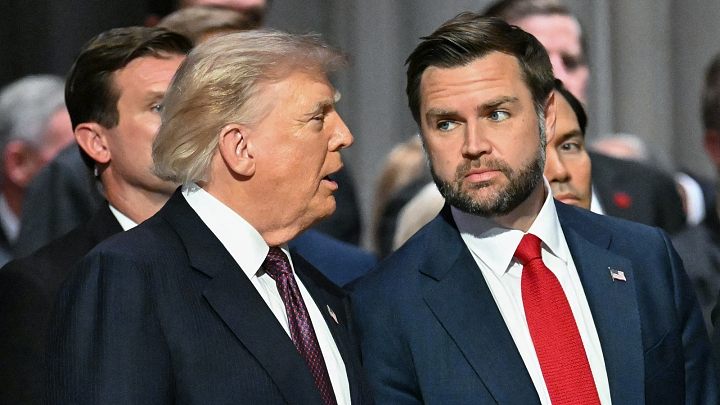
After Midterm Setback, JD Vance Weighs Direct Talks With Iranian Official Amid US Push For Peace
United States Vice President JD Vance is exploring the possibility of holding direct negotiations with a senior Iranian security official as the Trump administration looks to chart a diplomatic path towards ending the co
Ni Prisha Vibhavari··55K nabasa
After Midterm Setback, JD Vance Weighs Direct Talks With Iranian Official Amid US Push For Peace
United States Vice President JD Vance is exploring the possibility of holding direct negotiations with a senior Iranian security official as the Trump administration looks to chart a diplomatic path towards ending the conflict with Tehran, The Wall Street Journal reported on Wednesday, citing US and Middle Eastern officials.
President Donald Trump has authorised Vance to take charge of fresh diplomatic efforts, signalling his willingness to restart negotiations with Iran, according to the report.
The discussions are still at a preliminary stage, with no meeting date finalised. However, Washington and Tehran have been exchanging messages through intermediaries and regional partners to explore the possibility of resuming dialogue.
Vance reportedly wrote to Mohsen Rezaei, secretary-general of Iran’s Supreme National Security Council, in October, seeking a meeting. However, Rezaei said on Tuesday that there were no plans for him to hold talks with the US vice president.
The development marks a shift in the administration’s diplomatic approach, with Vance emerging as the principal figure handling engagement with Tehran.
His involvement has also pushed White House envoys Steve Witkoff and Jared Kushner into a less prominent position in the negotiations, the Journal reported, citing US officials.
Also Read: ‘We Lost Because Of War’: JD Vance’s Long Post On How Iran Conflict Cost Republicans US Midterms
Vance Takes Political Gamble On Iran Diplomacy
Taking ownership of the diplomatic initiative could prove consequential for Vance’s political future. A breakthrough in negotiations could position him as a key figure in bringing an end to the conflict. However, a failure to secure an agreement could leave him bearing much of the political fallout.
Vance has openly connected the war with the Republicans’ disappointing performance in last week’s midterm elections, arguing that the conflict has become a political liability for the party.
His position contrasts with that of Secretary of State Marco Rubio and Defence Secretary Pete Hegseth, who have stood by Trump’s handling of the military campaign.
Trump, meanwhile, has reportedly expressed reservations in private about the June memorandum of understanding with Iran, which Vance had helped negotiate.
According to two US officials cited by the Journal, the president believes the arrangement was a misstep because it gave Tehran an opportunity to rebuild its position and earn revenue from oil exports.
A White House official, however, pushed back against suggestions that Trump regretted the agreement, maintaining that the negotiating team had operated in good faith.
There are also differences within the administration over how Washington should proceed. Rubio and White House Chief of Staff Stephen Miller are said to favour continuing the naval blockade until Iran agrees to US demands, according to two officials.
Also Read: ‘Maybe He Won’t Run’: Trump On Vance’s 2028 Presidential Bid After Midterm Loss
US-Iran Talks Remain Uncertain
The diplomatic push comes against the backdrop of a conflict that began on February 28, when the US and Israel launched a military offensive against Iran.
A ceasefire was reached in April, followed by a framework agreement between Washington and Tehran in June that was intended to pave the way for a broader peace settlement. However, subsequent negotiations have failed to deliver a comprehensive agreement, leaving both sides without a clear resolution to the conflict.
With Vance now taking a more prominent role in the diplomatic effort, the possibility of direct engagement could offer a fresh opening. Whether Tehran agrees to sit across the table from the US vice president, however, remains uncertain.