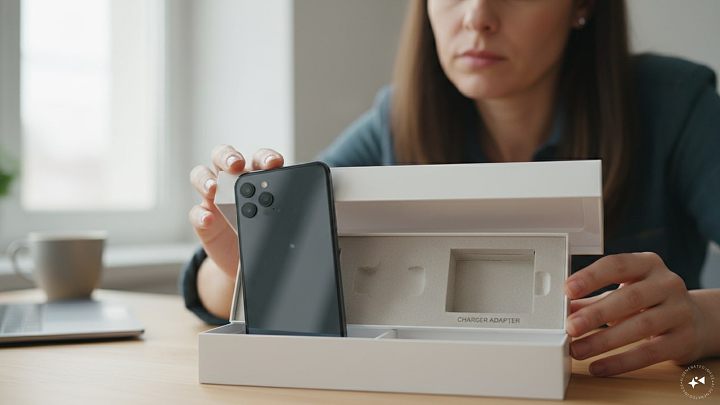
Remember when buying a new mobile phone meant getting almost everything you needed inside the box? A charger, cable, earphones and sometimes even a protective case. Some phones came with little extras that you probably n
Ni Anjan N Ghosh··25K nabasa
Why Did Phone Companies Stop Giving Us Chargers?
Remember when buying a new mobile phone meant getting almost everything you needed inside the box? A charger, cable, earphones and sometimes even a protective case. Some phones came with little extras that you probably never used, but it was still nice to find them in the box.
Over the years, things started disappearing.
First, the earphones. Then, the charger.
Apple removed the charging adapter from the iPhone box with the iPhone 12 series in 2020. Samsung followed with its Galaxy S21 series in 2021. Several other manufacturers made similar changes, although many phones, particularly in the Android market, still come with chargers.
The main explanation was environmental. Most people already had chargers lying around at home, so including another one with every new phone meant producing more accessories that might never be used. Smaller boxes also meant less packaging and more phones being transported in the same space.
I can understand that argument. I probably have enough old chargers and cables at home to open a small shop.
But I’ve often wondered whether saving the environment was the only reason behind this decision.
Removing a charger also saves the manufacturer money. There’s one less accessory to produce, pack and ship. The box becomes smaller, packaging costs come down and shipping becomes more efficient. When you’re selling millions of phones, even a small saving on each unit can add up to a considerable amount.
And if someone needs a new charger, they can always buy one separately. Quite often from the same company that stopped including it in the first place.
That’s a rather convenient arrangement, isn’t it?
There’s another part of this story that I find interesting. Every year, phone companies talk about improved batteries and faster charging. We hear about phones that can charge to a certain percentage in fifteen or twenty minutes. Some manufacturers have developed their own fast-charging systems, while others support more common standards.
But not every charger can deliver those speeds.
You may have an old charger at home that works perfectly well with your new phone. It will probably charge it safely, provided it’s a proper, compatible charger in good condition. But it may not support the faster charging speeds your new phone offers.
So you buy an expensive phone, discover that there’s no charger in the box and then realise you might need to buy another charger if you want to use its faster charging feature.
And that brings me back to the environmental argument.
If someone ends up buying a separate charger anyway, complete with its own packaging and delivery, how much have we really saved?
I don’t know. And I wouldn’t assume everyone buys a new one. Many people already own perfectly good chargers and continue using them. That certainly reduces unnecessary waste.
USB-C has also made life easier. A compatible USB-C charger can now be used across many phones, tablets, laptops and other gadgets. That’s a welcome change from the days when every manufacturer seemed determined to invent a different charging connector.
So I’m not against the idea of removing unnecessary accessories from the box.
What I find slightly amusing is that we’re now paying substantial amounts for premium phones while getting fewer things with them. And we’ve largely accepted it.
Of course, phone prices depend on many things, so we can’t simply assume that removing the charger should have reduced the selling price by a particular amount. But it would be interesting to know how much manufacturers actually save by leaving it out.
Personally, I think there could be a simpler solution.
Give customers a choice.
If I already have a suitable charger, let me buy the phone without one at a slightly lower price. If I need a charger, offer a bundle that includes a properly matched adapter.
That way, I don’t end up collecting unnecessary chargers, and someone buying their first smartphone or moving to a different charging system doesn’t have to go looking for an accessory separately.
The environmental argument makes sense, and I believe reducing electronic waste is important. But I also think it’s reasonable to ask whether cutting costs played a part in the decision.
My guess is that both reasons mattered. I can’t say how much each one influenced the companies involved, and I doubt we’ll ever get a straightforward answer.
Still, I find it rather interesting how quickly we got used to opening a new phone box and finding fewer things inside.
And somewhere along the way, buying a charger separately became perfectly normal.
Not bad for something that used to come free with the phone!