What Is CNAP? How Government Plans To Show Caller Names On Your Phone
Getting a call from an unknown number may soon become less common in India, at least when it comes to identifying who is calling. The government has directed telecom operators to introduce Calling Name Presentation (CNAP
Ni Ijaj Khan··26K nabasa
What Is CNAP? How Government Plans To Show Caller Names On Your Phone
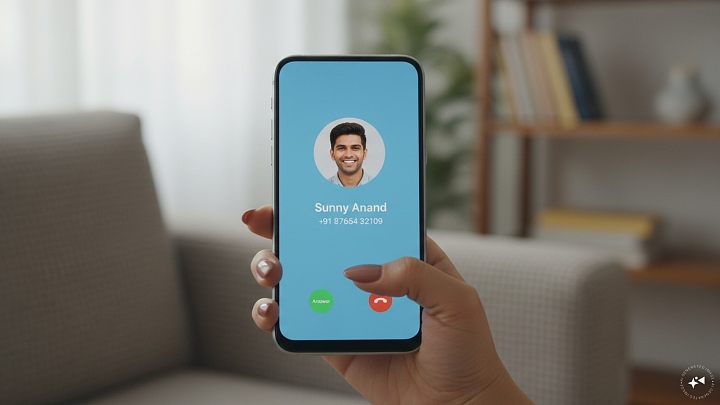
Getting a call from an unknown number may soon become less common in India, at least when it comes to identifying who is calling. The government has directed telecom operators to introduce Calling Name Presentation (CNAP) from November 1, 2026. The service will display the caller’s name along with their mobile number on the recipient’s mobile phone.
The Department of Telecommunications (DoT) has asked telecom operators to enable CNAP by default for users on 4G and newer networks, including 5G. The service will work through telecom networks, which will give users another way to identify callers without depending on apps such as Truecaller and other third-party tools or apps.
However, the service will not cover every network at the start. The government will examine its implementation on 2G and 3G networks and public switched telephone networks separately.
How Will CNAP Identify Unknown Or Spam Callers?
CNAP will show the incoming phone number and the caller’s name in separate fields on the recipient’s screen. If the number is already saved in the phone’s contacts, the recipient can identify the caller using the saved details.
For numbers that are not saved, the system will obtain the registered subscriber name from the caller’s telecom operator’s database for domestic calls. This means users can see a name even when they have not saved the number on their mobile phones.
However, international incoming calls will be marked as “International Call”.
To make this system work, telecom operators must create and maintain databases linking mobile numbers with subscribers’ registered names. When a call comes in, the receiving operator will use this information to display the caller’s name.
The service will also include privacy safeguards. According to the DoT’s instructions, operators must ensure that the name retrieved through the system is not retained after the call ends. Subscribers who use Calling Line Identification Restriction (CLIR) to prevent their caller details from being displayed will remain excluded from CNAP name presentation.
Will CNAP Replace Truecaller?
Not necessarily. While CNAP will help users identify callers through information held by telecom operators, it may not provide the same information as third-party caller identification apps.
Truecaller’s CEO, Rishit Jhunjhunwala said the service has already been rolled out in parts of India and explained why a registered name may not always identify the person making a call.
“Firstly, SIMs are often shared between family members and even employees. This causes all sorts of problems. Secondly, what our users really care about is who is actually using the SIM, what others say about the caller such as occupation, company they work for and so on. Additionally, knowing a name doesn’t solve the rise of spam and fraud calls, which is also something Truecaller users love about our service.”
He further added that the company welcomes the government’s move.
“CNAP is a good complementary function to our service and we welcome the move by the government to increase transparency in mobile communication.”
CNAP will identify the registered subscriber, but that person may not always be the one using the phone. It also does not, by itself, establish whether a call is spam or a fraud attempt.
What Do TRAI’s Rules Say About Spam Calls?
Caller identification is also linked to the ongoing debate over how India should handle unwanted calls. Earlier this year, Truecaller challenged proposals from the Telecom Regulatory Authority of India (TRAI) concerning caller identification and spam control, raising concerns about how the proposed framework could affect existing spam protection services.
Under TRAI’s clarification, calls from 1600-series numbers, used mainly by banks, financial institutions, insurance companies and government agencies for service-related communication, cannot be tagged or blocked as spam by caller identification apps.
The rules also cover 140-series numbers, which registered telemarketers use for promotional calls. Users who want to restrict such calls are encouraged to register for the Do Not Disturb (DND) service.
The aim is to prevent people from missing important calls, including banking alerts, one-time passwords, fraud notifications and other service-related messages.
What Does This Mean For Mobile Phone Users?
CNAP will give users another way to identify incoming calls without installing a separate app. However, seeing a name on the screen does not guarantee that the person calling is trustworthy or that the call is free from fraud.
Telecom-based identification and third-party apps also serve different purposes. CNAP relies on subscriber records, while caller identification platforms may use user reports and other information to flag suspected spam.
In short, the introduction of CNAP could therefore make caller identification easier, but tackling spam and fraud will require more than displaying a name. Users will still need to exercise caution when dealing with unknown callers, especially those asking for banking details, passwords or OTPs.