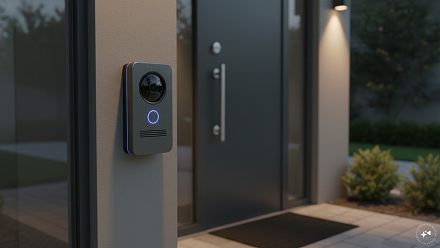
Video Doorbell vs Traditional CCTV: Which Is Better for Front Door Monitoring?
Monitoring the front door is one of the simplest ways to improve home security, but the right device depends on what you want to monitor. Traditional CCTV cameras have long been used to keep an eye on entrances, driveway
Ni Consumer Trends Desk··18K nabasa
Video Doorbell vs Traditional CCTV: Which Is Better for Front Door Monitoring?
Monitoring the front door is one of the simplest ways to improve home security, but the right device depends on what you want to monitor. Traditional CCTV cameras have long been used to keep an eye on entrances, driveways and other areas around a home. Video doorbells offer a more focused approach, combining a camera with a doorbell and features designed specifically for visitors at the front door.
A video doorbell can notify you when someone approaches, let you see who is outside and, on supported models, allow you to speak to the visitor without opening the door. Traditional CCTV cameras generally provide wider or more continuous surveillance and can be part of a larger security system covering multiple areas.
The two options therefore serve slightly different purposes. A video doorbell is primarily designed around the front-door interaction, while CCTV is better suited to broader surveillance. Your choice should depend on whether visitor monitoring or continuous security coverage is the bigger priority.
Verdict: Which one should you choose?
Choose a video doorbell if:
Your main priority is monitoring the front door.
You want alerts when someone approaches or rings the bell.
You want two-way communication with visitors.
You want to check visitors remotely before opening the door.
You prefer a compact, dedicated front-door security device.
Choose traditional CCTV if:
You want continuous monitoring of the entrance.
You need a wider surveillance area.
You already have multiple CCTV cameras installed.
You want to monitor the driveway, gate or surrounding areas.
You prefer a dedicated recording system for security footage.
A video doorbell is generally the more convenient choice for front-door monitoring because it combines visitor identification, alerts and communication in one device. Traditional CCTV is better when the requirement extends beyond the doorway to broader or continuous surveillance.
Top picks
1. CLEGO V1 Smart Video Doorbell
Price: Was – Rs 2,998 | Now – Rs 1,799 | Discount: 40%
2. Qubo Smart WiFi Video Doorbell
Price: Was – Rs 14,990 | Now – Rs 8,989 | Discount: 40%
3. Trueview Smart WiFi Video Doorbell 3MP
Price: Was – Rs 6,999 | Now – Rs 3,199 | Discount: 54%
4. MANOMAY Protect Pro 3MP Mini Wi-Fi Pan-Tilt Camera
Price: Was – Rs 13,300 | Now – Rs 2,999 | Discount: 77%
5. Trueview 3MP 4G Mini PT Security Camera
Price: Was – Rs 13,800 | Now – Rs 3,895 | Discount: 72%
6. CP PLUS 2.4MP Full HD IP
Price: Was – Rs 2,000 | Now – Rs 930 | Discount: 54%
Quick comparison
Feature
Video Doorbell
Traditional CCTV
Primary purpose
Front-door visitor monitoring
General security surveillance
Camera coverage
Focused on doorway
Wider depending on camera
Visitor alerts
Yes, on supported models
Usually requires connected system
Doorbell function
Built in
Not usually included
Two-way communication
Common
Available on some models
Continuous recording
Depends on model and storage plan
Common in dedicated systems
Remote viewing
Common
Available with compatible systems
Installation
Generally simpler
Can be more involved
Storage
Cloud, local or subscription-based depending on model
DVR/NVR, memory card or cloud depending on system
Best for
Monitoring visitors at the door
Wider home surveillance
Everyday convenience
Excellent
Good
How does a video doorbell work?
A video doorbell combines a doorbell button with a camera and other security features in a single device. When someone approaches or presses the doorbell, the device can provide an alert and allow the homeowner to view the area outside the door.
Many models also support two-way audio, allowing the homeowner to communicate with visitors through a connected smartphone or the doorbell itself. This can be useful when receiving deliveries, speaking to guests or checking an unexpected visitor without physically opening the door.
Depending on the model, video footage may be stored locally, on a memory card or through a cloud-based service. Some features may also require a subscription, so buyers should check the storage and notification arrangements before purchasing.
The main strength of a video doorbell is its focus. Instead of monitoring the entire property, it is designed to provide a convenient view of the area where visitors approach the home.
Where video doorbells perform best
Front-door monitoring
Visitor identification
Package and delivery monitoring
Remote visitor communication
Apartment entrances
Real-time notifications
Where video doorbells struggle
Wider property surveillance
Monitoring distant gates or driveways
Continuous recording on some models
Dependence on Wi-Fi or other connectivity
Subscription requirements on certain features
A video doorbell therefore works particularly well when the front door itself is the main security concern.
How does traditional CCTV work?
Traditional CCTV uses dedicated security cameras to capture footage of a particular area. A camera can be positioned at the front door, gate, driveway or another location depending on the home’s surveillance requirements.
A conventional CCTV setup may include multiple cameras connected to a DVR or NVR, allowing footage from different parts of the property to be recorded and reviewed. Some modern systems also support remote viewing through a smartphone or other connected device.
Unlike a video doorbell, a CCTV camera does not necessarily have to be positioned directly beside the door. This gives homeowners greater flexibility when they need to cover a wider entrance area.
For homes with multiple security points, CCTV can therefore provide a more comprehensive surveillance solution.
Where traditional CCTV performs best
Continuous security monitoring
Wider entrance coverage
Driveways and gates
Multiple-camera systems
Recording security footage
Larger homes and properties
Where traditional CCTV struggles
More complicated installation in some setups
Does not normally function as a doorbell
Visitor communication may not be available
More equipment may be required
Less focused on direct visitor interaction
Traditional CCTV is consequently better suited to surveillance requirements that go beyond the immediate front door.
Which provides better front-door coverage?
Coverage depends on the camera’s field of view and installation position. A video doorbell is designed to capture the area directly in front of the entrance, making it useful for identifying people standing at the door.
A CCTV camera can be positioned farther away or at a different angle, potentially covering the entrance, gate and part of the driveway at the same time. This makes CCTV more flexible when the front-door area is part of a larger property.
For a single apartment or house entrance, a video doorbell can provide a more targeted view. For a property with a large approach to the front door, CCTV may provide more useful coverage.
Coverage comparison
Video Doorbell: Better for focused front-door monitoring
Traditional CCTV: Better for wider entrance and property surveillance
Which is better for monitoring visitors?
Video doorbells have the advantage when the primary requirement is knowing who is at the door. The doorbell button, camera and visitor alerts are integrated into one device, and two-way audio can allow communication before opening the door.
Traditional CCTV can also show who is approaching, but it is primarily designed as a surveillance system rather than a visitor-interaction device. Unless the particular camera includes two-way audio and is connected appropriately, communication may require an additional device.
For deliveries, guests and unexpected visitors, the video doorbell is therefore usually more convenient.
Which offers better recording?
Traditional CCTV generally has an advantage when continuous recording is the priority. Dedicated systems can record footage from one or several cameras, depending on the configuration and storage setup.
Video doorbells can also record events, but recording methods vary considerably. Some models rely on local storage, while others use cloud storage or offer additional features through a subscription.
Buyers who want a permanent record of activity should therefore check whether the specific device supports continuous recording, event recording and the desired storage method.
Which is easier to install?
Installation depends on the specific product and whether the device requires wiring. Some video doorbells are designed for relatively straightforward installation, while wired versions may require existing electrical connections.
Traditional CCTV systems can involve more planning because camera position, cables, recording equipment and power connections may all need to be considered. A multi-camera system can be particularly complex compared with installing a single front-door device.
For a simple front-door security upgrade, a video doorbell is often the easier option. For a full surveillance system, the additional installation effort of CCTV can be justified by its wider coverage.
Which offers better convenience?
Video doorbells are designed around everyday visitor interactions. Notifications, live viewing and two-way communication can make it easy to check the front door even when you are in another room or away from home.
CCTV systems are more focused on surveillance and recording. They can provide greater coverage, but reviewing multiple cameras and managing a recording system can involve more effort.
If convenience means quickly checking who is at the door, a video doorbell has the advantage. If convenience means having one system monitor several areas of the property, CCTV may be more practical.
Which offers better value?
Value depends on the security requirement rather than simply the purchase price. A video doorbell can offer several front-door features in one compact device, making it a sensible investment for apartments and homes where the entrance is the main area of concern.
Traditional CCTV can provide greater value when several areas need to be monitored. A multi-camera system can cover the entrance, driveway, gate and other vulnerable areas, making it more appropriate for larger properties.
Users should also consider storage costs, installation expenses and any subscription fees when comparing the long-term cost of either option.
Which should you buy for front-door monitoring?
If your main concern is knowing who is at the front door, receiving visitor alerts and communicating with people before opening the door, a video doorbell is the more convenient choice. It combines several functions specifically designed for the entrance.
If you want continuous surveillance or need to monitor the front door along with a driveway, gate or other parts of the property, traditional CCTV is likely to be the better option.
For many homes, the decision can be simplified to the type of security required: choose a video doorbell for focused visitor monitoring and CCTV for broader surveillance coverage.
Common security scenarios
Situation
Better choice
Monitoring visitors at the front door
Video Doorbell
Receiving delivery alerts
Video Doorbell
Talking to visitors remotely
Video Doorbell
Apartment entrance monitoring
Video Doorbell
Monitoring a front gate
Traditional CCTV
Monitoring multiple areas
Traditional CCTV
Recording activity across a property
Traditional CCTV
Large home or property
Traditional CCTV
Remote visitor interaction
Video Doorbell
FAQs
1. Is a video doorbell better than CCTV for the front door?
A video doorbell is generally more convenient when the main requirement is monitoring visitors at the front door. CCTV is better when the entrance needs to be monitored as part of wider property surveillance.
2. Can a video doorbell replace CCTV?
It can replace CCTV for some basic front-door monitoring requirements, but it does not necessarily provide the same coverage as a dedicated CCTV system. Homes requiring multiple surveillance points may still benefit from CCTV.
3. Do video doorbells record continuously?
Not all models do. Recording capabilities vary, with some devices focusing on motion-triggered or event-based recording. Buyers should check the specific model’s recording and storage options.
4. Can you talk to someone through a video doorbell?
Many video doorbells support two-way audio, allowing homeowners to communicate with visitors remotely. The exact functionality depends on the model.
5. Does CCTV provide a wider view than a video doorbell?
It can. CCTV cameras can be positioned to cover entrances, gates, driveways and other areas, while video doorbells are generally designed to focus on the immediate doorway.
6. Which is easier to install?
A video doorbell can be easier to install for a single entrance, particularly when using a suitable wireless model. CCTV installation can involve more equipment and planning, especially for multi-camera systems.
7. Do video doorbells need Wi-Fi?
Many smart video doorbells rely on Wi-Fi for remote notifications and live viewing, although the exact connectivity method varies by product. Buyers should check the requirements of the specific model.
8. Which should I buy overall?
Choose a video doorbell if front-door visitors, alerts and two-way communication are your priorities. Choose traditional CCTV if you need continuous recording and wider surveillance around your home.
Disclaimer: The product descriptions mentioned in the article are solely based on the primary and secondary research conducted by our experts. To keep you ahead of the curve with these latest products, News18 utilises affiliate links. This means if you decide to shop through our recommendations, we may earn a small referral commission at no extra cost to you. Please be advised that News18 is not responsible for any claims under the Consumer Protection Act, 2019, or other applicable laws regarding the final performance, quality, or safety of these products.