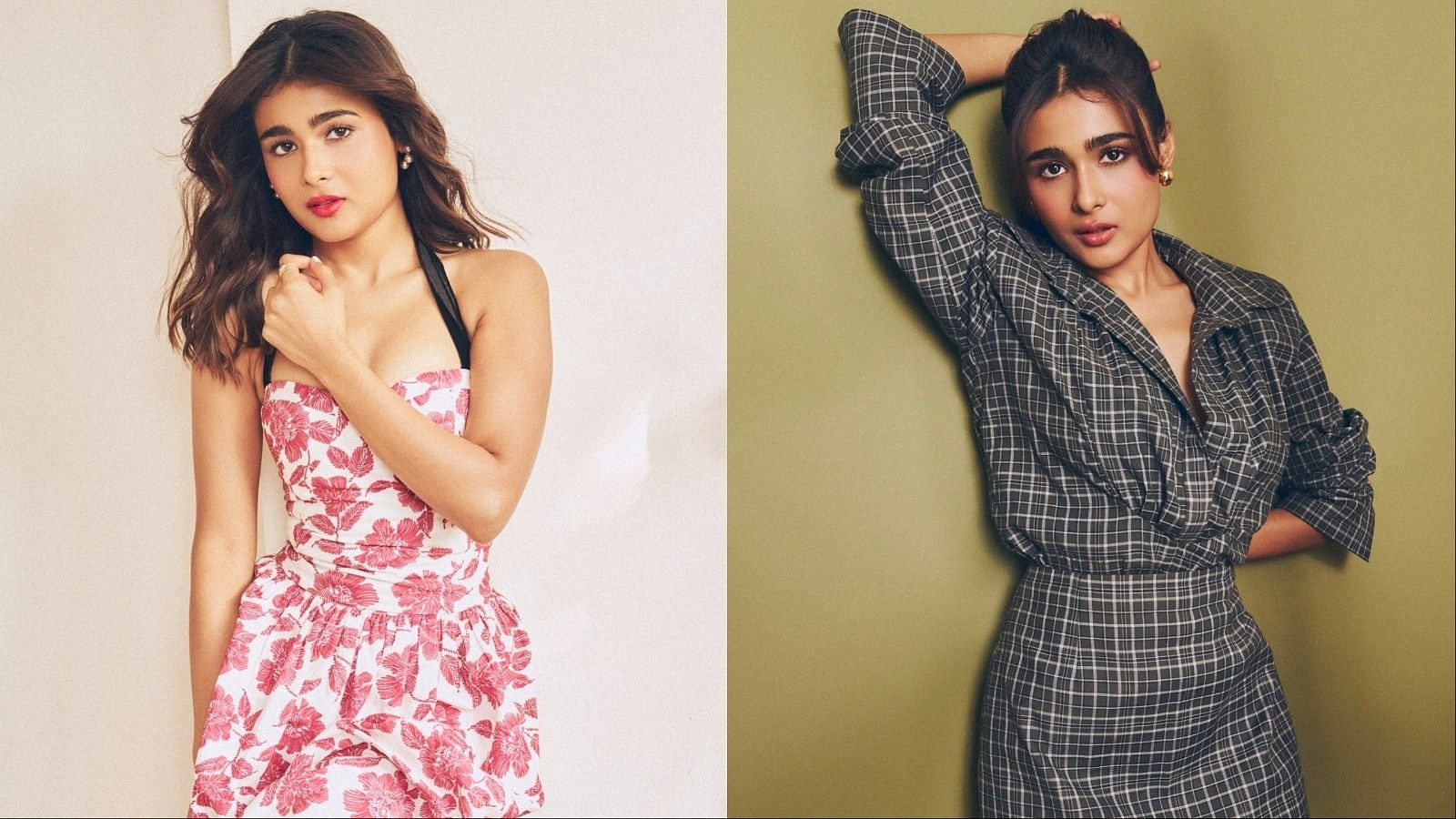
Shalini Pandey Calls Viral Video AI-Generated; Here's What You Need To Check Before Believing
Actor Shalini Pandey has become the latest Indian celebrity to be targeted by a fabricated, AI-generated video, taking to Instagram on Monday to publicly deny any connection to a clip circulating online. Her statement ad
Ni News18 Tech··45K nabasa
Shalini Pandey Calls Viral Video AI-Generated; Here's What You Need To Check Before Believing
Actor Shalini Pandey has become the latest Indian celebrity to be targeted by a fabricated, AI-generated video, taking to Instagram on Monday to publicly deny any connection to a clip circulating online. Her statement adds her to a growing list of Indian actors, including Rashmika Mandanna, Alia Bhatt, Deepika Padukone, Katrina Kaif, Ranveer Singh, Aamir Khan and Sachin Tendulkar, who have all had to publicly refute deepfake content bearing their likeness.
What Shalini Pandey Said
Addressing the video directly, the Arjun Reddy actor wrote: “I want to address a fake AI-generated video of me that is currently being circulated online. The video is completely fabricated and does not depict me. It is deeply disturbing to see technology being misused in this way to target and harm individuals, especially women.” She went further, urging people not to download or share the clip and to report it instead, adding, “I strongly condemn this kind of abuse and believe this kind of misuse of technology should never be normalised.”
Without independently examining the clip frame by frame, several contextual factors line up with how these fabricated videos typically surface and spread, based on patterns seen in prior Indian deepfake cases:
A direct, specific denial from the subject herself, rather than vague deflection, which is consistent with how genuine deepfake victims (Rashmika Mandanna, Ranveer Singh, Aamir Khan) have responded in the past, all of whom similarly disowned videos attributed to them.
No original, verifiable source. Legitimate footage of a public figure typically traces back to an event, interview or official post. Fabricated clips tend to appear first on anonymous or low-credibility accounts with no clear origin.
The broader pattern in India this year. Actor Mrunal Thakur faced a similar incident shortly before this one, and cases involving Sudha Murty and others show a consistent trend of AI-generated content being deployed against recognisable public figures, often for engagement, scams, or targeted harassment.
None of this alone proves a video is fake, but taken together with the subject’s own explicit denial, it strongly supports Pandey’s account rather than raising doubt about it.
How To Spot An AI-Generated Video in 2026
Detection has become genuinely harder this year, as generative video tools have improved sharply. Old advice like “look for unnatural blinking” no longer reliably works, since modern AI models simulate blinking convincingly. Here’s what still holds up:
1. Check The Face Boundaries And Skin Texture
Look closely at where the face meets the hairline, ears and neck, especially when the person turns their head. Flickering, blurring or an unnatural blend at these edges remains one of the more persistent tells, even in higher-quality fakes.
2. Watch The Mouth And Lip-Sync
Slight mismatches between spoken words and lip movement, teeth that blur or subtly change shape, or a jaw that doesn’t quite track natural speech patterns are still common giveaways, particularly in videos with fast or emotional speech.
3. Look At Lighting Consistency
In a manipulated video, the face is sometimes lit differently from the rest of the scene, or shadows on the face don’t match the direction of light elsewhere in the frame. This mismatch is harder for AI tools to get perfectly consistent, especially across a longer clip.
4. Listen To The Audio Closely
Cloned or synthetic voices can sound flat, carry unusual pauses, or have a tone that doesn’t quite match the facial expression on screen. Background audio is another clue: real environments have ambient noise and room acoustics that match what’s visible, while AI-generated clips sometimes sound suspiciously clean or mismatched to the setting shown.
5. Check Where The Video First Appeared
This matters more than any visual trick. Ask who posted it first, and whether any credible outlet or verified account has independently confirmed it. A dramatic clip that exists only on a single anonymous account, with no coverage anywhere else, is a strong warning sign regardless of how convincing it looks.
6. Use A Detection Tool As A Second Check
Since the human eye alone is becoming less reliable against the best fakes, pairing visual judgement with an AI detection tool is increasingly the sensible approach for anything consequential, treating your own observations as a first filter rather than a final verdict.
Security experts and the affected celebrities themselves have consistently urged the same response: do not download, forward or engage with the content, and report it directly on the platform where you find it. If a deepfake targets you personally, filing a police complaint is recommended.