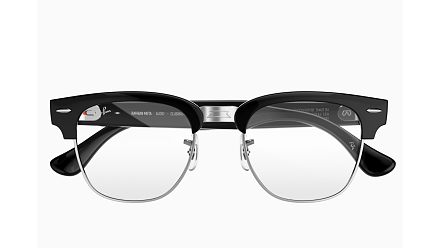
Ray-Ban Meta Audio Glasses Launched Without A Camera: Basically Earbuds You Wear Like Specs
Meta has launched a new version of its smart glasses that takes a very different approach from the Ray-Ban Meta models that came before it. Called Ray-Ban Meta Audio, the new glasses remove the camera completely and focu
Ni Ayush Mukherjee··31K nabasa
Ray-Ban Meta Audio Glasses Launched Without A Camera: Basically Earbuds You Wear Like Specs
Meta has launched a new version of its smart glasses that takes a very different approach from the Ray-Ban Meta models that came before it. Called Ray-Ban Meta Audio, the new glasses remove the camera completely and focus on audio, calls and AI.
Unveiled at Meta Connect 2026, Ray-Ban Meta Audio is designed to combine the functionality of open-ear earbuds with the familiar look of Ray-Ban glasses. It can play music and podcasts, handle phone calls and let users interact with Meta AI without reaching for their smartphone. Meta says the glasses can run for up to 12 hours on a single charge, with the charging case adding another 48 hours.
The glasses start at $349 in the US, with pre-orders opening on September 23 and shipments scheduled to begin on October 13. Meta has not announced an India price or launch date for Ray-Ban Meta Audio yet.
What Is Ray-Ban Meta Audio?
Ray-Ban Meta Audio is Meta’s first audio-only pair of smart glasses. Unlike the company’s camera-equipped Ray-Ban Meta models, there is no camera on the Audio version.
That means the glasses cannot take photos or record videos. Instead, Meta is concentrating on the features people can use throughout the day: listening to music, playing podcasts, making calls and speaking to an AI assistant.
The glasses weigh as little as 43 grams, and Meta describes them as its lightest and slimmest AI glasses yet. They have adjustable temple tips, adjustable or swappable nose pads and overextension hinges aimed at improving comfort during longer periods of use.
Ray-Ban Meta Audio will initially be available in two frame styles: Clubmaster and Burbank. There are 23 colour and lens combinations, and both styles support a wide range of prescription options.
What Can Ray-Ban Meta Audio Do?
The biggest feature is audio. Because the speakers are built into the glasses, users can listen to music and podcasts without putting earbuds inside their ears.
Users can also make and receive phone calls. Meta says the microphones are designed to capture the wearer’s voice clearly, including when the glasses are being used outdoors.
The glasses also provide hands-free access to Meta AI. Users can speak to the assistant while going about their day rather than taking their phone out of their pocket.
Meta says its AI glasses can handle tasks such as answering questions, providing sports scores, recommending nearby restaurants and translating live conversations. The company is also bringing its Muse personal AI agent to its AI glasses, allowing users to interact with the agent hands-free.
There Is No Camera
This is what separates Ray-Ban Meta Audio from the conventional Ray-Ban Meta glasses. The existing camera-equipped models can capture photos and videos from the wearer’s point of view. The new Audio version cannot do that because it has no camera hardware.
That also means it cannot use a camera to understand what the wearer is looking at. If you point the glasses at an object and want AI to analyse it visually, the Audio model cannot provide that camera input.
Instead, Ray-Ban Meta Audio is built around hearing, voice commands and AI.
Ray-Ban Meta Audio Vs Ray-Ban Meta Gen 3
Feature
Ray-Ban Meta Audio
Ray-Ban Meta Gen 3
Camera
No
12MP camera
Video recording
No
3K Ultra HD
Audio
Open-ear audio
Open-ear audio
Meta AI
Yes
Yes
Muse AI
Yes
Yes
Battery life
Up to 12 hours
Up to 9 hours
Charging case
Up to 48 additional hours
Charging case included
Weight
43 grams
Not specified by Meta in its launch announcement
Starting US price
$349
$449
The Ray-Ban Meta Gen 3 is the more feature-heavy option on paper because it retains the camera. It has a 12-megapixel camera capable of recording 3K Ultra HD video, while also adding a six-microphone array that Meta says can reduce more than 90 per cent of background noise. The Gen 3 is rated for up to nine hours of battery life.
Ray-Ban Meta Audio instead focuses on audio and AI, while also offering a longer claimed battery life. The choice therefore comes down to whether the user needs camera-based features or wants glasses primarily for audio and hands-free assistance.
Why Did Meta Remove The Camera?
Meta has not positioned Ray-Ban Meta Audio simply as a stripped-down version of its camera glasses. The company says audio has been its most popular feature on its smart glasses, which is one reason it has created a dedicated audio-focused model.
Removing the camera also changes the privacy equation. There is no camera to capture photographs or videos of people around the wearer. However, the glasses still contain microphones and connect to Meta’s AI services, so removing the camera does not mean the device has no privacy considerations.
The result is a much simpler proposition: they look like Ray-Ban glasses, but they also work as open-ear headphones and provide hands-free access to AI.
How Long Does Ray-Ban Meta Audio Last?
Battery life is one of the biggest upgrades claimed for the Audio model. Meta rates Ray-Ban Meta Audio for up to 12 hours on a single charge. The included charging case can provide up to another 48 hours of power.
For comparison, the new Ray-Ban Meta Gen 3 is rated for up to nine hours, while Meta’s previous-generation glasses were rated for up to eight hours of use. Actual battery life will depend on how heavily the glasses are used for music, calls and AI.
Ray-Ban Meta Audio Price And Availability
Ray-Ban Meta Audio starts at $349 in the US. Pre-orders opened on September 23, with shipping beginning October 13.
Meta has not announced an India price or launch date for Ray-Ban Meta Audio at the time of writing. The company previously launched Ray-Ban Meta Gen 2 in India, with prices starting at ₹39,900, but that price should not be treated as an indication of the new Audio model’s eventual Indian pricing.