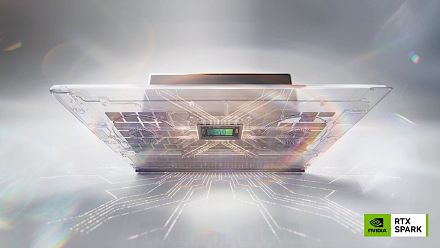
Nvidia RTX Spark PCs Arrive With Up To 128GB Memory To Run AI Models Locally
Nvidia is bringing its AI computing technology to a new category of Windows PCs with RTX Spark systems designed for developers, creators and gamers who want to run demanding workloads on their own devices.
Ni Ayush Mukherjee··38K nabasa
Nvidia RTX Spark PCs Arrive With Up To 128GB Memory To Run AI Models Locally
Nvidia is bringing its AI computing technology to a new category of Windows PCs with RTX Spark systems designed for developers, creators and gamers who want to run demanding workloads on their own devices.
The company announced the availability of RTX Spark laptops on October 16, with systems from manufacturers including Asus, Dell, HP, Lenovo, Microsoft and MSI. The development is relevant to the growing interest in running AI models locally instead of relying entirely on cloud-based services.
According to Nvidia’s official announcement, RTX Spark combines Blackwell RTX graphics with an Nvidia Grace CPU and offers up to 128GB of unified memory. The company claims that the systems can deliver up to one petaflop of FP4 AI computing performance.
The actual specifications, performance and availability will vary by system configuration and manufacturer.
WHAT IS NVIDIA RTX SPARK?
RTX Spark is designed to bring high-performance graphics and AI computing into portable Windows computers.
Unlike a conventional laptop that relies heavily on remote servers for demanding AI workloads, a suitably configured RTX Spark system could run compatible AI models directly on the device.
Local processing can be useful for developers testing AI applications, creators working with large projects and businesses that want more control over where certain data is processed.
Nvidia says the platform can support local AI agents, creative applications and demanding graphics workloads. It also combines technologies from the company’s wider ecosystem, including CUDA, DLSS and hardware-accelerated video processing.
The systems are intended to support different kinds of work, from editing media and rendering 3D scenes to running AI tools.
WHY DOES 128GB OF UNIFIED MEMORY MATTER?
Memory capacity is an important factor when running large AI models locally.
A model’s parameters, supporting software and working data all require memory. Larger models can demand substantial resources, while creative applications may need additional capacity for high-resolution images, video and 3D projects.
Nvidia’s RTX Spark platform offers up to 128GB of unified memory, allowing the CPU and GPU to work with a shared memory pool.
However, 128GB of memory does not mean that every AI model can run on every RTX Spark laptop. The outcome depends on the model’s size, precision, software optimisation and the system’s actual configuration.
Nvidia also claims that RTX Spark can handle demanding 3D scenes and modern games. These performance claims should be evaluated against independent tests of individual laptops before buyers make a purchase decision.
CAN IT MAKE CLOUD AI LESS NECESSARY?
Local AI computing could reduce the need to send every request to a remote server. It may also offer advantages for privacy, offline access and predictable performance in certain workloads.
However, cloud services will remain important for tasks that require large-scale computing, extensive storage or access to models too demanding for a personal computer.
For Indian developers and businesses, the main question will be the cost of these systems compared with cloud computing services and conventional workstations.
Nvidia has announced the platform’s availability through several global PC manufacturers, but Indian pricing, configurations and retail availability should be checked separately before making claims about local sales.
RTX Spark reflects a broader shift in personal computing: AI is increasingly becoming a workload that computers are expected to handle alongside everyday applications, gaming and creative software.
For buyers, the technology could offer more flexibility, but the value will depend on the price, the applications they use and whether they genuinely need powerful local AI computing.
Note for publication: The SBI, Nvidia chip-order and Qualcomm drafts are based on Reuters reporting; the WhatsApp, CERT-In and Microsoft drafts draw on reporting by The Indian Express; the Apple story uses reporting by MacRumors; and the RTX Spark story uses Nvidia’s official announcement. The RTX Spark announcement was dated October 16, so it should not be described as a product first launched on October 20 or 21.