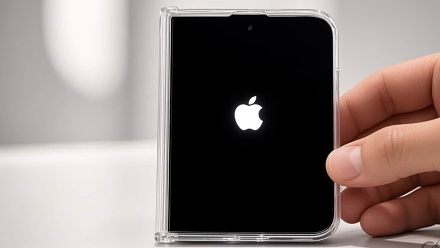
iPhone Fold: Samsung Is Selling Foldables In India For Nearly 7 Years, But Apple Could Finally Make Indians Buy Them
iPhone Fold: Call it brand value, product finesse, Apple Aura or whatever you want. The iPhone Fold or Ultra– Apple’s first foldable smartphone– will be an instant hit in India. Irrespective of the pricing. India has had
Ni Debashis Sarkar··26K nabasa
iPhone Fold: Samsung Is Selling Foldables In India For Nearly 7 Years, But Apple Could Finally Make Indians Buy Them
iPhone Fold: Call it brand value, product finesse, Apple Aura or whatever you want. The iPhone Fold or Ultra– Apple’s first foldable smartphone– will be an instant hit in India. Irrespective of the pricing. India has had foldable smartphones for years, but the category has never truly become mainstream. Samsung has spent years trying to convince Indian consumers that a phone that folds is the future. Motorola, Google and other brands have also entered the segment. Yet, for most smartphone buyers, foldables remain a luxury rather than a trend.
That could change very quickly if Apple brings its first foldable iPhone to India.
And here is the controversial part: I don’t think the price will necessarily stop people from buying it.
If Apple’s first foldable iPhone arrives in India at around ₹2 lakh, ₹2.2 lakh or even more, there will still be buyers willing to pay for it. Apple’s brand pull, the iPhone ecosystem and the sheer curiosity around an iPhone that folds could make the device far more influential than its sales numbers initially suggest. Not to forget, there are many buyers in India who would buy it just to flaunt.
Apple has not yet confirmed the name, price or India availability of the rumoured foldable iPhone. However, the device is widely expected to be unveiled at Apple’s September 9 event, with reports suggesting a price above $2,000.
India Doesn’t Need A Cheaper Foldable. It Needs An Apple Foldable
Foldables are already available in India. Samsung’s latest Galaxy Z Fold8 Ultra is priced at ₹1,99,999 for the 256GB version, while the Galaxy Z Fold8 starts at ₹1,79,999. Samsung is also pushing financing options, including no-cost EMI and upgrade programmes, making these phones easier to purchase without paying the entire amount upfront.
So, the argument that Indians simply cannot afford a ₹2 lakh smartphone does not tell the complete story.
Premium smartphones are increasingly being purchased through EMIs, trade-ins, bank offers and upgrade programmes. The monthly cost can feel much less intimidating than the headline price.
That is precisely why Apple’s strategy could work. If Apple launches the iPhone Fold in India, a consumer who would never have considered spending ₹2 lakh on a foldable could suddenly start thinking about it.
Not because the person suddenly needs a foldable. Because it is an iPhone that folds.
Samsung Has Done The Hard Work. Apple Could Make Foldables Cool
Samsung deserves enormous credit for creating the modern foldable smartphone category. Its first Galaxy Fold arrived in 2019, meaning Samsung has been building and selling foldables for around seven years. The company has continued to improve the hardware, hinge technology, durability, software and overall experience.
Yet foldables remain a relatively small part of India’s smartphone market.
Counterpoint Research estimates cited by Business Standard suggest India’s foldable smartphone market could cross 650,000 shipments in 2026, while Samsung continues to dominate the category with an estimated 89 per cent share. At the same time, foldables are expected to account for only around 2-3 per cent of India’s smartphone market by value.
That tells us something important: Samsung has created the category, but it has not yet created a mass-market obsession around it.
Apple could potentially change that. This is not necessarily because Apple’s foldable would be dramatically better than Samsung’s. We don’t even know that yet. It is because Apple has a remarkable ability to take an existing technology and turn it into a mainstream consumer conversation.
People who have ignored foldables could suddenly start asking questions: “Is that the new iPhone?”; “Does it really fold?”; “How much does it cost?”; “Should I get one?”
That is how trends begin.
The ₹2 Lakh Price Tag May Actually Help Apple
There is another interesting possibility: Apple’s first foldable being extremely expensive could actually strengthen its appeal.
A very expensive iPhone Fold would immediately become a status product. It would not be positioned as another smartphone competing on specifications. It would become something people want because it represents Apple’s most advanced and unusual iPhone.
Reports currently point to a price of more than $2,000 for the foldable, although Apple has not confirmed the figure. Some estimates for India have put the device around the ₹2 lakh-plus mark.
At that price, Apple would not sell the same number of units as a conventional iPhone.
But it may not need to.
The first-generation Fold could function as a halo product. It could generate enormous attention, get people into Apple Stores and retailers, dominate YouTube and Instagram feeds, and make foldable phones part of everyday smartphone conversations.
And once that happens, the second and third generations could become much more important.
This Is The Real Threat To Samsung
If Apple launches the Fold in India, Samsung’s biggest problem may not be losing every foldable sale to Apple.
The bigger problem could be that Apple suddenly makes consumers reconsider what a premium smartphone should look like.
Samsung has spent years educating consumers about foldables. It has dealt with the early durability concerns, developed its Galaxy Z Fold and Flip ranges and built software around larger folding displays.
But Apple’s entry could shift the conversation from “Why should I buy a foldable?” to “Which foldable should I buy?”
Samsung could actually benefit from a larger foldable market, but it would also face much stronger competition for the customers it has spent years cultivating.
And it would no longer be enough to say that Samsung has more experience in foldables.
Apple’s advantage would be the iPhone ecosystem.
Apple Should Bring The Fold To India As Soon As Possible
This is why I believe Apple should launch the iPhone Fold in India at the earliest possible opportunity.
India should not be treated as a secondary market for this product. The country has a huge premium smartphone audience, a rapidly expanding digital economy and a consumer base that has shown a willingness to spend on premium Apple products.
More importantly, India is an ideal market for Apple’s foldable experiment because the device does not necessarily need to become a mass-market phone immediately.
Even a relatively small number of early adopters could create significant visibility.
Imagine the iPhone Fold appearing in airports, cafés, offices, college campuses and social media videos across India. The phone would become a conversation starter simply because it is different from every other iPhone people have seen.
And once consumers see someone actually using an iPhone that opens into a larger screen, the idea of owning one becomes much easier to understand.
The Foldable Phone May Finally Have Its India Moment
There is no guarantee that Apple will magically transform India’s foldable market overnight. Price, durability, battery life, repair costs and the practicality of a folding phone will still matter. A ₹2 lakh-plus smartphone is a serious purchase, regardless of the brand.
But Apple’s entry could be the catalyst the category has been waiting for.
Samsung has spent nearly seven years building the foundation. Apple could be the company that turns that foundation into a trend.
And that is why the most important question on September 9 may not be “How much will the iPhone Fold cost?”
It may be: “How many Indians will suddenly decide that they want a foldable phone?”
If the answer is significantly higher than it is today, Apple’s first foldable iPhone could end up doing something Samsung has struggled to achieve for years: making foldable phones feel less like an expensive experiment and more like the next big thing.
(Opinion: This article reflects the author’s view. Apple has not officially confirmed the name, price or India availability of its first foldable iPhone ahead of the September 9 event.)