I Like Digital Door Locks. I Just Don't Want to Argue With One at Midnight.
The quickest way to appreciate a digital door lock is to use one for a few weeks and then stay somewhere with an ordinary key.
Ni Anjan N Ghosh··40K nabasa
I Like Digital Door Locks. I Just Don't Want to Argue With One at Midnight.
The quickest way to appreciate a digital door lock is to use one for a few weeks and then stay somewhere with an ordinary key.
Suddenly you are patting every pocket again.
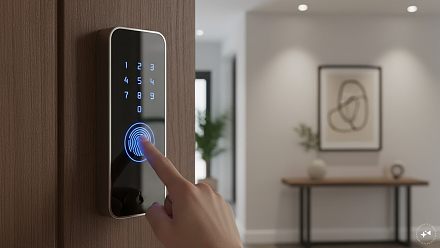
Fingerprint access is wonderfully convenient. A PIN works for family members. Temporary codes can help with guests. Some locks allow different users, access records or remote control. For households where people come and go at different times, the convenience is real.
But I think digital locks are sometimes bought in the wrong order.
We start with the features. Fingerprint. Face recognition. Camera. Doorbell. App. Remote unlock. Video screen. Smart-home connection.
I would start with the door.
What kind of door is it? How thick is it? Which way does it open? Is the frame suitable? Will the lock fit properly without weakening the door? Who is installing it, and do they know the product?
A Rs 50,000 lock badly fitted to a poor door is not a Rs 50,000 security system. It is an expensive problem attached to wood.
After installation comes the question I care about most: what happens when the normal way of opening it doesn’t work?
Fingerprints can fail if the sensor or finger is wet, dirty or damaged. Batteries eventually run down. Electronics can misbehave. A family member can forget the PIN. Connectivity can disappear. None of these things automatically makes digital locks unreliable; it simply means backup access is important.
Before buying, I would want to understand the fallback options clearly. Is there a PIN if the fingerprint fails? A physical key? An emergency power contact? How early does the lock warn about low batteries? Can it still be opened if the internet is down? These are more important questions than whether the app has a dark mode.
For older parents or children, I would also check whether the lock is genuinely easy for them to use. A feature that looks effortless in a showroom may feel very different to someone who is not comfortable with gadgets.
Then there is remote access.
Being able to create a temporary PIN for a visitor can be genuinely useful. So can knowing when the door was opened. Remote unlocking may help in some households, but it also means the account protecting the lock deserves proper attention. Use a strong password. Turn on extra login protection if available. Keep the app and lock software updated. Remove access when someone no longer needs it.
The more connected the lock becomes, the more it should be treated like a security product rather than a fancy door handle.
I am also not convinced every home needs the camera-and-screen version. If you already have a video doorbell or a camera covering the entrance, paying again for a lock with another camera may add cost without adding much value. On the other hand, for a home without those devices, combining functions could be convenient.
This is why the premium can vary so wildly. At the basic end, you are paying to stop carrying a key. Move upward and you are paying for more ways to enter, remote access, logs, cameras, displays and integration with other devices.
The sensible stopping point is different for every household.
A person living alone who travels often may value remote access and detailed alerts. A family with children may care more about simple fingerprints and PINs. Someone buying for elderly parents may prefer the least complicated model with a clear physical backup. A rented home may not justify major changes to the door at all.
There is also a small behavioral change nobody mentions. With a normal lock, you physically turn the key and know the door is locked. With some digital locks, people walk away trusting the beep. For the first few days, almost everyone turns around and checks the handle anyway.
Technology takes time to earn that kind of trust.
I like digital locks because they remove a tiny daily inconvenience. That is exactly the kind of technology I enjoy: something that quietly makes life easier without demanding much attention.