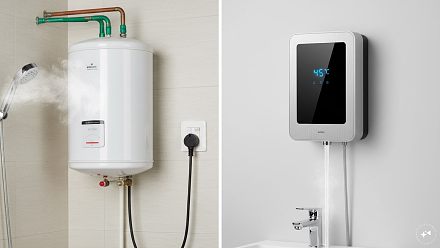
Geyser Vs Instant Water Heater: Which Saves More Electricity?
If you are trying to reduce your winter electricity bill, replacing a storage geyser with an instant water heater may seem like an obvious solution. After all, an instant heater warms water only when you need it, while a
Ni Consumer Trends Desk··31K nabasa
Geyser Vs Instant Water Heater: Which Saves More Electricity?
If you are trying to reduce your winter electricity bill, replacing a storage geyser with an instant water heater may seem like an obvious solution. After all, an instant heater warms water only when you need it, while a storage geyser heats an entire tank and then has to keep that water warm.
The actual calculation is more nuanced. Instant heaters typically have powerful heating elements, while storage geysers lose some heat while water sits in the tank. How much electricity you ultimately consume depends on how much hot water you use, how often you use it, the temperature setting and how long a storage geyser remains switched on.
Which should you choose?
Choose a storage geyser if:
You need enough hot water for regular showers.
Several people use the bathroom one after another.
You want a steady supply of already heated water.
You prefer larger capacities such as 10, 15 or 25 litres.
You are willing to switch the geyser off after heating to reduce unnecessary energy use.
Choose an instant water heater if:
You need small quantities of hot water at a time.
It is mainly for handwashing, shaving or kitchen use.
You want hot water without heating and storing a full tank.
You live alone or have relatively low hot-water requirements.
You want a compact unit for a smaller bathroom or kitchen.
If electricity saving is the only consideration, an instant heater can have an advantage when hot-water consumption is low because it largely avoids standby heat loss. For larger quantities of water, however, a correctly sized storage geyser can be considerably more convenient.
Top picks
1. Racold Eterno Pro 25L – Best large-capacity storage geyser
Price: Was – Rs 16,899 | Now – Rs 8,749 | Discount: 48%
2. Bajaj Shield Series New Shakti 15L
Price: Was – Rs 11,800 | Now – Rs 7,299 | Discount: 38%
3. Crompton Arno Neo 10L – Best compact storage geyser
Price: Was – Price: Was – Rs 9,200 | Now – Rs 5,799 | Discount: 37%
4. Havells Instanio 3L – Best compact instant heater
Price: Was – Rs 5,299 | Now – Rs 3,592 | Discount: 32%
5. Racold Pronto Pro 3L – Best value instant heater
Price: Was – Rs 4,849 | Now – Rs 2,999 | Discount: 38%
6. V-Guard Zio 5L – Best higher-capacity instant heater
Price: Was – Rs 6,300 | Now – Rs 3,999 | Discount: 37%
Quick comparison
Feature
Storage geyser
Instant water heater
How it works
Heats and stores water
Heats a small quantity quickly when required
Typical capacity
Larger
Smaller
Standby heat loss
Yes
Much lower
Heating element
Usually lower power over a longer period
Typically high power for rapid heating
Best for
Showers and larger families
Small, frequent requirements
Hot-water availability
Tankful available after heating
Limited by heating capacity/flow
Space required
More
Less
Purchase price
Generally higher for larger models
Often lower for compact models
Electricity-saving potential
Good when used efficiently
Good for small-volume use
How does a storage geyser work?
A storage geyser heats water inside an insulated tank and keeps it available until you turn on the tap. Once the water reaches the selected temperature, the thermostat stops the heating element. If the water cools sufficiently while the unit remains switched on, the heater can cycle on again.
That stored supply is what makes these geysers convenient. The Racold Eterno Pro, for example, has a 25-litre tank, the Bajaj Shield Series New Shakti has a 15-litre tank and the Crompton Arno Neo holds 10 litres.
The trade-off is standby heat loss. Even an insulated tank gradually loses heat to its surroundings. Leaving the geyser switched on for long periods can therefore consume electricity reheating water that you may not immediately use.
Where storage geysers make sense
Regular bathing and showers
Families with higher hot-water requirements
Bathrooms where several litres are required at once
Homes where users want hot water ready before bathing
Situations where consistent hot-water delivery is important
Where they can waste electricity
Leaving the geyser switched on all day
Heating a large tank for a very small requirement
Using unnecessarily high temperature settings
Choosing a much larger tank than the household needs
How does an instant water heater work?
An instant water heater has a much smaller water capacity and a high-powered heating element designed to heat water rapidly. The products selected here illustrate the difference clearly: the Havells Instanio and Racold Pronto Pro have 3-litre capacities, while the V-Guard Zio has a 5-litre capacity and a 3,000W heating element.
Instead of heating 10, 15 or 25 litres in advance, these units heat a relatively small quantity as required. This reduces the amount of hot water sitting unused in a tank.
Where instant heaters make sense
Kitchens
Handwashing
Shaving and other short bathroom requirements
Homes with low hot-water consumption
Small households
Places where hot water is required several times for brief periods
Where they can struggle
Long showers
Large families
Situations requiring a substantial quantity of hot water at once
Homes where electrical infrastructure is unsuitable for a high-wattage load
So, does an instant heater use less electricity?
For the same quantity of water heated through the same temperature rise, the basic energy required to heat the water is broadly similar. The main opportunity for savings comes from reducing losses and avoiding heating water you do not use.
Suppose you only need a few litres of warm water. Heating a large storage tank and then leaving much of that hot water unused is inefficient. A small instant heater can be more economical because it heats closer to the quantity you actually require.
But this does not mean a 3,000W instant heater is automatically expensive to operate. Wattage tells you how quickly an appliance consumes power while running. Your electricity bill depends on both power and operating time.
A 3,000W heater running briefly can consume less electricity overall than a lower-powered storage heater that runs for substantially longer and subsequently reheats stored water.
Does the star rating matter?
For storage water heaters, energy efficiency deserves close attention because heat retention is an important part of their performance.
The Crompton Arno Neo shown here carries a 5-star rating, while the Racold Eterno Pro listing identifies it as a 4-star model. The Bajaj Shield Series New Shakti is also listed as a 5-star-rated geyser.
A better-insulated storage tank loses heat more slowly, reducing the need for reheating. If you regularly use a storage geyser, therefore, its efficiency rating and insulation can have a meaningful effect on electricity consumption.
With instant heaters, the calculation is somewhat different because water is not being stored for long periods.
Which is cheaper for bathing?
This depends on how you bathe.
For a quick bucket bath using a modest quantity of water, an instant heater may work well, provided its capacity and hot-water output meet your requirements.
For a shower, particularly a longer one, a storage geyser is usually more practical because it can deliver a larger volume of heated water. A 15-litre or 25-litre unit can store enough hot water to be mixed with cold water before use.
Trying to save electricity by installing an undersized heater can become inconvenient if you repeatedly have to wait for additional water to heat.
Which is better for the kitchen?
This is where a compact instant heater has a strong practical advantage.
Kitchen hot-water requirements tend to be brief: washing greasy utensils, rinsing something or cleaning during colder weather. Heating 15 or 25 litres of water for such tasks usually makes little sense.
A 3-litre or 5-litre instant heater can provide hot water when required without dedicating substantial wall space to a large tank.
Does switching a storage geyser off save electricity?
Yes, particularly if there will be a long gap before you need hot water again.
Once the water has reached the required temperature, leaving the unit on allows the thermostat to reheat the tank whenever its temperature falls sufficiently. Switching it off avoids this repeated reheating.
For many households, a practical routine is to switch the geyser on before bathing and switch it off once sufficient water has been heated rather than leaving it powered continuously throughout the day.
Does tank size affect electricity consumption?
It can.
A larger tank means there is potentially more water to heat. If your household genuinely uses that water, the larger capacity may be appropriate. If you regularly heat 25 litres but use only a fraction of it, you are using electricity to heat water unnecessarily.
This is why the smallest heater is not automatically the best choice either. Capacity needs to match actual usage.
A 10-litre storage geyser may suit modest requirements, while 15-litre and 25-litre models provide progressively larger reserves for bathing and multiple users.
Common usage scenarios
Situation
More practical choice
Kitchen sink
Instant water heater
Handwashing
Instant water heater
One person with low hot-water use
Instant water heater
Quick, small-volume requirements
Instant water heater
Regular showers
Storage geyser
Family bathroom
Storage geyser
Several users bathing consecutively
Storage geyser
Need hot water stored and ready
Storage geyser
Limited wall space
Instant water heater
Minimising standby heat loss
Instant water heater
What to consider before buying
Capacity: Match the heater to actual water usage. A 25-litre storage geyser is unnecessary if you only need a few litres of hot water at a time.
Power rating: Instant heaters can draw considerable power while operating. Check that your electrical wiring, socket and circuit are suitable for the appliance.
Energy efficiency: For storage geysers, look at the current BEE star rating and insulation quality, particularly if the unit will be used heavily.
Water pressure: If you live in a high-rise building, check whether the heater is designed to withstand the water pressure in your home. The Racold Pronto Pro listing, for example, specifically identifies high-rise suitability.
Safety: Look for appropriate safety systems, pressure protection and ISI certification where applicable. Water heaters combine electricity, high temperatures and pressurised water, so correct installation is essential.
FAQs
1. Does a 3,000W instant water heater consume a lot of electricity?
It has a high power draw while operating, but it usually runs for relatively short periods. Total electricity consumption depends on both wattage and the length of time the heater operates.
2. Is an instant heater cheaper to run than a 15-litre geyser?
It can be if you regularly need only small amounts of hot water. If you need a large volume for bathing, the comparison becomes less straightforward because both appliances ultimately need energy to heat the required quantity of water.
3. Should I switch my storage geyser off after the water heats up?
If you will not need more hot water for some time, switching it off can reduce standby reheating. The thermostat otherwise maintains the stored water within its operating temperature range.
4. Is a 3-litre instant heater enough for a shower?
It is better suited to small, short-duration requirements. For regular showers, a larger storage geyser is generally more convenient.
5. What size storage geyser is suitable for a family?
It depends on the number of users and bathing habits. A 10-litre model can suit modest requirements, while 15-litre and 25-litre models provide more stored hot water for showers and multiple users.
6. Which type is better if electricity saving is my main priority?
If your hot-water requirement is small, an instant heater can reduce waste by heating water only when required. For higher consumption, focus on correct sizing, efficient heating and sensible usage rather than heater type alone.
Disclaimer:The product descriptions mentioned in the article are solely based on the primary and secondary research conducted by our experts. To keep you ahead of the curve with these latest products, News18 utilises affiliate links. This means if you decide to shop through our recommendations, we may earn a small referral commission at no extra cost to you. Please be advised that News18 is not responsible for any claims under the Consumer Protection Act, 2019, or other applicable laws regarding the final performance, quality, or safety of these products.