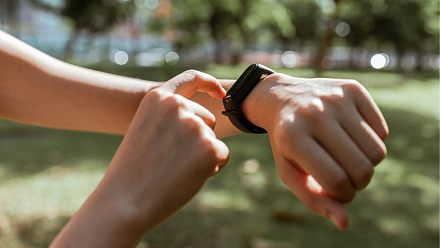
It doesn’t know how many steps I’ve taken, how well I slept or whether I’m stressed. It has never congratulated me for standing up, and it certainly doesn’t vibrate because somebody has sent “Good Morning” to a WhatsApp group.
And strangely, I rather like that.
But smartwatches are everywhere now, which makes me wonder: do we actually need them, or have we simply become used to having another screen attached to our bodies?
The Great Step Competition
From what I see around me, most people wearing smartwatches aren’t studying HRV, recovery scores or detailed health trends. Many probably couldn’t tell you what half those measurements mean.
What almost everybody understands is one wonderfully simple number:
Steps.
Somewhere along the way, walking became a competitive sport.
The watch says 9,643 steps at 10.30 at night and suddenly somebody is pacing around the bedroom because apparently going to sleep with 357 steps outstanding would be an admission of defeat.
Then there’s the colleague who has already done 12,000.
Now it’s personal.
I’m not mocking step tracking. If a number on your wrist encourages you to walk more, that’s a genuinely useful outcome. But it does make me wonder how many sophisticated smartwatch features people actually use.
There’s an Extraordinary Amount of Technology on That Wrist
Modern smartwatches can track heart rate, workouts, sleep and various other health and fitness measurements. Some can detect falls, provide emergency features, guide navigation, control music, handle calls and show messages without requiring you to take out your phone.
That’s impressive.
But ask the average person what they actually use every day and I suspect the list becomes much shorter.
What time is it?
Who’s calling?
How many steps have I done?
Perhaps we have recreated the ₹1 lakh smartphone situation on our wrists: an astonishing collection of technology, of which many of us regularly use about six things.
Did We Reduce Phone Distraction or Just Move It?
This is the part I’m less convinced about.
One argument for a smartwatch is that you don’t need to keep checking your phone. A quick glance at the wrist tells you whether something deserves your attention.
Fair enough.
But there’s another possibility.
We’ve taken all those interruptions we complained about on our phones and strapped them directly to our bodies.
Emails. Messages. News alerts. Shopping apps. Social media. Calendar reminders.
Buzz. Buzz. Buzz.
Your phone can at least be left on the table.
Your wrist tends to follow you around.
Of course, notifications can be controlled, and that’s probably the sensible way to use a smartwatch. Let important things reach your wrist and tell everything else to calm down.
And Then There’s My Analogue Watch
My analogue watch doesn’t count anything.
It doesn’t require a charger beside my bed. There are no activity rings to close and no software updates waiting.
I look at it, see the time and continue with whatever I was doing.
That doesn’t make it better than a smartwatch. It makes it a completely different kind of object.
A smartwatch isn’t really just a watch anymore. It’s a small computer, fitness tracker, notification screen and phone companion that happens to sit on your wrist.
And for some people, those functions are genuinely useful.
The question is whether you use them.
If your smartwatch helps you exercise more, navigate somewhere, notice an important health trend or simply keeps you from pulling out your phone fifty times a day, brilliant.
But if its main purpose is telling you that you’ve done 8,742 steps…
Well, another 1,258 and you can finally go to bed.