Deepinder Goyal Says Temple Could Check If Pilots Are Fit To Fly
The shocking Flydubai cockpit incident has raised fresh questions about how airlines assess the physical and mental fitness of pilots before they take control of a passenger aircraft. The incident has also brought an une
Ni Ayush Mukherjee··34K nabasa
Deepinder Goyal Says Temple Could Check If Pilots Are Fit To Fly
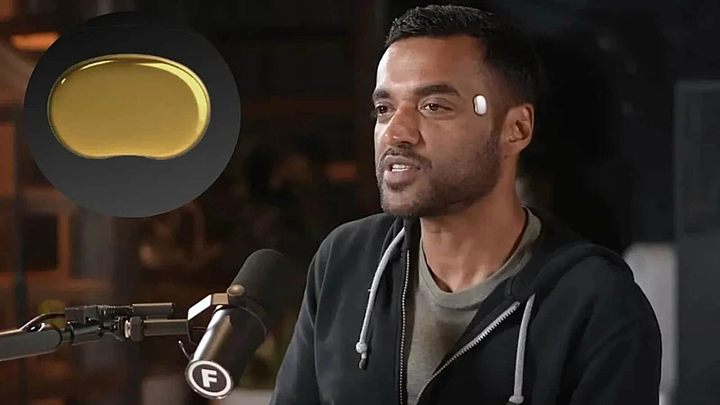
The shocking Flydubai cockpit incident has raised fresh questions about how airlines assess the physical and mental fitness of pilots before they take control of a passenger aircraft. The incident has also brought an unexpected Indian technology angle into focus, with Zomato founder Deepinder Goyal saying his Temple wearable could one day be used to assess whether pilots are fit to fly. Having said that Goyal directly did not mention anything about the Flydubai incident. But it is hard to ignore the timing of the comment.
Goyal made the comments while responding to users on X after announcing that pre-orders for Temple, his head-worn health-tracking device, are opening in India.
Deepinder Goyal Wants Temple On The Flight Deck
Goyal was responding to a suggestion that Temple could be useful for restaurant managers and chefs by monitoring stress and other physiological signals during particularly demanding periods.
He suggested a very different application. Goyal said he would want Temple to be used on pilots to check whether they were fit to fly. He also suggested that the Indian Air Force could potentially use the technology to identify which pilots were physically and physiologically best prepared to undertake a mission on a particular day.
The timing of the comment makes it particularly notable
The Flydubai incident has triggered questions about existing pilot screening and whether conventional checks can identify problems that may emerge after a pilot has already been cleared to fly. Aviation experts have pointed out that medical and security checks are extensive, but they are still essentially assessments conducted at particular points in time.
That is where continuous wearable monitoring could, in theory, become useful.
However, Temple should not currently be viewed as a system capable of determining whether a commercial pilot is medically or psychologically fit to fly. Goyal’s comments describe a potential future application rather than an existing certified aviation-safety function.
What Could Temple Actually Monitor?
Temple is designed to sit against the side of the head and continuously collect physiological signals.
The company has been particularly focused on a feature called BrainFlow, which is intended to track changes associated with blood flow in the brain.
Goyal recently disclosed details from Temple’s second validation study involving 60 participants and three physiological challenges: head-down tilt, stand-to-squat and stand-to-supine.
According to results shared by Temple, BrainFlow showed correlations ranging from 0.84 to 0.91 with changes in brain blood volume measured using time-domain NIRS. The strongest result came during the head-down tilt test, where the reported correlation with brain blood volume was 0.91, compared with 0.49 for scalp blood volume.
The study has been published as a preprint and submitted for peer review.
It is important to understand what that means.
The results do not establish that Temple can diagnose a pilot, determine whether someone is psychologically stable or independently certify that a person is safe to operate an aircraft. They show a correlation between Temple’s BrainFlow measurements and physiological changes measured using a research-grade reference technology.
That distinction is particularly important when discussing something as safety-critical as aviation.
Could A Wearable Help Detect When A Pilot Is Not At Their Best?
This is where the idea becomes more interesting. A pilot’s ability to safely operate an aircraft can potentially be affected by factors such as fatigue, dehydration, stress and sleep deprivation.
A wearable that continuously monitors physiological signals could theoretically provide an additional layer of information before or during a flight.
Instead of relying exclusively on a periodic medical examination, an airline could potentially have access to a longer-term picture of a pilot’s physiological state.
That could mean identifying unusual changes from an individual’s normal baseline rather than attempting to make a medical judgement from a single measurement.
But that would require considerably more research and regulatory validation before such a system could be used for operational decisions.
Temple’s current research does not establish that capability.
Temple’s BrainFlow Research Is Still At An Early Stage
Temple says its second BrainFlow validation study is one of two recent validation efforts. The company previously compared BrainFlow against transcranial Doppler, a clinical method used to assess cerebral blood-flow velocity.
In that earlier study involving 23 healthy adults, Temple reported a within-subject temporal correlation of roughly 0.8 with middle cerebral artery velocity under the tested conditions. The company has described both studies as early validation work and has encouraged independent researchers to replicate its findings.
The newer NIRS study is particularly interesting because time-domain NIRS can distinguish blood-volume changes in the brain from those in the scalp.
But the evidence is still based on relatively small studies involving healthy participants and controlled physiological challenges.
That is very different from demonstrating that Temple can identify fatigue, impaired judgement or psychological instability in working pilots.