ChatGPT vs Gemini vs Qwen: How To Use The New 'Chinese' AI Model, Pricing And All Details
Qwen has become one of the most talked-about AI model families of 2026, and the claim that it “beats Gemini and ChatGPT in coding” is circulating widely. The claim traces back to a real result, just not a coding one. Qwe
Ni Ayush Mukherjee··32K nabasa
ChatGPT vs Gemini vs Qwen: How To Use The New 'Chinese' AI Model, Pricing And All Details
Qwen has become one of the most talked-about AI model families of 2026, and the claim that it “beats Gemini and ChatGPT in coding” is circulating widely. The claim traces back to a real result, just not a coding one. Qwen3-Max-Thinking outperformed Gemini 3 Pro and GPT-5.2 on Humanity’s Last Exam, a demanding general reasoning and knowledge benchmark, when paired with search tools.
Model
DeepSWE score
GPT-5.6 Sol
73
Gemini 5
70
Claude Opus 4.8
59
Qwen 3.8 Max
56.6
An earlier independent evaluation from 16x Eval reached a similar conclusion about the Qwen3 Coder generation: Gemini 2.5 Pro beat it overall on coding tasks, even though Qwen3 Coder matched or exceeded it on some narrower, concise-code tasks. Qwen has also been described as trailing the very top closed models, GPT and Claude’s frontier tiers, by a real margin on raw coding capability.
Where Qwen’s coding-specific models earn genuine praise is different: cost, openness and being good enough for the bulk of everyday work. One widely cited developer piece calls the Qwen family “the open-source story of 2026,” noting Qwen3-Coder became the world’s most downloaded AI system by January 2026, not because it tops the leaderboard, but because a huge share of teams now run 60 to 80 percent of their coding-agent traffic on models like it locally, only escalating the genuinely hard 20 percent to a frontier API. That is a real and significant achievement. It is a different claim from “beats Gemini and ChatGPT.”
What is Qwen?
Qwen is a family of AI models developed by Alibaba Cloud, spanning general-purpose chat models, dedicated coding models, and specialised variants for vision, audio and reasoning. Unlike ChatGPT or Gemini, most of the Qwen lineup is released as open weights, meaning the underlying model files are publicly downloadable rather than accessible only through a company’s own servers.
Tier
What it’s for
Qwen-Flash / Qwen-Turbo
Cheapest, fastest, for high-volume simple tasks
Qwen-Plus
Mid-tier, the value option for most production use
Qwen3-Max / Qwen3.8-Max
Flagship general-purpose reasoning model
Qwen3-Coder / Qwen3-Coder-Next
Dedicated coding and agentic-coding model
Qwen-VL
Vision-language, for image and chart analysis
Qwen-Audio
Speech transcription and audio understanding
How To Actually Use It
For casual use: Qwen Chat
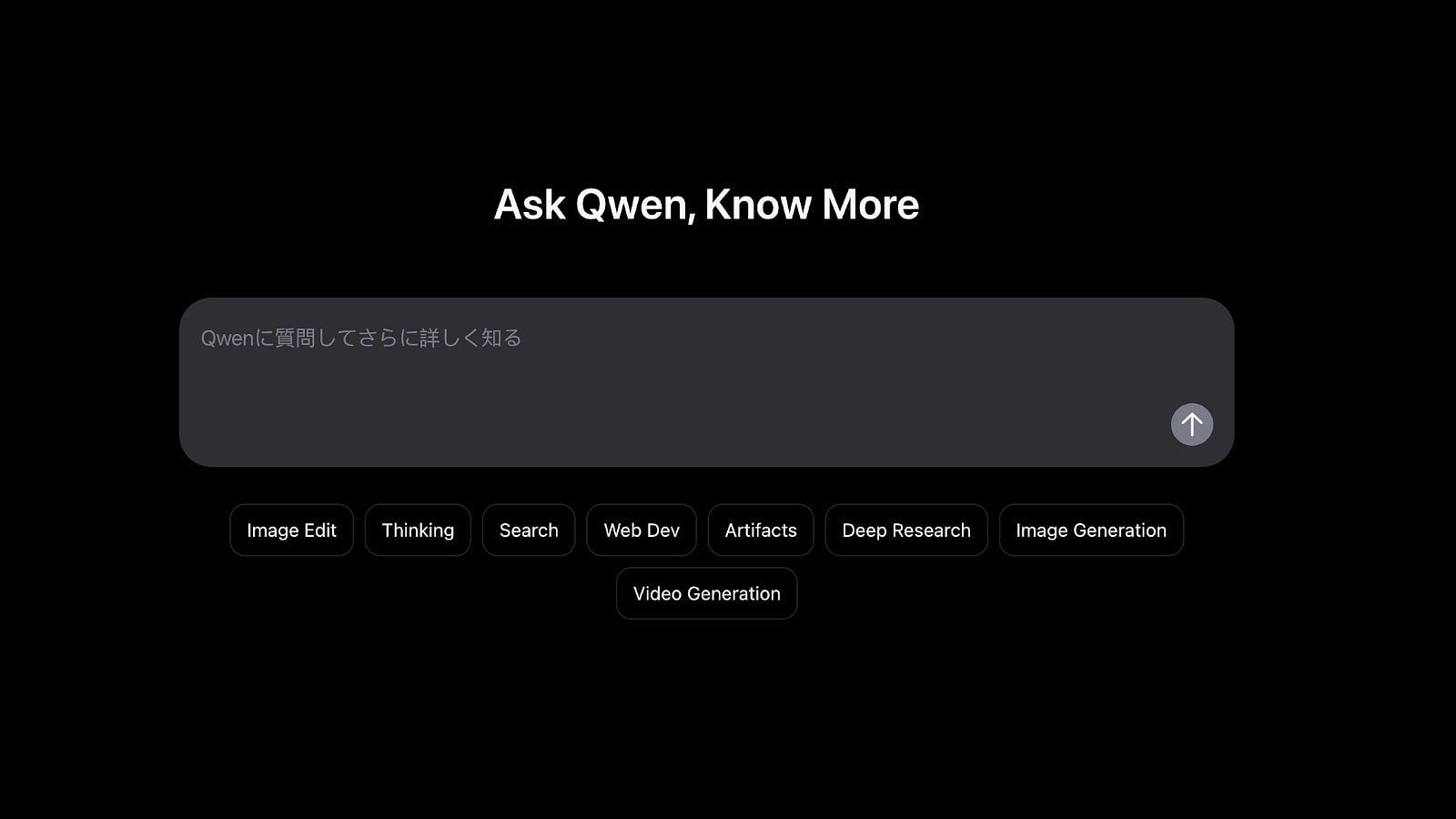
The simplest route is chat.qwen.ai, Alibaba’s free consumer chat interface. No payment details are required to start, it covers text, image and document input, and it gives access to the flagship model family without a subscription. There is also an official mobile app.
Unlike ChatGPT Plus or Claude Pro, Qwen currently has no public, stable consumer subscription tier layered on top of the free chat product. As of mid-August 2026, independent pricing trackers checking Qwen’s own product pages found no published recurring subscription price for the chat product, only the free tier and the separate developer API.
For developers: the API via Alibaba Cloud Model Studio
Developers building applications use Alibaba Cloud’s Model Studio (formerly called DashScope), billed per token. New accounts get a free onboarding quota, roughly 1 million tokens per eligible model on the international Singapore endpoint, valid for 90 days. Because the quota applies per model rather than as one shared pool, testing across the many Qwen variants can add up to a genuinely large free evaluation window. Note that a broader free-tier programme that existed earlier was discontinued in April 2026; what remains is this onboarding trial rather than an ongoing free allowance.
For coding specifically: Qwen Code
Alibaba has released Qwen Code, a command-line coding agent adapted from Google’s Gemini Code, designed to integrate Qwen3-Coder directly into a developer’s existing workflow rather than requiring a separate chat window.
For self-hosting: download the weights
Because most Qwen models are released under permissive licences, primarily Apache 2.0, you can download the model files from Hugging Face and run them on your own hardware entirely free of per-token charges. Smaller variants run on consumer-grade GPUs; the larger Max-tier models need substantial cloud infrastructure. Third-party hosts including Together AI, DeepInfra, Groq and Morph also offer hosted inference on open-weight Qwen models at their own rates, though note that the proprietary flagship models, Qwen3.8-Max among them, are not available through these third parties and remain exclusive to Alibaba Cloud.
Pricing: Where Qwen Genuinely Wins
Model
Input, per million tokens
Output, per million tokens
Qwen-Flash
$0.05
$0.40
Qwen-Turbo
$0.05
$0.20
Qwen-Plus
$0.40
$1.20
Qwen3.7-Max (promotional)
$1.25
$3.75
Qwen3.8-Max
$2.00
$6.00
Qwen3-Max-Thinking
$1.20 (under 32k context)
$6.00
How that compares to the competition
Model
Input, per million tokens
Output, per million tokens
Qwen-Plus
$0.40
$1.20
Claude Opus 4.8
$5.00
$25.00
Claude Fable 5
$10.00
$50.00
DeepSeek V4 Flash (Qwen’s closest open-weight rival, via Morph)
$0.079
$0.278
GLM-5.2 (via Morph)
$0.8415
$3.1365
At the mid-tier, Qwen-Plus runs roughly nine times cheaper than Claude Opus 4.8 for output tokens, for tasks where the quality gap between them is often negligible. That is the honest version of Qwen’s pricing pitch, and it is a genuinely strong one. It is worth noting DeepSeek’s API is often slightly cheaper than Qwen’s at the equivalent tier, so Qwen is not automatically the cheapest option in every category, just consistently and dramatically cheaper than the major closed US labs.
At the flagship Max tier, Qwen’s pricing climbs toward the same territory as Western frontier models rather than staying dramatically cheaper. Qwen3.8-Max at $2.00/$6.00 is not in a different universe from some competitor pricing once you’re comparing top-tier reasoning models against top-tier reasoning models. The savings are largest and most consistent in the low and mid tiers, not automatically everywhere.
Qwen’s Advantages
Open weights. This is the actual differentiator against ChatGPT and Claude, neither of which publishes model weights. You can inspect, modify and self-host most Qwen models, which matters enormously for regulated industries, privacy-sensitive workloads, or anyone who wants zero dependency on a vendor’s uptime and pricing decisions.
Cost at the low and mid tiers. For high-volume, moderate-complexity tasks, autocomplete, drafting, summarisation, routine code generation, Qwen’s per-token cost makes it a rational default even when a frontier model would technically produce marginally better output.
Strong multilingual performance, particularly in Chinese and other Asian languages, where it has a well-documented edge over English-first competitors.
Qwen’s Limitations
Frontier coding tasks. For the hardest coding problems, deep architectural reasoning, complex multi-file refactors, genuinely novel problems, the leading closed models still measure ahead on the benchmarks built to test exactly that.
Data residency. Using Qwen through Alibaba Cloud’s hosted API routes data through China-jurisdiction servers, which will be a disqualifying factor for regulated industries or any organisation with data sovereignty requirements. Self-hosting the open-weight models avoids this entirely, at the cost of managing your own infrastructure.
No stable consumer subscription. If you want a fixed monthly price for heavy personal use the way ChatGPT Plus or Claude Pro offer, Qwen does not currently have a clearly published equivalent product, which makes budgeting for heavy individual use less predictable than with its Western competitors.