AI Cameras Can't See You If You Wear This Strange Hawaiian Shirt
A brightly coloured Hawaiian shirt may not seem like something capable of challenging artificial intelligence. But one unusual design from Berlin is being used to demonstrate just how differently humans and AI-powered ca
Ni Ayush Mukherjee··46K nabasa
AI Cameras Can't See You If You Wear This Strange Hawaiian Shirt
A brightly coloured Hawaiian shirt may not seem like something capable of challenging artificial intelligence. But one unusual design from Berlin is being used to demonstrate just how differently humans and AI-powered cameras can interpret the same scene.
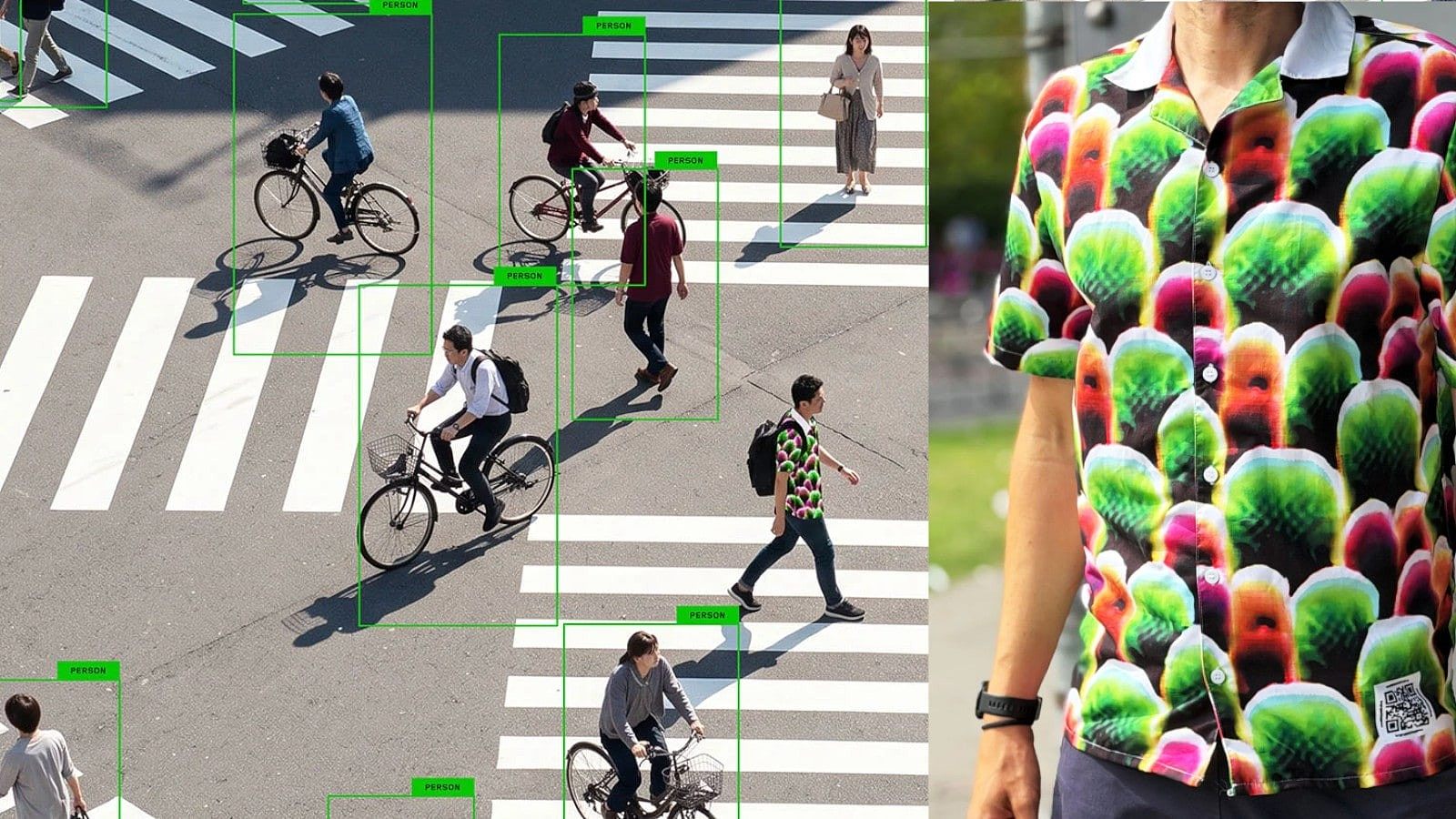
Digital artist Simon Weckert created a garment called Digital Camouflage, featuring an intentionally chaotic mix of colours, shapes and patterns. While the design is clearly visible to the human eye, it can interfere with the way an object-detection system identifies the person wearing it.
The project highlights an increasingly important question as AI-powered cameras become more common: if an algorithm learns to recognise people from patterns in images, what happens when those patterns are deliberately disrupted?
The Shirt Is Not Designed To Hide A Person From Humans
Digital Camouflage does not work like traditional camouflage. The wearer is not blending into a wall, tree or other background. In fact, the shirt is deliberately eye-catching.
Its purpose is to interfere with the visual features that an AI model may use when attempting to identify a human figure.
Computer-vision systems analyse images by looking for patterns learned during training. Depending on the system, these can include shapes, edges, body proportions and other visual features associated with people and objects.
Weckert’s idea was to manipulate those signals rather than simply make the wearer visually blend into their surroundings.
The result is a shirt that looks bizarre to people but can produce a very different response from a machine-learning model.
AI Was Used To Help Design The Anti-AI Pattern
One of the most interesting aspects of the project is that artificial intelligence was involved in creating the pattern intended to confuse another AI system.
Weckert used an adversarial approach, repeatedly testing different visual patterns to determine which ones could interfere with object detection.
The process is important because the weaknesses of a computer-vision model are not necessarily obvious to a human designer. A pattern that looks random to us may contain exactly the combination of visual signals capable of changing an AI model’s prediction.
For the project, Weckert tested Digital Camouflage with YOLO, an open-source family of real-time object-detection models.
This created an unusual feedback loop: AI helped identify the visual patterns that could make it harder for another AI system to recognise a person.
Why The Pattern Can Confuse Computer Vision
The human brain is extremely good at recognising people even when their appearance is partially obscured or distorted. We can usually identify a head, shoulders, arms and legs almost instantly. AI object detectors approach the problem differently. They rely on learned statistical relationships between visual features and the objects they were trained to recognise.
Digital Camouflage attempts to disrupt those relationships.
The shirt’s strong colour changes and overlapping shapes create a large amount of visual information. The resulting pattern can interfere with the continuous outline that a detector may expect when identifying a human figure.
That is why the project is more interesting than simply calling the shirt “invisible”. The person has not disappeared. The machine’s interpretation of the image has changed.
It Does Not Mean Every Security Camera Can Be Fooled
There is an important limitation to the experiment. Digital Camouflage should not be treated as a universal method for defeating surveillance cameras. Weckert’s demonstrations use a generic YOLO-based object-detection system. Different surveillance products can use different cameras, algorithms, training data and detection techniques.
A pattern capable of affecting one model may have little or no impact on another. It is also important to distinguish between object detection and technologies such as facial recognition, thermal imaging and other specialised surveillance systems. They do not necessarily rely on the same visual signals. In other words, wearing the shirt does not make someone invisible to CCTV.
Instead, the experiment demonstrates something more fundamental: AI vision has weaknesses that can be very difficult for humans to predict simply by looking at an image.
This Is Why Adversarial Attacks Matter For AI
The technology behind the shirt belongs to a wider area of computer-science research involving adversarial examples.
Researchers have demonstrated that carefully modified images can sometimes cause machine-learning models to make incorrect classifications, even though the changes may appear insignificant to humans.
Digital Camouflage turns that technical concept into something people can see and understand. Instead of presenting an abstract example involving pixels and neural networks, the project uses a physical shirt. The wearer remains obvious to anyone standing nearby, while the AI system can potentially struggle with the same image.
That difference matters as more cameras gain the ability to automatically identify objects and people rather than simply record video.
The Artist Has Challenged Digital Systems Before
This is also not Weckert’s first project involving technology and machine perception. He previously attracted widespread attention with an experiment involving 99 smartphones and Google Maps. By carrying the phones in a small wagon through Berlin, he created a simulated concentration of devices that caused Google Maps to display a traffic jam.
The project demonstrated how digital systems can interpret unusual collections of data as something different from what is actually happening in the physical world.
Digital Camouflage explores a similar idea from another direction. Instead of manipulating location data, the artist is manipulating visual information. And instead of asking whether a digital map can be fooled, the project asks whether a computer-vision system can be made to misunderstand what its camera is seeing.