Indian-Origin Techie Loses Over ₹2 Crore After Stock Trading Turns Into Addiction: 'I Couldn’t Stop'
An Indian-origin software developer has revealed how his attempt to make money through stock trading spiralled into a years-long addiction, eventually costing him more than ₹2 crore. Akshay Sapra, 31, told Business Insid
Ni Buzz Staff··68K nabasa
Indian-Origin Techie Loses Over ₹2 Crore After Stock Trading Turns Into Addiction: 'I Couldn’t Stop'
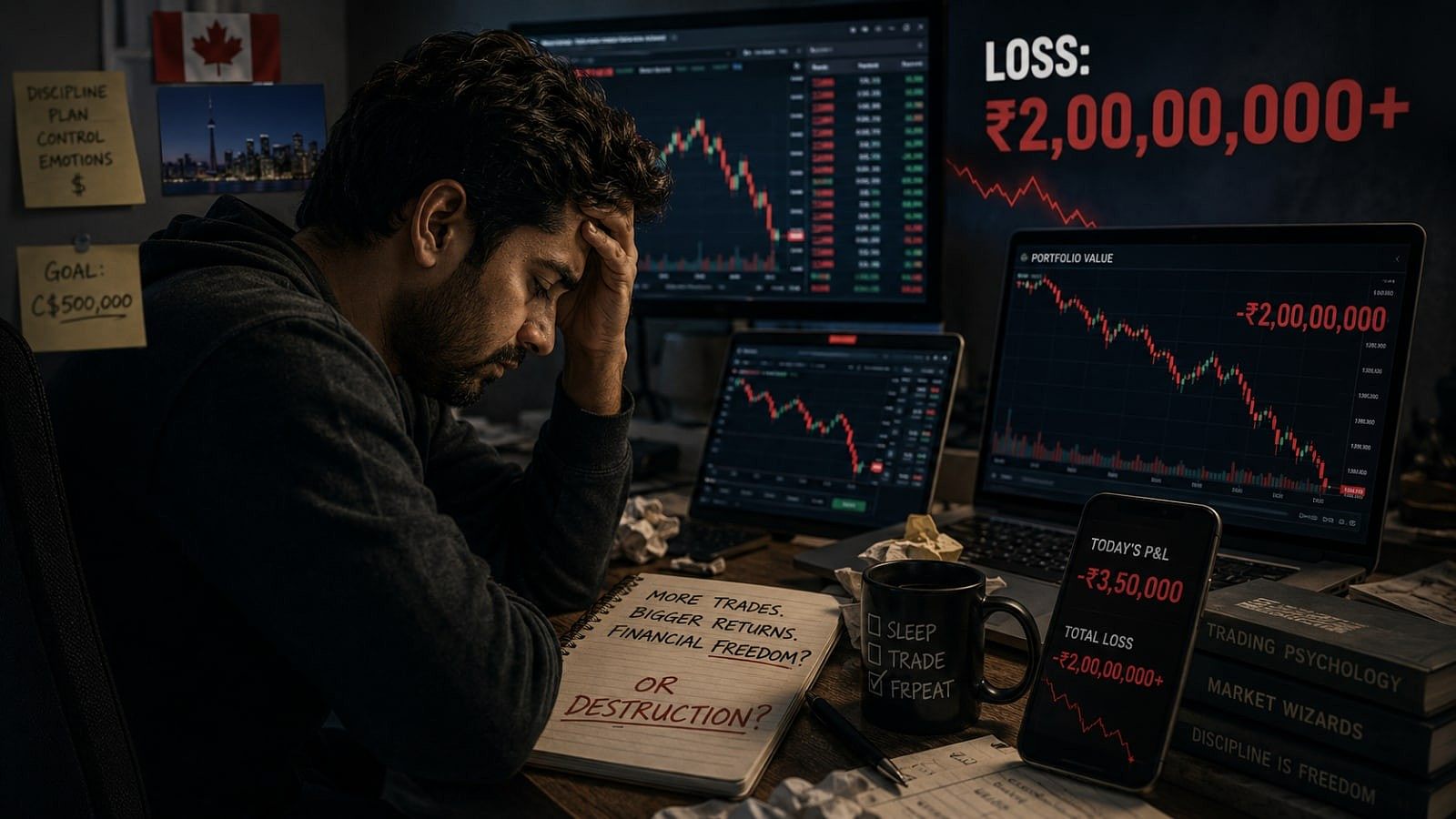
An Indian-origin software developer has revealed how his attempt to make money through stock trading spiralled into a years-long addiction, eventually costing him more than ₹2 crore. Akshay Sapra, 31, told Business Insider that the thrill of quick profits kept pushing him towards bigger and riskier bets, even after suffering major losses.
Sapra was born in India and moved to Canada with his parents when he was four. His family initially faced financial difficulties, with his parents taking up various jobs, including moving boxes, driving a taxi and working as a security guard. His father, a veterinarian, eventually spent nearly a decade building a successful veterinary practice in Kelowna, Canada.
Looking back, Sapra believes growing up amid financial uncertainty influenced his relationship with money. He said his parents’ “scarcity mindset” stayed with him even after the family became financially stable. He also cited his mother’s battle with a brain tumour, childhood trauma and bullying as experiences that affected his mental health.
Sapra first began trading stocks in 2017 while he was in college. A university friend told him that marijuana would soon be legalised in Canada and encouraged him to invest in marijuana companies.
Although the stocks initially rose, Sapra said he failed to make significant profits because he kept buying and selling in an attempt to predict short-term market movements. He eventually realised that he had what he described as “paper hands” and struggled to hold investments for the long term.
Trading soon began taking over his daily routine. He recalled sitting on his laptop and trading during college lectures. “At first, I lost a lot of the money, which came from my campus jobs and professional internships. But I learned and started to make money,” he said.
After graduating, Sapra landed a software engineering job in 2018. His trading activity initially reduced, with occasional checks of his investments during work breaks. However, a successful bet involving Meta changed his perception of trading.
He recalled betting during his lunch break that Meta’s stock would fall ahead of an earnings announcement. When the company reported disappointing results and his position generated a substantial profit, the experience reinforced the thrill he associated with trading.
Eventually, Sapra left his software engineering job and began delivering for Uber while spending much of his time trading. Over the next four years, he described his finances as a cycle of major gains followed by significant losses.
Three-Week Gambling Addiction Programme
His trading habit eventually became so severe that Sapra enrolled in a three-week gambling addiction programme. He was not allowed access to his phone during treatment, but even then, trading remained part of his life.
His cryptocurrency trading bot, which he had developed himself, continued making trades while he was undergoing treatment.
“I eventually went to a three-week gambling addiction program for my stock trading habit, without access to my phone. Ironically, my bot continued to trade,” he wrote in his Business Insider essay.
Sapra said fellow patients warned him that he would eventually return to trading. “While I was in treatment, some other patients told me I would go back to trading. They were right,” he wrote.
After leaving the programme, he returned to trading and began taking larger risks using his Uber earnings, loans and lines of credit.
Sapra said he eventually made more than C$1.7 million through trades involving companies including AMD and Nvidia. Initially, his target was C$500,000, which he believed would be enough for him to stop trading, find a job and purchase a house.
But as his account approached C$2 million, his ambitions changed. He began factoring in taxes and Canada’s high housing costs, causing his original financial target to move further away.
The larger his trades became, the greater the potential losses. At one point, Sapra said he was trading for as many as 16 hours a day, often from his bed using an iPhone. Some days, he claimed, he could make around $15,000 with very little effort.
However, the gains did not last. By the end of 2025, he said he had lost almost all of his accumulated profits. An investment in Beyond Meat alone resulted in a loss of nearly $200,000.
Instead of stepping away, Sapra decided he needed to make another C$400,000 to recover what he considered lost time and money. That decision led to even riskier trades.
“Within a week or two of riskier and riskier trading, I had lost it all,” he said, acknowledging that the pattern continued.
SpaceX Bets Cost Him More Than $350,000
One of his most recent trading episodes involved SpaceX, which Sapra described as his favourite company because of its scientific ambitions and vision of making humanity interplanetary.
Believing that the company’s inclusion in the Nasdaq 100 would create substantial buying pressure, Sapra made a large bet involving thousands of shares and call options.
The strategy backfired. He said SpaceX fell from $158.92 at market open to $149.47, costing him more than $200,000. He then attempted to profit from a further decline by purchasing 2,200 put options, but that trade resulted in additional losses.
According to Sapra, he ultimately lost more than $350,000 on SpaceX trades in a single week. He later managed to make more than $300,000 through another set of put options, only to lose those gains again within days.
“In just a month, I had lost, made, and lost again over $300,000 (₹2 crore) betting on SpaceX,” he said.
Despite everything, Sapra does not appear ready to give up trading entirely. He now plans to launch a YouTube channel documenting every trade publicly, hoping that the transparency will make him more accountable.
“There’s a skill involved with what I do, but it veers into gambling territory far too often,” Sapra said.