Davidoff Coffee Candies Are Fake? Brand Responds After Creator Spots Rs 250 Candy Cups In Mumbai
A familiar premium brand name can make even the most ordinary product look like a luxury purchase. But what happens when that name appears on a product that the brand itself has never authorised? A content creator’s disc
Ni Mallika Bhagat··87K nabasa
Davidoff Coffee Candies Are Fake? Brand Responds After Creator Spots Rs 250 Candy Cups In Mumbai
A familiar premium brand name can make even the most ordinary product look like a luxury purchase. But what happens when that name appears on a product that the brand itself has never authorised? A content creator’s discovery of Davidoff-branded coffee candies being sold at a Mumbai supermarket has sparked a conversation about counterfeit branding, misleading packaging and how easily consumers can be influenced by familiar names.
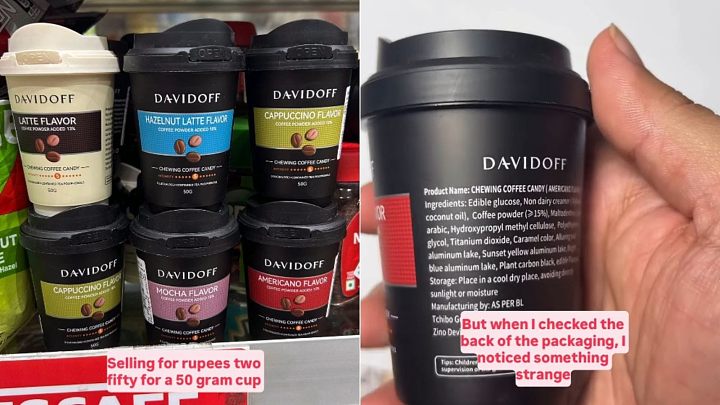
Instagram creator The Quip Drip (@thequipdrip) recently shared an investigation into the coffee candies, which were being sold for Rs 250 for a 50-gram cup at a supermarket in Mumbai. The packaging initially caught his attention, and he assumed it was an interesting brand extension by Davidoff, the premium coffee brand. However, a closer look raised questions about the product’s authenticity.
In his video, the creator said, “These popular Davidoff coffee candies are fake and I got confirmation from Davidoff themselves.”
He explained that he had spotted the candies selling quickly at a Mumbai supermarket, where a retailer told him they were doing particularly well. However, when he examined the packaging more closely, he noticed that the manufacturer’s name was missing and that the brand founder’s name, Zino Davidoff, appeared to be misspelled. That was enough to make him investigate further.
Davidoff Coffee Candies: What Did The Brand Say?
The creator said he spoke to retailers, looked into similar products being sold online and eventually contacted Davidoff Café in Germany through Instagram to verify whether the candies were an official product. According to the response he received from the company, the candies were unlicensed, the manufacturer had no affiliation with Davidoff and the product violated the brand’s trademark.
The creator also spoke to another retailer who told him that he had stopped stocking the candies after hearing concerns about their authenticity from other retailers. His investigation also led him to similar-looking coffee candies listed on Amazon by different sellers. Interestingly, these products appeared to have the Davidoff name removed from their packaging.
The discovery raises questions about how products using familiar brand imagery can find their way into retail stores and online marketplaces, potentially confusing buyers who assume they are purchasing an official product.
Why Were People Buying The Rs 250 Coffee Candies?
One of the more interesting aspects of the investigation was the creator’s observation about the product’s appeal. He decided to try the candies himself and was not particularly impressed with their taste. “I tried the candy myself and frankly, it doesn’t even taste good,” he said. According to him, much of the product’s appeal appeared to come from the Davidoff name rather than the candy itself. “A big part of its appeal appears to come from the Davidoff name. Consumers recognise it as a premium coffee brand and that familiarity can make an otherwise ordinary coffee candy seem more desirable,” he explained.
He added: “That’s the power of brand equity and how it can be exploited.”
The observation touches upon a larger problem in consumer markets. A familiar logo, colour palette or brand name can create an impression of quality even before a customer has checked the ingredients, manufacturer or product details. In this case, the association with a premium coffee brand may have been enough to make shoppers pick up a small cup of candies priced at Rs 250.
View this post on Instagram
A post shared by The Quip Drip (@thequipdrip)
‘I Felt Scammed’: Internet Reacts To Davidoff Candy Controversy
The video has also prompted several consumers to share their experiences, with some saying they had purchased the candies believing they were associated with the premium coffee brand. One user wrote, “Bro, i haven’t felt scammed like this ever. Thinking back, i realise i didnt actually like this because they have a weird chemical aftertaste to it. Thanks for the info. Much appreciated.”
Another person said the packaging had initially convinced them to consider buying the candies as Diwali gifts. “Even I loved the packaging and was about to stock it up for Diwali Gifting,” the user commented, adding that they had noticed inconsistent pricing across different stores in Mumbai and eventually decided against purchasing them.
The ingredient list also became a talking point in the comments. Some buyers pointed out the presence of titanium dioxide, with one user expressing surprise at seeing an ingredient they associated with mineral sunscreens. However, the presence of titanium dioxide alone does not establish that a food product is unsafe. Its regulatory status and permitted use depend on the food category and applicable standards.
Disclaimer: This article is based on user-generated content. The claims made in the original post have not been independently verified by News18.