Bengaluru Founder Reacts To UPI MDR Move: ‘There Lies A Learning…’
The government’s decision to bring a merchant discount rate (MDR) to some UPI payments has started a debate over who will actually bear the extra cost. Under the new rule, a 0.4 per cent MDR will apply to UPI payments ab
Ni Buzz Staff··95K nabasa
Bengaluru Founder Reacts To UPI MDR Move: ‘There Lies A Learning…’
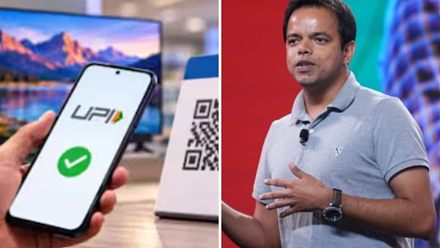
The government’s decision to bring a merchant discount rate (MDR) to some UPI payments has started a debate over who will actually bear the extra cost. Under the new rule, a 0.4 per cent MDR will apply to UPI payments above ₹2,000 made to merchants.
While the government has said customers should not be charged for the MDR, some business owners and users are worried that merchants could find other ways to recover the amount. Bengaluru-based entrepreneur Siddharth Dialani has shared why he believes customers could eventually have to pay more.
MDR Will Apply To Some UPI Payments
MDR is a fee paid by merchants to banks and payment firms when customers make digital payments. UPI transactions have not had MDR since 2020, as the policy was aimed at encouraging people to use digital payments instead of cash.
The government notification now says that a “nominal MDR of 0.4% will be levied on P2M transactions above ₹2,000”. The change has led to questions about whether businesses will absorb the fee or pass it on in some other form.
Dialani, co-founder and CEO of BharatAgri, said his concern comes from what happened in the food delivery industry.
Dialani Points To Swiggy And Zomato
Dialani referred to the early days of Swiggy and Zomato to explain his argument. He said food delivery platforms expected restaurants to offer discounts because online orders brought more business and did not require the same costs as dine-in customers.
“When Swiggy and Zomato started food delivery, they expected restaurants to give them discounts as (1) they brought more business to restaurants (2) those online orders didn’t need tables, air conditioning, waiters, etc,” the Bengaluru-based founder said.
According to Dialani, restaurants did not offer the expected discounts. This meant the food delivery companies had to find other ways to make money.
“What ended up happening was that restaurants charged the same amount to these aggregators as dine-in orders. So, these aggregators had to introduce price mark-ups, platform fee, delivery fee, etc. in order to earn money. Customers ended up paying those additional fees, as restaurants didn’t pass on the savings from online orders,” he wrote on X.
He Says UPI Could Follow The Same Pattern
Dialani said he sees a similar possibility with the new MDR on UPI payments. In his view, merchants and banks may not want to absorb the cost themselves.
“There lies a learning for MDR on UPI. At the end of it, customers will end up paying the fee, as merchants and banks would refuse to pass on the savings from cash handling,” he concluded.
Government Says Customers Cannot Be Charged
The Centre has maintained that UPI payments will remain free for consumers.
Union Minister for Communications Jyotiraditya M Scindia also said merchants cannot transfer the MDR cost to customers. He said any attempt to recover the MDR from customers would violate the law and amount to a criminal offence.
The Opposition, meanwhile, has criticised the decision, calling it a “betrayal” and a “UPI tax”. It has also alleged that the move was made under pressure from the US and would benefit foreign payment companies.
When Swiggy and Zomato started food delivery, they expected restaurants to give them discounts as
– they brought more business to restaurants
– those online orders didn’t need tables, air conditioning, waiters, etc.
But what ended up happening was that restaurants charged the…
— Siddharth Dialani (@siddharth_iitm) September 16, 2026
Users Question Who Will Bear The Cost
Despite the government’s position, some users responding to Dialani’s post said they remain doubtful about how the cost will work in practice.
“This “merchant will bear costs” take is such a mid-wit take. All costs are terminal on the final customer,” wrote one X user while responding to Siddharth Dialani’s post.
“The customer has to always pay. There’s no way out of it,” another agreed.
Disclaimer: This article is based on user-generated content. The claims made in the original post have not been independently verified by News18.