What Is J&K’s 2000 Autonomy Resolution That Has Sparked A Fresh Political Row?
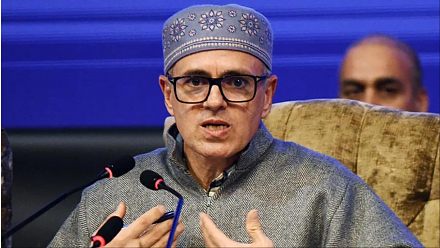
Jammu and Kashmir Chief Minister Omar Abdullah on Friday moved a fresh resolution in the Legislative Assembly calling for the immediate and urgent restoration of full statehood to Jammu and Kashmir, but a reference to a
Ni Ieshan Wani··196K nabasa
What Is J&K’s 2000 Autonomy Resolution That Has Sparked A Fresh Political Row?
Jammu and Kashmir Chief Minister Omar Abdullah on Friday moved a fresh resolution in the Legislative Assembly calling for the immediate and urgent restoration of full statehood to Jammu and Kashmir, but a reference to a 26-year-old resolution on greater autonomy triggered a sharp confrontation between the ruling National Conference and BJP legislators.
The resolution, listed as a supplementary item of business, says that “in addition to” the resolutions passed by the House on June 26, 2000, and November 6, 2024, the Assembly calls upon the Government of India to restore full statehood to Jammu and Kashmir and resolves that the resolution be forwarded to the Centre.
The wording became the flashpoint of Friday’s proceedings. BJP members objected specifically to the reference to the June 26, 2000, resolution, saying they would not allow a discussion on autonomy. BJP MLAs entered the Well of the House and tore copies of the resolution, leading to heated exchanges and an adjournment.
So, What Exactly Was The 2000 Resolution?
The June 26, 2000, resolution was not a statehood resolution. It was based on the report of the State Autonomy Committee (SAC) constituted by the then-Chief Minister Farooq Abdullah-led National Conference government.
The committee examined how Jammu and Kashmir’s constitutional relationship with the Union could be altered to restore what the report described as the State’s pre-1953 position, within the framework of the Instrument of Accession, the Constitution (Application to Jammu and Kashmir) Order, 1950, and the 1952 Delhi Agreement.
The Assembly adopted the SAC report on June 26, 2000, and asked the Union and State governments to take steps towards implementing it. The proposal sought to restore to J&K all subjects of governance except defence, foreign affairs, currency and communications.
In other words, the proposal envisaged a much more autonomous constitutional position for J&K, rather than merely restoring the status of a full-fledged state within the post-1953 constitutional framework. The report also sought changes in several constitutional provisions that had been extended to Jammu and Kashmir after 1953.
However, the resolution passed then was not accepted by the Union Cabinet.
On July 4, 2000, the Union Cabinet rejected the J&K Assembly’s autonomy resolution. The Ministry of Home Affairs’ annual report records that the Assembly had passed the resolution on June 26 and that the Cabinet subsequently decided not to accept it. The Centre argued that accepting it would reverse the constitutional evolution of J&K and affect the integration of the State with the rest of India.
The Cabinet’s decision specifically stated that the government did not accept the resolution endorsing the State Autonomy Committee report. It nevertheless said the Centre was willing to consider proposals for greater powers to the State government in areas where this could improve governance.
So, the 2000 resolution was passed by the J&K Assembly but rejected by the Union government. It was never implemented.
Why 1953 Is Important
The year 1953 is central to the autonomy debate because it marks the dismissal and arrest of Sheikh Abdullah as Prime Minister of Jammu and Kashmir. The autonomy report argued that, over subsequent decades, the Union had progressively extended constitutional provisions to J&K and that this had substantially reduced the autonomy envisaged in the earlier constitutional arrangement.
The 2000 proposal therefore sought to reverse a large part of that process.
Among the issues associated with the autonomy proposal were the distribution of legislative powers, the application of Union laws, emergency provisions, the role of the Governor, judicial powers and other constitutional arrangements.
It is important, however, not to describe the 2000 resolution simply as a resolution to “restore Article 370”. Its recommendations were broader and were framed around restoring the constitutional position that the committee believed existed before 1953.
The new resolution itself is primarily about statehood. But by saying it is being moved “in addition to” the 2000 and 2024 resolutions, the document places the latest demand alongside two earlier positions taken by the J&K Assembly.
The BJP interpreted the reference to the 2000 resolution as bringing the autonomy issue into the current proceedings. BJP legislators said they would not allow a discussion on autonomy and protested in the Well.
The National Conference, meanwhile, defended the reference. Omar Abdullah subsequently clarified that the new resolution does not replace, dilute or withdraw the earlier resolutions; rather, the new resolution is intended to stand on its own and specifically seek the restoration of full statehood.
That distinction is significant: the Assembly is not, through Friday’s resolution alone, re-adopting the 2000 autonomy report. The document explicitly says the statehood resolution is “in addition to” the earlier resolutions.
The other resolution mentioned in Friday’s document was passed by the J&K Assembly on November 6, 2024, shortly after the first Assembly elections since the 2019 constitutional changes.
That resolution was moved by then-Deputy Chief Minister Surinder Kumar Choudhary and called for dialogue between the Union government and elected representatives of Jammu and Kashmir on the restoration of special status and constitutional guarantees. It also expressed concern over the removal of special status.