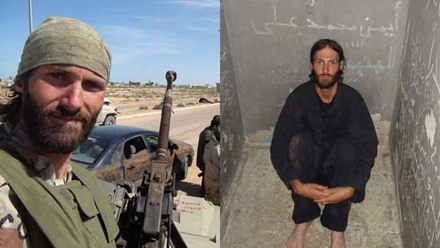
What Allowed VanDyke, 6 Ukrainians To Walk Free And Return Home? The UAPA Gap Behind Court’s Order
After nearly six months in custody, American national Matthew Aaron VanDyke and six Ukrainian co-accused can now leave India and return home, albeit only for a month and subject to a string of conditions imposed by a Del
Ni Pragati Ratti··189K nabasa
What Allowed VanDyke, 6 Ukrainians To Walk Free And Return Home? The UAPA Gap Behind Court’s Order
After nearly six months in custody, American national Matthew Aaron VanDyke and six Ukrainian co-accused can now leave India and return home, albeit only for a month and subject to a string of conditions imposed by a Delhi court.
The Special NIA Court’s order is significant because of what the National Investigation Agency has not charged the accused with in its first chargesheet. The NIA has filed a chargesheet against VanDyke and the six Ukrainians under provisions of the Immigration and Foreigners Act, 2025, but has not included offences under the Unlawful Activities (Prevention) Act, or UAPA. The agency has told the court that its investigation into the alleged UAPA offences is still continuing.
Read More: Myanmar Drone Training Camp: NIA Court Allows Matthew VanDyke, 6 Ukrainians To Travel Home For A Month
This distinction became crucial to VanDyke’s bail and, subsequently, his permission to travel abroad.
The UAPA Chargesheet That Never Came
VanDyke was arrested on March 13, 2026, along with six Ukrainian nationals, in a case concerning alleged links to a training mission involving Myanmar-based ethnic armed groups.
According to the NIA’s allegations, the seven had entered India in December 2025 and subsequently travelled towards Mizoram without the required Protected Area Permit or Restricted Area Permit. The agency alleged that they crossed into Myanmar and reached Victoria Camp, where they were supposed to participate in training involving drones, drone warfare, assembly and jamming technology. The NIA also alleged links between some of the Myanmar-based groups and insurgent organisations operating in India.
VanDyke was initially arrested under Section 18 of the UAPA, which deals with conspiracy or attempts to commit a terrorist act.
But when the NIA filed its first chargesheet on September 8, exactly when the 180-day investigation period expired, it invoked Sections 21 and 23 of the Immigration and Foreigners Act instead. The UAPA investigation was kept open for further probe. This created the legal opening for default bail.
Under the ordinary criminal procedure, an accused can become entitled to statutory or “default” bail when the investigating agency fails to complete its investigation and file the required chargesheet within the prescribed period.
For UAPA cases, Section 43D(2) modifies the ordinary rule and permits the period for completing the investigation to be extended to 180 days, subject to the statutory requirements. The Supreme Court has also recognised the importance of these procedural safeguards in protecting personal liberty.
In VanDyke’s case, the NIA had been granted an additional period of investigation, taking the permissible period to 180 days. But by September 8, the agency had not filed a UAPA chargesheet. Instead, it filed what the special court described as a “piecemeal” chargesheet limited to immigration offences, while retaining the UAPA probe for further investigation.
On September 18, the court granted VanDyke default bail. It subsequently held that the six Ukrainian co-accused were also entitled to similar relief under the law.
Importantly, default bail is not an acquittal. It does not mean the court has found that the allegations are false or that the UAPA investigation has been closed. The NIA can continue its investigation and take further legal steps in accordance with law.
Why Could Vandyke And Others Fly Home?
The second order, allowing VanDyke and the six Ukrainians to travel, turned on another important constitutional principle.
The court noted that the right to travel abroad is an extension of the fundamental right to life and personal liberty under Article 21. The Supreme Court has repeatedly recognised that the right to go abroad forms part of Article 21 and cannot be restricted through an unfair, arbitrary or unreasonable procedure.
But the court did not give VanDyke and the others an unrestricted right to leave India. Instead, it attempted to balance their liberty with the continuing investigation.
The court noted that the NIA itself had not said that the physical presence of VanDyke or the six co-accused would be required in India in the immediate future for completing the investigation. It also observed that the NIA would take some time to complete its probe and that the court could not direct the agency to finish that investigation within a particular period.
What The Court Has Allowed For VanDyke And Others
The court has allowed VanDyke to travel to the United States, while the six Ukrainian nationals can travel to Ukraine, for one month from the date they board their flights.
They have to return to India after the one-month period and inform the court of their return within 72 hours. They have also been directed to provide the NIA with their residential addresses, working mobile numbers and email addresses within 24 hours. They must cooperate with the investigation through video-conferencing or appear physically whenever required.
Their passports are to be released in accordance with the court’s directions.
The order also makes an important clarification: the court does not require their physical custody going forward merely because the UAPA investigation remains pending.
The case is therefore far from over. The NIA’s investigation into possible UAPA offences remains open, and a further or supplementary chargesheet could potentially follow if the agency collects sufficient evidence. The fact that UAPA provisions were not included in the first chargesheet was central to the default-bail issue, but it does not by itself prevent further investigation.
For now, VanDyke’s journey home is the result of a combination of factors including the expiry of the statutory investigation period, the absence of UAPA charges in the first chargesheet, his entitlement to default bail, and the court’s assessment that his immediate physical presence was not necessary for the continuing probe.
This means while he has not been cleared of the allegations, he has been released from custody and permitted temporary travel while the investigation continues.