Water, Power Crisis Ahead? Karnataka’s Reservoir Numbers Raise Fresh Questions
Karnataka’s four major Cauvery basin reservoirs are holding significantly less water than they did on the same day last year, with the sharp fall in storage coming amid a severe rainfall deficit across the state. The Kri
Ni Rohini Swamy··118K nabasa
Water, Power Crisis Ahead? Karnataka’s Reservoir Numbers Raise Fresh Questions
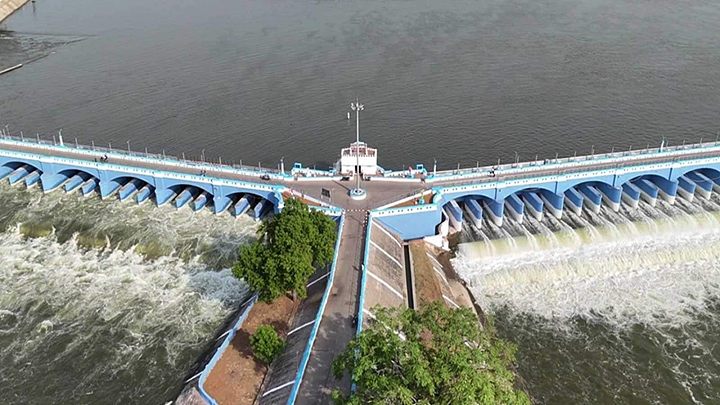
Karnataka’s four major Cauvery basin reservoirs are holding significantly less water than they did on the same day last year, with the sharp fall in storage coming amid a severe rainfall deficit across the state. The Krishna Raja Sagar, Kabini, Hemavati and Harangi reservoirs together are showing a marked year-on-year decline, raising concerns over drinking water availability, irrigation and hydropower generation in the months ahead.
The situation has prompted Karnataka Chief Minister DK Shivakumar to warn that the state could face a shortage of drinking water and electricity and ask people to be “mentally prepared”, even as he said the government was taking measures to manage the situation.
At the same time, Water Resources Minister N Cheluvarayaswamy has made a fresh push for the Mekedatu project, pointing out that around 112.88 TMC of surplus Cauvery water has flowed into the sea over the past five years and arguing that the project could provide storage capacity for at least 22 TMC of drinking water, particularly during drought years like this.
Cheluvarayaswamy, who chaired a review meeting of the Cauvery Neeravari Nigam on Wednesday, issued a stern warning to officials, directing them to step out of their offices, get into the field and address farmers’ and drinking water concerns, echoing what the Chief Minister has been saying, asking officials and ministers to hit the ground and report with factual numbers on the drought situation.
“Don’t sit in AC rooms and just crunch numbers. Go to the field and work,” Cheluvarayaswamy told officials, warning that those who failed to would even face suspension.
The reservoir numbers underline the pressure on the state.
The KRS reservoir, which has a gross capacity of 49.45 TMC, currently has 27.54 TMC, compared with 47.68 TMC on September 16 last year. Its live storage stands at 19.17 TMC, against 39.30 TMC during the corresponding period in 2025 — a reduction of nearly 51%.
Kabini, with a total capacity of 19.52 TMC, currently has 10.95 TMC of gross storage, against 18.23 TMC last year. Its live storage is just 1.14 TMC, compared with 8.42 TMC on the same date in 2025.
Hemavati currently has 19.49 TMC against its total gross capacity of around 37 TMC. On September 16 last year, the reservoir had 36.95 TMC. Its live storage has fallen to 15.12 TMC, from 31.58 TMC a year ago.
At Harangi, the current gross storage is 6.48 TMC, compared with 8.33 TMC last year, against a total capacity of 8.5 TMC. Its live storage is currently 5.73 TMC, against 7.58 TMC on September 16, 2025.
The flow realised at Biligundlu, the Cauvery measuring point on the Karnataka-Tamil Nadu border, between June 16 and September 14 this year was 37.531 TMC.
The reservoir position comes at a time when Karnataka is reporting a substantial shortfall in rainfall. Shivakumar has said the state is facing around a 60% rainfall deficit, with 178 taluks recording deficient rainfall.
Of these, 158 taluks have received very scanty rainfall and 20 have received no rainfall. The situation in Vijayanagara district is particularly severe, according to the government’s assessment.
Karnataka has so far declared 101 taluks drought-hit in the first phase, with the possibility of adding more areas after the ongoing assessment is completed.
The government is now preparing for a difficult water situation, with the immediate challenge of protecting drinking water supplies and managing irrigation and power requirements, even as it pushes for Mekedatu as a longer-term storage solution.
Shivakumar has also written to Prime Minister Narendra Modi seeking the deployment of a central team to assess the drought situation, while the state government is preparing a detailed report on the drought situation to be submitted to the Centre.
Earlier, Shivakumar had directed officials to prepare a report on rainfall deficit and drought conditions within 15 days, based on spot inspections rather than reports prepared from offices. He wanted the report to ensure the central team had a clear and correct picture of the drought situation in the state.
District in-charge ministers had also been asked to visit their respective districts and assess the situation on the ground. Shivakumar has insisted that the assessment report by the state committee-led teams should be based on field inspections and actual conditions in the affected areas.
Shivakumar has also said the government was more concerned about the situation than the Opposition and urged political parties not to use the drought for political purposes.
“Rain is in deficit and I am requesting that there is no point in holding protests for political purposes. The government is more concerned than you. Some people and Opposition are trying to use this politically; I request them not to,” he said earlier.
With reservoir levels in the red zone, the government is also focusing on how available water is allocated between drinking water and irrigation.
Shivakumar has instructed water committees to regularly inform farmers about reservoir levels and the availability of water before they sow crops. The government has cautioned that if farmers sow crops expecting subsequent water releases, meeting irrigation requirements could become difficult if reservoir levels decline further.
The state had earlier released Rs 379 crore for drinking water purposes, including Rs 1 crore each for rural assembly constituencies.
Hydroelectric power generation has declined by around 23%, according to the state government, as lower rainfall has reduced inflows into reservoirs. The fall in hydropower generation comes at a time when the state is dealing with high electricity demand, adding to the pressure on the government to make alternative arrangements for power supply.
The drought and agrarian crisis are expected to be among the key issues discussed during the special session of the Karnataka legislature from September 21 to 23. The state cabinet is also scheduled to meet on September 18, with drought management, drinking water supply and measures for farmers expected to be discussed.
Meanwhile, Chaluvarayaswamy has directed officials to reserve 20% of the available water exclusively for drinking purposes and ordered that water be released every three days to tanks in the Tumakuru, Basaralu and Nagamangala regions.
The minister has also directed officials to provide twice-daily updates on dam water levels, dead storage, water released to Tamil Nadu, flows recorded at Biligundlu and the status of command areas, while ordering precautionary measures to ensure drinking water availability through the end of the summer.
On Mekedatu, Chaluvarayaswamy said the project would provide a long-term solution for both Karnataka and Tamil Nadu, including by creating storage capacity for at least 22 TMC of drinking water, particularly during drought years.
He said the queries raised by Tamil Nadu regarding water flows had already been addressed through an SOP and that the Central Water Commission had also responded positively.
The minister said efforts would be made to meet the Union Jal Shakti Minister through Chief Minister DK Shivakumar and, with the support of Karnataka MPs, explain the benefits of the project to Prime Minister Narendra Modi.
The government wants to begin work once alternative land is secured for the submergence area and aims to complete the project within three years, he said. Officials have also been directed to immediately digitise all documents related to the Mekedatu project.
The Cauvery basin covers 34,273 square kilometres across 11 districts of Karnataka. As per the Cauvery Water Disputes Tribunal award, the state aims to provide irrigation to 18.85 lakh acres, including 15.55 lakh acres under major and medium irrigation projects and 3.30 lakh acres under minor irrigation.