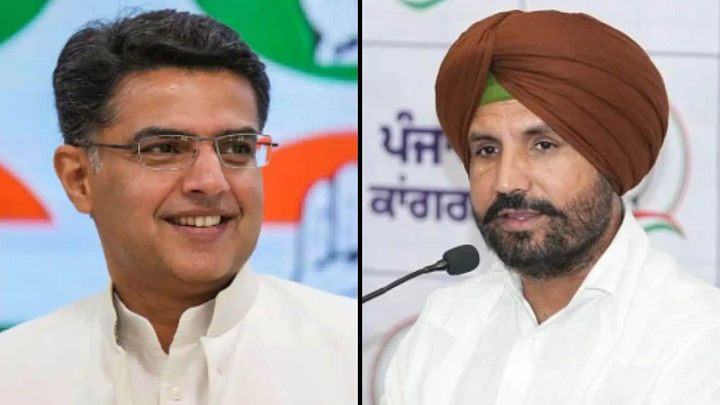
Sachin Pilot In, Raja Warring Out: Can Congress Avoid Its Old Punjab Trap?
A new state chief. A home in Punjab for Sachin Pilot. Pind, or hometown, yatras. And an attempt to strike a Jat-Sikh-Hindu balance.
Ni Pallavi Ghosh··174K nabasa
Sachin Pilot In, Raja Warring Out: Can Congress Avoid Its Old Punjab Trap?
A new state chief. A home in Punjab for Sachin Pilot. Pind, or hometown, yatras. And an attempt to strike a Jat-Sikh-Hindu balance.
After months of meetings, feedback from state leaders and internal deliberations, the Congress believes it has a formula to reset its Punjab unit ahead of the next election. But the leadership change—with Raja Warring on his way out—comes with little time to spare and an organisation still struggling with internal differences.
Sources said Rahul Gandhi was initially reluctant to make a change, but eventually agreed after several rounds of consultations, with the leadership placing greater emphasis on electoral viability and organisational requirements.
ALSO READ | Punjab Congress: Can Sachin Pilot End The ‘Kalesh’ Before 2027?
The decision comes after months of discontent within the Punjab Congress over the functioning of Warring, who took charge as state president after the party’s defeat to the Aam Aadmi Party (AAP).
Why The Congress Wanted A Change
Sources said Warring initially brought energy to the organisation after taking over but, over time, several leaders began keeping their distance from party programmes and events.
When Sachin Pilot was preparing for his first visit to Punjab, some of these leaders reportedly told him that being seen alongside Warring could hurt them politically in the state.
However, not everyone agreed with the growing demand for a change.
Sources said former Chhattisgarh chief minister Bhupesh Baghel, who had been given charge of Punjab by the Congress, had argued against replacing Warring. Baghel’s position was that the party should not buckle under internal pressure and that a change of leadership could further destabilise the organisation.
ALSO READ | The Rise Of Sachin Pilot: How Congress’s Rajasthan Problem Became Its Punjab Solution
That resistance, however, did not last.
The Congress leadership eventually settled on Pilot, with sources saying the expectation was that his arrival could help reduce some of the resentment surrounding Warring and bring different factions back to the table.
A show of strength at a Pilot-led protest in Chandigarh briefly projected unity, but it did little to conceal the differences within the state unit. The leadership change was eventually set in motion.
Pilot’s Punjab Plan
Pilot is now preparing for an intensive stint in Punjab.
Sources said he has been looking for a rented house in the state and plans to spend at least four days a week in Punjab until the elections expected in February next year. The idea is to ensure that the new state chief is not seen as a part-time organisational head operating from outside the state.
Pilot is also planning a series of ‘pind’ yatras, travelling through leaders’ hometowns and villages rather than limiting political activity to their respective constituencies.
The message to Congress leaders is expected to be clear: they will have to move beyond their own constituencies and traditional political networks, and spend more time connecting with voters across the state.
The Congress also hopes that the leadership arrangement can help manage the state’s social and political equations, particularly the Jat-Sikh and Hindu balance.
Warring’s War
Warring, meanwhile, appears to have gone largely incommunicado, according to sources. He has not responded to calls from Congress general secretary KC Venugopal and other senior leaders, they said.
Speaking to News18, Warring had said he had never had a problem with anyone in the party. “I have never had any problem with anyone, but I don’t know why others do. Maybe some are insecure. But I am a warrior. I won’t give up. And will achieve my target,” Warring said.
His response suggests that the leadership change may not automatically end the political contest within the Punjab unit.
Can Pilot Avoid Congress’ Old Trap?
The bigger question for the Congress is whether changing the state chief so close to the electoral battle can actually repair the organisation.
The party’s recent Punjab history offers reasons for caution. Leadership changes and competing power centres during the Captain Amarinder Singh era, followed by the period when Navjot Singh Sidhu was given charge, were accompanied by prolonged internal battles that eventually overshadowed organisational issues.
The challenge for Pilot is therefore not simply to energise the cadre. He will have to rebuild trust among leaders who have spent months or years operating in competing camps, while also creating a common electoral strategy.
For Pilot, Punjab is also politically significant beyond the state. A successful stint could strengthen his organisational credentials and potentially add to his standing in Rajasthan, his home state.
But a poor electoral performance could have the opposite effect, giving fresh ammunition to those who argue that the Congress’ habit of making last-minute leadership changes, coupled with persistent infighting, damages the party more than any external political opponent does.
The clock is already ticking. Pilot now has to prove that the Congress’ Punjab reset is more than a change of face and that the organisation can actually move together before voters get their say.