India Warned For Years, West Waited: Now On FBI's Top 10 List, How Goldy Brar's Network Went Global | Exclusive
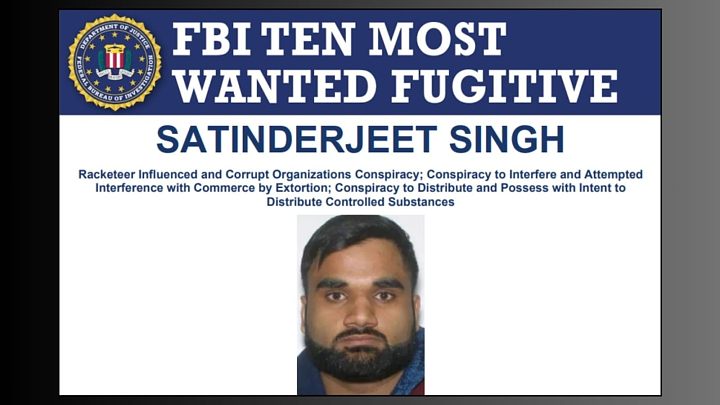
The FBI’s decision to place gangster Satinderjeet Singh alias Goldy Brar on its Ten Most Wanted Fugitives list, carrying a reward of up to $1 million, has brought fresh attention to a concern Indian agencies have been fl
Ni Manoj Gupta··169K nabasa
India Warned For Years, West Waited: Now On FBI's Top 10 List, How Goldy Brar's Network Went Global | Exclusive
The FBI’s decision to place gangster Satinderjeet Singh alias Goldy Brar on its Ten Most Wanted Fugitives list, carrying a reward of up to $1 million, has brought fresh attention to a concern Indian agencies have been flagging for years—the international reach of gangster networks operating from safe havens abroad.
For New Delhi, the development is significant because India has consistently maintained that these were not merely local criminal gangs or isolated fugitives, but transnational organised crime networks with links to terror groups and the ability to orchestrate violence, extortion, drugs and targeted killings across borders.
The FBI’s action now puts one of the most prominent names in that network on America’s highest-profile fugitive list.
The agency has described Brar as a leader of the Lawrence Bishnoi organised crime group and alleged that the network is involved in targeted killings, shootings, kidnappings, extortion and narcotics trafficking in the US and Canada. The FBI says Brar is considered armed and dangerous and is believed to operate between the US and Canada.
For Indian security agencies, the question is why action against such networks took years to acquire the same urgency in Western jurisdictions.
From India’s Wanted Lists To FBI’s Top 10
Indian agencies have for years shared information on members and associates of the Bishnoi network, as well as individuals linked to Khalistani extremist groups, with foreign governments.
According to Indian security and intelligence inputs, agencies including the National Investigation Agency and Punjab Police repeatedly sent Letters of Request, mutual legal assistance requests and extradition requests seeking action against fugitives operating from Canada, the UK and other parts of Europe.
Canada has been the biggest point of contention. India has said that around 26 extradition requests to Canada remained pending for years, including requests involving members and associates of the Lawrence Bishnoi network. Names repeatedly flagged by Indian agencies have included Arshdeep Singh Gill alias Arsh Dalla, Lakhbir Singh Landa, Gurjeet Singh, Gurjinder Singh and Gurpreet Singh.
Indian agencies have maintained that dossiers containing details of wanted individuals, their locations and their alleged criminal activities were shared with Canadian authorities, but that action was delayed or did not materialise in several cases.
The Canadian side, meanwhile, has cited legal and evidentiary requirements in dealing with extradition requests.
The dispute over these cases became particularly contentious as India stepped up its allegations that Canada was allowing individuals linked to violent extremist and organised-crime networks to operate from its territory.
Goldy Brar: From Student Visa To FBI’s Most Wanted
Brar is perhaps the clearest example of the evolution of this problem.
Indian agencies have alleged that Brar, who moved to Canada on a student visa, became a key North American operator for the Bishnoi gang and helped direct criminal activities from abroad.
India shared information about him and sought action, but he was not arrested or extradited by Canadian authorities. An Interpol Red Notice was issued against Brar in 2022, while India had also designated him under its anti-terror law.
He subsequently became one of the most wanted names in India’s investigation into the Bishnoi network, with Indian agencies alleging his involvement in extortion, targeted killings and other violent crimes.
The FBI has now independently placed him on its Ten Most Wanted list and is offering up to $1 million for information leading to his arrest. That is a significant shift: a fugitive whom Indian agencies had been seeking for years is now being pursued at the highest level by US law enforcement.
The Network Goes Beyond Goldy Brar
Indian security inputs suggest the problem was never restricted to Brar.
Several other alleged associates of the Bishnoi network have continued to operate from overseas, including Harry Boxer alias Hari Chand Jat and Goldy Dhillon, who have been linked by Indian agencies to extortion and shootings.
From the UK, Rohit Godara has been identified by Indian agencies as a key operative managing European operations linked to the Bishnoi-Brar network.
Indian agencies have also shared lists of wanted fugitives and associates with US authorities, seeking assistance in locating and acting against individuals operating from North America and Europe.
According to the inputs shared by Indian security officials, cooperation and information exchange on some of these overseas nodes was delayed or limited despite repeated requests.
The Rs 6,000-Crore Drugs Case
The alleged overseas infrastructure of these networks also features prominently in India’s investigations into organised drug trafficking.
According to Indian agency inputs, in the Rs 6,000-crore synthetic drugs Bhola case and related investigations, Punjab Police and the Enforcement Directorate sought extradition or assistance against several NRIs based in Canada. The names cited in these requests include Pardeep Singh Dhaliwal, Nirankar Singh Dhillon, Gursewak Singh Dhillon, Amarjit Singh Kooner and Ranjit Kaur Kahlon alias Roobi Kahlon, among others.
Indian agencies have maintained that formal Letters of Request and extradition processes concerning several such individuals were delayed or did not progress, including in some instances on technical or legal grounds.
These cases formed part of the larger Indian argument that overseas bases were allowing organised crime syndicates to continue operating even as their activities generated violence and criminal proceeds in India.
India’s Argument: Gangsters, Terror Links And Overseas Bases
Indian agencies have increasingly described the Bishnoi network and similar outfits through the prism of transnational organised crime, rather than treating each shooting, extortion case or drug seizure as an isolated criminal incident.
The NIA has previously alleged that organised crime syndicates had developed links with pro-Khalistan elements and were using overseas-based handlers to coordinate criminal activity in India. The agency has investigated cases involving extortion, targeted killings, arms trafficking and alleged terror-crime links, with several accused operating from abroad.
This is where the Indian assessment intersects with the FBI’s latest action.
The US agency’s description of the Bishnoi organisation includes targeted killings, shootings, kidnappings, extortion and narcotics trafficking, essentially portraying the network as a multinational criminal enterprise rather than a conventional local gang.
From India’s Security Problem To A Western One
The consequences of these networks are no longer confined to India.
The FBI’s recent crackdown on India-based organised crime groups, including the Bishnoi network, has involved alleged violence, extortion, drug trafficking and weapons offences in North America.
US authorities have also alleged that Brar and other senior members of the organisation directed criminal operations from overseas. The FBI’s action comes amid a broader international investigation involving law-enforcement agencies in the US, Canada, Europe and Asia.
For India, that development reinforces a long-running warning that criminal networks operating from foreign soil can eventually turn into a security problem for the countries hosting them as well.
Indian agencies have for years argued that fugitives based in Canada, the US, the UK and continental Europe were able to exploit jurisdictional gaps, lengthy extradition procedures and differences in the legal treatment of organised crime and terrorism.
The latest FBI action does not by itself establish India’s broader allegations about every individual or every network. But it marks a notable development: Goldy Brar, once primarily pursued by Indian agencies as an overseas gangster accused of directing violence in India, is now officially among the FBI’s Ten Most Wanted Fugitives, with Washington offering a $1 million reward for his capture.
For New Delhi, that is likely to strengthen its argument that the gangster-terror ecosystem it had repeatedly flagged was never only an Indian problem.