HAL Hands Over Tejas Mk-1 Trainers, HTT-40 & Dhruv Helicopters: How India Will Fly Higher With Atmanirbhar Boost
Hindustan Aeronautics Limited (HAL) officially on Friday handed over the final two LCA Tejas Mk-1 Final Operational Clearance (FOC) twin-seater trainers and the first batch of HTT-40 basic trainer aircraft to the Indian
Ni Manjiri Joshi··114K nabasa
HAL Hands Over Tejas Mk-1 Trainers, HTT-40 & Dhruv Helicopters: How India Will Fly Higher With Atmanirbhar Boost
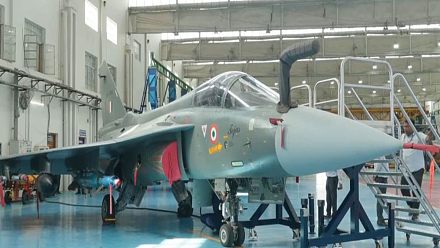
Hindustan Aeronautics Limited (HAL) officially on Friday handed over the final two LCA Tejas Mk-1 Final Operational Clearance (FOC) twin-seater trainers and the first batch of HTT-40 basic trainer aircraft to the Indian Air Force (IAF) at its facility in Bengaluru.
The ceremony was attended by Defence Minister Rajnath Singh and Union Civil Aviation Minister K. Rammohan Naidu. During the event, HAL also handed over its first fleet of indigenous Dhruv Next Generation (NG) helicopters to civil operator Pawan Hans Limited (PHL).
THE ORDER
The handover of the final two twin-seater FOC trainers successfully completes the original 40-aircraft LCA Tejas Mk-1 contract signed by the IAF. With the completion of this baseline order, HAL will transition its entire fighter aircraft assembly infrastructure to accelerate production for the subsequent 180 Tejas Mk-1A fighter jets ordered across 2021 and 2025.
HAL delivered the initial batch of three series-production HTT-40 basic trainer aircraft (two built in Bengaluru and one in Nashik). The first aircraft was officially dubbed “Ankur”. These aircraft are part of a ₹6,838-crore contract for 70 trainers signed in March 2023. They feature advanced glass cockpits, modern avionics, and zero-zero ejection seats to train rookie IAF pilots in foundational flying, night navigation, and aerobatics.
Deliveries faced prior timeline adjustments due to global supply chain issues impacting the American-sourced Honeywell TPE331-12B turboprop engines, which have since been resolved. HAL expects to clear the remaining 67 aircraft over the next four to five years.
Four Dhruv NG civil-certified helicopters were delivered to Pawan Hans Limited. This 5.5-tonne twin-engine multi-role helicopter has received Directorate General of Civil Aviation (DGCA) type certification and will be deployed for VVIP transport, air ambulance operations, offshore support, and pilgrimage transit.
WHY IT IS A MAJOR ATMANIRBHAR MILESTONE
This simultaneous delivery is a major strategic milestone for India’s defense sector, marking a critical transition toward self-reliance (Aatmanirbhar Bharat) and reshaping the capabilities of the Indian Armed Forces. According to a statement shared by HAL, the LCA FOC trainer is a lightweight, all-weather, multi-role 4.5-generation aircraft designed primarily to support the training requirements of the IAF, while retaining the capability to undertake fighter operations when required.
Total Self-Reliance in Pilot Training: With the induction of the HTT-40, India finally bridges a decades-old gap in its pilot training pipeline. India can now train its military pilots from day one to advanced combat readiness using entirely indigenous platforms—moving from Stage-1 basic training (HTT-40) to Stage-2 intermediate training (Kiran/IJT), and finally to Stage-3 advanced fighter training using the LCA Tejas Twin-Seater.
LCA FOC Trainer और HTT-40 भारत की इंडिजिनस मिलिट्री एयरोस्पेस कैपेबिलिटी और आत्मनिर्भर फाइटर एयरक्राफ्ट इकोसिस्टम की बढ़ती मैच्योरिटी के प्रतीक हैं। एयरक्राफ्ट डिजाइन, एवियोनिक्स, प्रोपल्शन, ट्रेनिंग और सर्टिफिकेशन जैसी कैपेबिलिटीज को एक इंटीग्रेटेड एयरोस्पेस इकोसिस्टम में विकसित… pic.twitter.com/6iGJWDO0wV
— Rajnath Singh (@rajnathsingh) September 18, 2026
This successfully eliminates the reliance on foreign basic trainers, such as the Swiss-made Pilatus PC-7 MkII, ensuring that the foundational training of India’s future fighter pilots remains free from foreign supply chain disruptions.
Runway for Faster Tejas Mk-1A Production: Completing the baseline LCA Tejas Mk-1 FOC contract removes a significant manufacturing bottleneck.
HAL can now reallocate its entire assembly line, engineering workforce, and structural jigs exclusively to the ₹1.15 lakh-crore Tejas Mk-1A programs (encompassing 180 aircraft ordered across 2021 and 2025). This transition is critical to helping the IAF stop the severe depletion of its fighter squadron strength as aging MiG-21, MiG-29, and Jaguar fleets retire.
स्वदेशी हेलीकॉप्टर Dhruv-NG का ONGC के ऑफ-शोर ऑपरेशंस के लिए इस्तेमाल और इसमें लगे स्वदेशी ‘शक्ति इंजन’ का DGCA सर्टिफिकेशन, भारत की एयरोस्पेस क्षमता में आत्मनिर्भरता का एक बड़ा प्रमाण है। pic.twitter.com/4TvkxSSXdl
— Rajnath Singh (@rajnathsingh) September 18, 2026
Proof of Maturity: This event validates the capability of India’s domestic aerospace ecosystem to deliver highly complex military hardware. The HTT-40 progressed from a design concept to a certified, series-production aircraft with remarkable speed compared to previous Indian defense projects, proving that the synergy between the IAF, HAL, and private defense vendors has matured. Over 60% of the components on both the Tejas and the HTT-40 are sourced locally. Producing these aircraft domestically channels billions of defense rupees back into Indian micro, small, and medium enterprises (MSMEs) rather than foreign defense contractors.
Commercial Success in Civil Aviation: The delivery of civil-certified Dhruv NG helicopters to Pawan Hans highlights a push to break the monopoly of foreign manufacturers (like Airbus and Bell) in India’s domestic commercial helicopter market. It establishes HAL as a dual-use manufacturer capable of supporting regional connectivity, medical evacuation, and disaster relief.