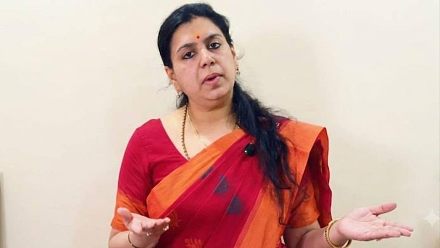
Ex-IAS Divya Mittal Enters Politics Without A Party, Says UP Will Be Her ‘Karmabhoomi’
Former IAS officer Divya Mittal has entered politics after 13 years in civil services, announcing that Uttar Pradesh will be the starting point of her political journey and that she intends to work directly with people r
Ni Oliver Fredrick··87K nabasa
Ex-IAS Divya Mittal Enters Politics Without A Party, Says UP Will Be Her ‘Karmabhoomi’
Former IAS officer Divya Mittal has entered politics after 13 years in civil services, announcing that Uttar Pradesh will be the starting point of her political journey and that she intends to work directly with people rather than immediately join an established political party.
In her announcement on Tuesday, Mittal said, “I will stay in Uttar Pradesh. I will not be afraid. I will ask questions. You stand with me.” She described Uttar Pradesh as her ‘karmabhoomi’ and said she wanted to continue working for people after leaving the administrative service.
The announcement ends weeks of speculation over what Mittal would do after resigning from the IAS. On September 27, she had posted on social media that she would reveal her next step at 8.30am on September 29. She had listed several possibilities, including staying at home, returning abroad, writing a book and taking up coaching, besides politics.
From IAS Officer To Political Entrant
Mittal, a 2013-batch Uttar Pradesh cadre officer, resigned from the IAS on August 30 after around 13 years in service. Her resignation was accepted in September. Before leaving the service, she was posted as Special Secretary in the Revenue Department in Lucknow.
Her administrative career included postings in several districts and key field assignments, including District Magistrate of Mirzapur and Deoria. She became particularly well known during her tenure in Mirzapur for taking up the problem of drinking water in Lahuria Dah, a remote hill village where residents had depended on tankers and other sources for years. Piped water was eventually taken to the village.
Her public profile grew further because of her direct engagement with citizens through social media and her emphasis on highlighting individual cases involving government schemes and administration.
In her resignation message, Mittal had said her 13-year journey in the civil services had taught her more from the people she served than she had given them. She recalled cases involving land rights, farmers, persons with disabilities and access to basic services, stressing that behind every government file was a person whose dignity mattered.
‘I Will Ask Questions’
Mittal’s political entry is centred on issues she encountered during her administrative career. She has spoken about the gap between government decisions and their implementation, arguing that approval of a scheme or issuance of an order does not necessarily mean that a citizen receives its intended benefit.
Her experience in Lahuria Dah became an example of this gap. While working on the drinking-water problem, she encountered villagers whose demands went beyond individual government benefits. The issue, she said, was also about basic infrastructure and access to education and opportunities.
Mittal has also raised questions about competitive examinations, paper leaks, employment and the changing nature of jobs in the age of artificial intelligence. These are issues that directly affect young people, particularly those preparing for government examinations or entering the job market.
Her focus on education, employment, infrastructure and implementation suggests that she is seeking to take issues that she dealt with as an administrator into the political arena.
No Party Announcement
A key feature of Mittal’s announcement is that she has not associated herself with any established political party. Instead, she has spoken about building a political platform with citizens. Her message indicates that she wants public participation and direct engagement to be central to her political activity.
She has also appealed to people to connect with her, indicating that digital communication and citizen outreach could form an important part of the initial phase of her political journey.
Mittal has also not announced whether she will contest the 2027 Uttar Pradesh Assembly election, from which constituency she might contest, or whether her initiative will eventually take the shape of a political party or electoral platform.
Why Her Entry Matters In UP
Mittal’s political debut comes at a time when parties are already preparing for the 2027 Uttar Pradesh Assembly election. Her entry is significant because she is moving directly from the bureaucracy into politics, bringing with her experience of district-level administration and a public profile built during her tenure as an IAS officer.
Her administrative career gives her familiarity with how government schemes are implemented at the district level, while politics will require her to build an organisation, constituency-level network and sustained public support.
That transition could therefore be as important as the issues she has identified.
Mittal’s resignation had already triggered political reactions. Congress state president Ajay Rai had written to Uttar Pradesh Governor Anandiben Patel after her resignation, calling for an environment in which civil servants could function independently and without administrative or political pressure.
Mittal herself, however, did not announce her resignation as a political protest. In her farewell message, she described the decision as the conclusion of a 13-year journey and said she wanted to pursue the dreams she had for the people.