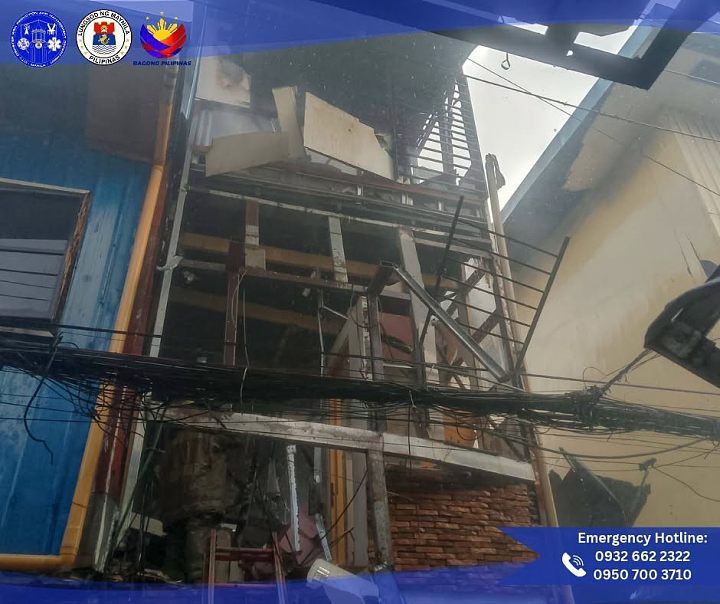
Delhi Building Collapse: Satya Niketan Case Joins A Grim List — Why Does India Never Learn?
Sunday night’s Satya Niketan collapse in Delhi, which has killed six people in a PG accommodation near Delhi University’s South Campus, is the latest entry in a decade-long pattern of deadly building failures across Indi
Ni Sumedha Kirti··119K nabasa
Delhi Building Collapse: Satya Niketan Case Joins A Grim List — Why Does India Never Learn?
Sunday night’s Satya Niketan collapse in Delhi, which has killed six people in a PG accommodation near Delhi University’s South Campus, is the latest entry in a decade-long pattern of deadly building failures across India. From Mumbai to Chennai, ageing structures, illegal alterations and monsoon rains have repeatedly proven fatal — often in buildings authorities had already flagged as unsafe years earlier.
According to National Crime Records Bureau data, structural collapses kill an estimated 1,200 to 2,000 people across India every year, with old and unauthorised residential buildings accounting for the bulk of these deaths.
Mumbai alone has recorded a major collapse every few weeks in some years, official figures show, with most fatalities occurring during the June-to-September monsoon, when heavy rain saturates weakened foundations and old masonry.
DELHI: SATYA NIKETAN BUILDING COLLAPSE: CCTV FOOTAGE EMERGES
CCTV footage from opposite the building captures the moment a person rushes out of his shop to save his life as the collapse unfolds.
Search and rescue operations continue at the site. pic.twitter.com/svxVTwDYhW
— Subodh Kumar (@kumarsubodh_) September 7, 2026
How Often Does This Happen?
Over the past ten years, at least half a dozen collapses have individually killed more than 10 people, several of them in buildings that civic bodies had themselves declared dangerous.
The recurrence suggests the problem isn’t a lack of rules — India’s building codes and audit mandates are fairly detailed — but weak enforcement once a structure is flagged.
Which Are India’s Deadliest Building Collapses In Last Decade?
Location & Year
Building
Toll
Key Cause
Mumbra, Thane (2013)
Lucky Compound (illegal, under construction)
74
Unauthorised construction, no occupancy certificate
Moulivakkam, Chennai (2014)
Prime Trust Heights (under construction)
61
Lightning strike on exposed rebar, construction flaws
Bhendi Bazaar, Mumbai (2017)
Husaini Building (117 years old)
33
Dilapidated structure awaiting redevelopment
Ghatkopar, Mumbai (2017)
Residential building
17
Ageing structure, monsoon damage
Dongri, Mumbai (2019)
Kesarbai Building (100 years old)
14
Aged MHADA structure, evacuation notices ignored
Bhiwandi, Thane (2020)
Jilani Building (30+ years old)
35+
Monsoon-weakened foundation, delayed repairs
Bhiwandi, Thane (2026)
Kohinoor Building
10+
Flagged dangerous in 2020, unauthorised repairs since
Satya Niketan, Delhi (2026)
PG accommodation
6
Under magisterial inquiry; owner FIR ordered
Why Do Buildings Keep Collapsing In India?
Structural engineers and civic officials point to a recurring set of causes. Illegal floors are routinely added onto load-bearing frames never designed to carry the extra weight.
Builders cut costs using substandard cement, corroded steel rebar and salt-mixed sand, which weakens concrete from within over time.
Many of the buildings involved are decades old and had been declared “dangerous,” but continue to be occupied because of rent-control disputes between landlords and tenants, or because residents — often with nowhere else to go — refuse to vacate.
Monsoon rain is the trigger in a majority of these cases, saturating soil, eroding old masonry and accelerating failures in structures already compromised.
Is Anyone Actually Held Accountable?
Accountability has historically been inconsistent. The Moulivakkam collapse led to a one-man inquiry commission and a tabled report in the Tamil Nadu assembly, but full convictions took years.
In Bhiwandi’s Kohinoor Building case, the civic body says it had issued eviction notices as far back as September 2020 and again in 2022 — yet occupants remained, and unauthorised repairs reportedly continued.
Delhi’s response to Satya Niketan has followed a similar early pattern: a magisterial inquiry, an FIR against the building’s owner, and a municipal order to seal illegal constructions above four floors — measures civic bodies have announced after past tragedies too, with mixed follow-through.
What Do The Safety Rules Actually Require?
Municipal bodies such as the BMC and MCD mandate structural audits once a building crosses 30 years of age, submitting fresh certificates every three to five years.
Buildings are graded on a four-tier risk scale — from C1 (highly dangerous, requiring immediate evacuation and demolition) to C3 (structurally sound, needing only routine upkeep).
In practice, enforcement often stops at paperwork: power and water disconnections, notices and dilapidated-building lists are common, but forced demolition or relocation frequently lags behind the warnings, leaving residents in harm’s way until disaster strikes.