Delhi Beats Mumbai, Bengaluru In Centre’s Clean-Air Ranking: Check Which City Topped The List
Lucknow has emerged as the city with the cleanest air among cities with a population of over one million in the 2026 Swachh Vayu Sarvekshan, recognising its efforts to improve air quality.
Ni Saurabh Verma··76K nabasa
Delhi Beats Mumbai, Bengaluru In Centre’s Clean-Air Ranking: Check Which City Topped The List
Lucknow has emerged as the city with the cleanest air among cities with a population of over one million in the 2026 Swachh Vayu Sarvekshan, recognising its efforts to improve air quality.
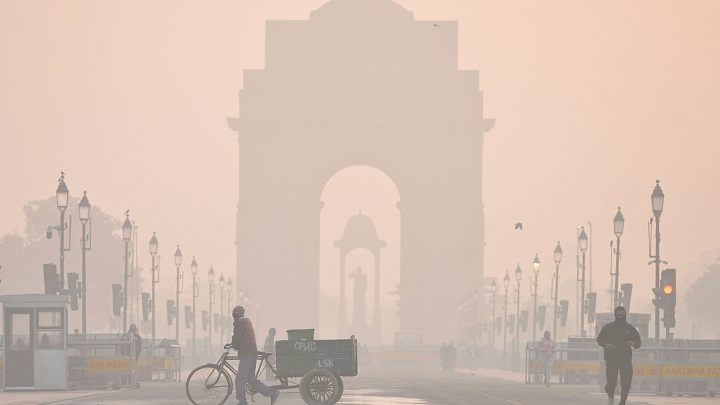
The rankings, however, threw up a surprise when Delhi did not feature among the five cities with the poorest air quality in this category. Despite its notorious pollution levels, particularly during the peak winter months, Delhi was ranked 21st.
Chennai, Jamshedpur, Kota, Kolkata and Madurai occupied the bottom five positions among million-plus cities.
Delhi, where air pollution frequently reaches hazardous levels in winter, was placed at 21st position in the assessment.
Also Read | Not Just Choking Lungs, Delhi Air Pollution Is Affecting Your Mental Health Too
Among other major cities, Srinagar ranked 26th, Mumbai 28th, Bengaluru 32nd and Varanasi 34th.
Rourkela topped the rankings among cities with populations between three lakh and 10 lakh, followed by Firozabad. Noida secured the eighth position, while Dehradun ranked 12th and Gaya 35th.
In the category of cities with populations below three lakh, Kalinga Nagar emerged as the top-ranked city, while Byrnihat was placed last.
Swachh Vayu Sarvekshan Award
The Ministry of Environment, Forest and Climate Change (MoEFCC) awarded the best-performing cities and wards under the National Clean Air Programme (NCAP) as part of the fifth Swachh Vayu Sarvekshan.
The Swachh Vayu Sarvekshan assesses the steps taken by cities to improve air quality across several areas, including road dust management, solid waste management, vehicular emissions, industrial pollution, construction and demolition waste, emissions from diesel generator sets and commercial establishments, and information, education and communication (IEC) activities.
The framework for the survey was introduced in 2022-23 to assess and rank cities based on their efforts to tackle air pollution.
For the 2026 awards, 130 cities covered under the NCAP were assessed across three population categories — cities with fewer than 3 lakh residents, those with populations between 3 lakh and 10 lakh, and cities with more than 10 lakh residents.
The assessment involved multiple stages, including self-assessment by cities, scrutiny and approval by State-level Monitoring Committees, evaluation by the Central Pollution Control Board (CPCB), and field verification by independent committees. The 10 best-performing cities were subsequently selected for recognition.
The awards were presented during Swachh Vayu Diwas, which also highlighted the progress made under the NCAP, the Centre’s flagship programme aimed at improving air quality across 130 cities in 24 states and Union Territories.
As part of the programme, a performance-linked grant of ₹16,425 crore has been provided to the 130 NCAP cities to help fund measures aimed at reducing air pollution and addressing critical gaps in pollution-control infrastructure.
The NCAP has reported improvement in PM10 concentrations across several cities. In 2025-26, compared with the 2017-18 baseline levels:
* 108 of the 130 cities recorded an improvement in PM10 levels.
* 72 cities achieved a reduction of more than 20% in PM10 concentrations.
* 26 cities recorded reductions of more than 40%.
* 14 cities met the National Ambient Air Quality Standards (NAAQS).
The figures indicate progress in reducing particulate pollution across several NCAP cities, although air quality remains a major challenge in many urban centres, particularly during periods of severe pollution.