Cross LoC Trade Chapter In Kashmir Officially Closes As Tourism Department Takes Over Salamabad Centre
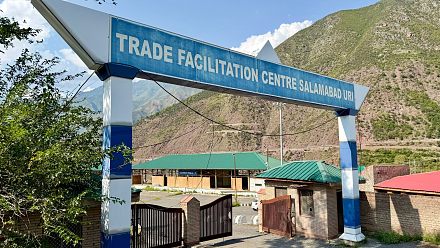
A large panoramic board welcomes you to the Salamabad Trade Centre. Inside, an unsettling silence hangs over the premises, broken only occasionally by the sharp rush of the wind. As you make your way to the far end of th
Ni Ieshan Wani··164K nabasa
Cross LoC Trade Chapter In Kashmir Officially Closes As Tourism Department Takes Over Salamabad Centre
A large panoramic board welcomes you to the Salamabad Trade Centre. Inside, an unsettling silence hangs over the premises, broken only occasionally by the sharp rush of the wind. As you make your way to the far end of the centre, the sound of the gushing Jhelum River grows louder. The sprawling facility, once bustling with activity, has remained silent since 2019.
Rust has begun to take over the massive pillars of the cargo halls, while the weighbridge counter lies covered in dust, its machinery broken and long out of use. At a distance, a weathered sign still reads, “P.O.K. Drivers’ Rest Room.”
The nearly two-decade-old chapter of Salamabad as a cross-LoC trade centre has now formally moved into the past, with the Jammu and Kashmir Tourism Department taking over the Salamabad Trade Facilitation Centre and its assets for tourism-related activities.
The handover marks a significant change in the status and purpose of the facility in Uri. Once established as a dedicated point for cross-LoC commerce, the centre will now be repurposed for border tourism, bringing an official end to its role as a trade facilitation facility.
While cross-LoC trade through Salamabad had already remained suspended since April 2019, the latest administrative decision gives the site a new institutional purpose. The infrastructure that was built to facilitate the movement of goods across the Line of Control will now come under the Tourism Department for the development and promotion of tourism in the border belt.
Salamabad became a major name in Kashmir’s cross-LoC engagement after trade between the two sides was introduced in October 2008. The initiative was part of a broader series of confidence-building measures across the Line of Control. It followed the launch of the Srinagar-Muzaffarabad bus service in 2005, which opened a route for divided families to reconnect.
The National Conference MLA, Dr Sajad Shafi, who took the initiative of converting the place, told News18 says that this project was in his mind since the government formation while pointing at the large peaks. “It’s a virgin place. We want to bring Uri on tourism map. Initially it was conceived as tourist facilitation centre but later when trade began it was handed over to the industries department. Then situation changes and trade came to a halt,” he told News18 while standing at the Centre.
“Trade has been shut since years now. Under the leadership of Omar Abdullah we planned to bring three things to Uri – border tourism and pilgrimage tourism,” he said.
For more than a decade, the Salamabad facility was associated with the movement of goods between traders on the two sides. The trade operated under a distinct barter-based mechanism rather than a conventional international trading system.
“People can live and stay here. We already have infrastructure here with rooms and other facilities,” he said while pointing out to an existing cafeteria which is constructed using stones.
For the people of Uri and surrounding areas, Salamabad was therefore not simply another government facility. It became part of a much larger story of the Line of Control, connecting commerce with one of the region’s most significant confidence-building initiatives.
Abdul Ahad, former General Secretary of Trade in Uri, pointed out the historic significance of the area while welcoming the move. “This is a heritage road, which used to be called the Jhelum Valley Road. Some part of that went to PoK, and to reconnect that, trade used to take place and this place was abuzz. This is a positive thought to convert it into a tourism place,” Ahad said.
Then the trucks stopped.
The Government of India suspended cross-LoC trade through Salamabad and Chakan-da-Bagh, citing concerns regarding the alleged misuse of the routes for illegal activities, including the movement of weapons, narcotics and counterfeit currency. The cross-LoC trade at Salamabad came to a halt in the aftermath of the Pulwama terror attack of February 2019.
The suspension brought commercial activity at Salamabad to an end. But the physical infrastructure remained. For the next seven years, the Trade Facilitation Centre stood as a reminder of a trading system that was no longer operational.
The name remained. The buildings remained. The facilities remained. But the trade did not return.
With the Tourism Department taking over the centre and its assets, Salamabad is no longer being retained as infrastructure for the earlier cross-LoC trade mechanism. Instead, the government intends to use the existing facility to promote tourism in the Uri border region.
The department is expected to assess the infrastructure and determine how it can be developed for visitors. Existing facilities such as accommodation with several rooms, a cafeteria, a park and a viewpoint are among the infrastructure being considered for tourism use.
The focus is expected to include border tourism and access to designated viewpoints along the Line of Control.
The significance of the handover lies in what it says about Salamabad’s changing identity. For years, the name “Salamabad Trade Facilitation Centre” was directly associated with cross-LoC commerce.
That association now seems to belong to history. The centre’s future will no longer be defined by trucks carrying permitted goods that operated between 2008 and 2019. Its proposed future is centred on tourists, sightseeing, and the development of the Uri border belt as a tourism destination.
The handover is more than a departmental transfer. The name may carry history, but the function has changed.