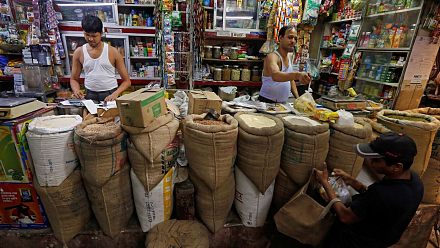
Chana, Tur, Moong, Matar: Why Is Your Dal Getting Costlier Ahead Of Diwali?
The dal in your kitchen may be getting more expensive just as the festive season gets underway. Prices of major pulses, including chana, tur, moong and matar have risen sharply over the past month, with wholesale rates o
Ni Apoorva Misra··37K nabasa
Chana, Tur, Moong, Matar: Why Is Your Dal Getting Costlier Ahead Of Diwali?
The dal in your kitchen may be getting more expensive just as the festive season gets underway. Prices of major pulses, including chana, tur, moong and matar have risen sharply over the past month, with wholesale rates of some varieties climbing by as much as 11 per cent, according to data from the Indian Pulses and Grains Association (IPGA).
Chana prices have risen 11 per cent in a month, while moong is up 10.6 per cent. Tur has become 6.5 per cent costlier and matar prices have increased 6 per cent during the same period. The increase has accelerated in recent days, with prices of the key pulses rising by 3-5 per cent over the past week.
The latest price movement comes ahead of Diwali, when demand for groceries and ingredients typically picks up. But festive buying is only one part of the story. Concerns over crop output, rainfall shortages, soil moisture and the outlook for the next rabi crop are adding to the pressure.
So, what exactly is happening with dals, and why are chana, tur, moong and matar all moving up?
First, How Much Have Dal Prices Risen?
The recent increase is most visible in wholesale markets.
According to IPGA data, chana, the most consumed pulse in India, has risen 11 per cent in a month and 5.5 per cent in a week. Moong has increased 10.6 per cent over the month and 4.3 per cent in a week. Tur prices are up 6.5 per cent in a month and 2.4 per cent in a week, while matar has risen 6 per cent in a month and 3 per cent in a week.
The year-on-year increase is even more pronounced for some varieties. Chana is up 23 per cent from a year ago, while matar is 47 per cent higher and urad 24 per cent higher. Moong and masur have seen more moderate annual increases of 4 per cent and 2 per cent, respectively.
At the retail level, the government’s Price Monitoring System showed the all-India average price of gram dal at Rs 88.72 per kg, tur dal at Rs 125.72, moong dal at Rs 112.14 and masoor dal at Rs 90.43 on Monday.
Is Diwali Demand The Main Reason?
It is one reason, but not the only one.
The festive season typically brings higher demand for household groceries, food preparation and processed pulse products. Traders and industry representatives say this increase in demand is now coinciding with growing concerns over supplies.
In other words, the market is dealing with a demand increase at the same time that traders are becoming more cautious about future availability. That combination can push wholesale prices up faster than either factor would on its own.
Why Is Chana Getting Expensive?
Chana is particularly important because it is India’s largest-consumed pulse and is also closely linked to the upcoming rabi sowing season.
The current chana price rise is being driven by several factors.
One is concern over soil moisture ahead of rabi sowing. Chana is a rabi crop, and adequate soil moisture is important when farmers begin planting it. The Agriculture Secretary has now warned that the upcoming rabi season could be challenging in rainfed areas because of the El Nino weather pattern and uneven rainfall.
There is also an import angle. Australia is India’s most important source of imported chana, and industry representatives expect Australia’s chana crop to be 40-50 per cent lower than last year. India imported about 6.42 lakh tonnes of chana during January-July 2026, down 45 per cent from the corresponding period last year; almost 95 per cent of those imports came from Australia.
At the same time, yellow peas, which can be used as a substitute for chana in some cases, have also become more expensive internationally.
So, the chana market is facing a combination of festive demand, concerns over the next crop and tighter import availability.
What About Tur Dal?
Tur is a different story because it is primarily a kharif pulse.
Tur prices have been rising amid concerns over the condition of the crop in Karnataka and parts of Maharashtra, two important production regions. Rainfall shortages and moisture stress have raised concerns about yields.
Maharashtra’s Marathwada region, for instance, has recorded a substantial rainfall deficit, while parts of Karnataka have also experienced severe rainfall stress. These regions are important to the tur crop, making weather developments particularly significant for the market.
Tur also depends significantly on imports. India imported around 14.8 lakh tonnes of tur in FY2025-26, up more than 21 per cent from the previous year. Mozambique, Myanmar and Tanzania were among the main sources. So, while tur has some government and private stocks available, the market is watching both domestic crop conditions and the flow of imports.
Why Has Moong Also Risen?
Moong has risen 10.6 per cent in the past month, making it one of the sharper movers in the current pulse market.
The sharp increase also shines the light on broader concerns about kharif supplies and weather conditions. Moong is a relatively short-duration crop, and its sowing and harvesting cycles can be affected by the timing and distribution of rainfall.
The important point here is that not every price increase means there is already a physical shortage in the market. Traders can also start pricing in the possibility of tighter supplies if weather conditions threaten the next crop.
Why Is Matar Becoming Expensive?
The prices of Matar or yellow peas, which is used as a pulse and as a substitute for chana, have risen partly because of tighter supplies from Russia, according to industry representatives. The Russia-Ukraine war has affected the supply outlook, adding to international price pressure.
India also imports large quantities of yellow peas. During January-July 2026, imports were around 7.29 lakh tonnes, up 11 per cent from the previous year. Canada accounted for more than 79 per cent of those imports, while Russia was another major supplier.
This makes matar particularly sensitive to what happens in international markets.
What Does El Nino Have To Do With Dal Prices?
This is becoming one of the biggest concerns for the market, particularly for the upcoming rabi season.
Agriculture Secretary Atish Chandra recently said the rabi season is likely to be challenging for rainfed areas because of El Nino. He said deficient-rainfall areas could face prolonged moisture stress, while some other areas could face excess soil moisture.
This matters because pulses occupy a significant part of India’s rabi acreage. Of around 638 lakh hectares normally sown during the rabi season, about 140 lakh hectares are under pulses, according to the Agriculture Secretary.
But Hasn’t India Produced More Pulses This Year?
The government’s estimates show that total pulse production in 2025-26 was estimated at a record 274.09 lakh tonnes, up 6.7 per cent from around 257 lakh tonnes the previous year. Chana production was estimated at 125.14 lakh tonnes, up 12.6 per cent, while moong production rose around 6 per cent to 44.92 lakh tonnes.
That means the current price rise should not automatically be described as a nationwide pulse shortage. In fact, the government has said domestic availability remains comfortable, with substantial procurement and stocks.
The difference is that current availability and expectations about future supply are not the same thing. A market can have enough stocks today and still see prices rise if traders expect the next crop to be weaker.
How Much Stock Does The Government Have?
The government has a substantial pulse buffer.
According to recent reports, government-held pulse stocks were around 4.5 million tonnes, above the buffer norm of 3.5 million tonnes. The stocks included roughly 1.95 million tonnes of chana, 1 million tonnes of tur, 0.88 million tonnes of moong and 0.56 million tonnes of masur.
The government has also said its pulse procurement has increased. In May 2026, it put government-held stocks at around 43 lakh tonnes, including more than 5.34 lakh tonnes of tur and 20.35 lakh tonnes of chana procured under its price-support framework.
The Department of Consumer Affairs also monitors prices of essential commodities across hundreds of centres and can calibrate buffer-stock releases depending on market conditions.
If Stocks Are Comfortable, Why Are Prices Still Rising?
Because commodities are priced on expected supply as well as current supply.
The market is currently balancing several factors—Festive demand is increasing, rainfall deficits have affected some major pulse-growing regions, there are concerns about soil moisture for rabi sowing, El Nino is adding uncertainty to the winter crop, Australia’s chana crop is expected to be smaller, yellow pea prices and supplies in international markets are affecting substitutes, import flows differ from one pulse to another, and traders are factoring in the possibility of tighter supplies later in the season.
At the same time, India has significant government stocks and domestic production has been strong.
That is why the current situation is better described as price pressure amid supply concerns, rather than a simple pulse shortage.
Will Dal Prices Rise Further Before Diwali?
That will depend on how several variables play out over the next few weeks.
The most important will be festive demand, arrivals of the kharif crop, rabi sowing conditions, rainfall and soil moisture, import availability and government stock releases.
If arrivals remain healthy and the government releases adequate buffer stocks, some of the pressure could ease. But if weather concerns intensify or traders become more convinced that the next crop will be affected, prices could remain firm.