CCTVs At All Pharmacies Soon? What Government Wants And Why Chemists Are Pushing Back
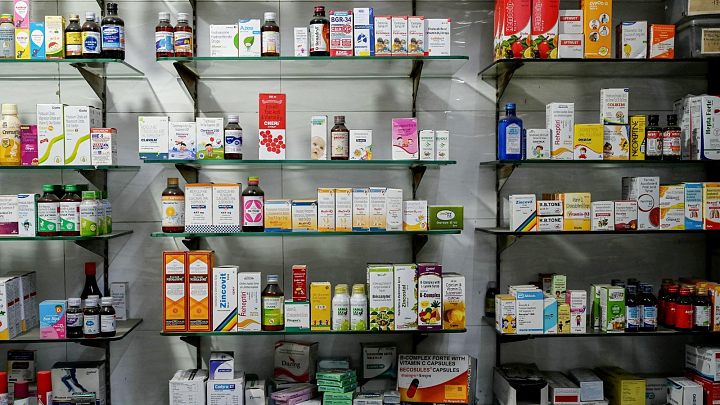
If you pick up antibiotics or cough syrup from your neighbourhood pharmacy, soon there could be a camera watching that transaction.
Ni Himani Chandna··194K nabasa
CCTVs At All Pharmacies Soon? What Government Wants And Why Chemists Are Pushing Back
If you pick up antibiotics or cough syrup from your neighbourhood pharmacy, soon there could be a camera watching that transaction.
India’s top drug advisory panel has recommended mandatory CCTV surveillance at every pharmacy counter across the country, a move aimed at cracking down on illegal drug trafficking. But the decision has already triggered alarm among India’s small chemists, who say the government is asking them to foot an unaffordable bill.
The recommendation comes after the Drugs Technical Advisory Board (DTAB) — a top panel that advises the central government on the regulation of drugs, cosmetics and medical devices — met on August 27.
According to the minutes of the meeting, seen by News18, the panel cleared a proposal for the “installation of CCTV at sales premises and tracking and tracing of all Narcotic Drugs and Psychotropic Substances (NDPS) in the supply chain”.
How Did This Proposal Get Here?
The push for CCTV surveillance at chemist shops is not new. For years, regulatory authorities have been concerned about diverted medicines — especially narcotic pain relievers and habit-forming cough syrups — flooding the illegal drug market. The National Commission for Protection of Child Rights (NCPCR) has also pushed for stricter monitoring to prevent drug abuse among minors.
The DTAB meeting in August formalised this into a recommendation. The proposal now sits with the Drug Controller General of India (DCGI), Dr Rajeev Singh Raghuvanshi, for final execution.
What Is The Government Actually Planning?
The government wants chemists to install CCTV cameras at sales premises to help track and trace NDPS drugs. The idea is to create a digital trail that authorities can audit, helping detect illegal sales.
While the move comes with sound logic, it has triggered a reaction from chemists across India, especially those in rural or remote areas.
A few weeks after the DTAB recommendation, India’s largest chemists’ association — the All India Organisation of Chemists & Druggists (AIOCD) — wrote an urgent letter to the Ministry of Health, dated September 17. AIOCD is India’s largest body representing chemists and drug distributors, with more than 15 lakh members.
Why Do Small Chemists Say They Cannot Do This?
The AIOCD’s concerns include the financial burden. “Installation of six to eight cameras, DVR/NVR systems, storage equipment, wiring, internet connectivity and regular maintenance can involve a substantial recurring expenditure of approximately 50,000 to 1 Lac (Rs 50,000-100,000),” the AIOCD said in its letter to Health Secretary Punya Salila Srivastava. For a small-town chemist earning modest margins on medicines, this could be a significant investment.
“Chemists should not be expected to bear such infrastructure costs merely to meet a regulatory requirement,” the chemists’ body argues in the letter, seen by News18.
Next comes the “technical problem”. India still faces electricity supply issues in rural areas. “Frequent power failures, poor internet connectivity and other infrastructure limitations in rural areas can make continuous CCTV recording technically impractical,” the AIOCD said. In many parts of India, asking for 24/7 digital surveillance could therefore be difficult to implement.
The letter also argues that it could be an unfair ask. Large pharmacy chains, many of which already have CCTV systems, may be able to absorb the cost. Small chemists — particularly those in economically weaker areas — may not. The association argues that the requirement could threaten their businesses.
Apart from the AIOCD, several other retailers have raised concerns.
According to Gurumurthy Ganapathy, the move is unjust, particularly for pharmacies in rural areas. “While we support measures to curb illegal drug sales, imposing this uniform rule ignores rural realities,” he said, adding that he runs five retail medical shops in rural areas.
“Small village chemists operate on minimal profit margins; forcing expensive camera setups, 90-day storage drives, and continuous upkeep threatens their survival. Frequent power outages and poor internet infrastructure make continuous recording technically impossible,” he said, urging the government to exempt small rural pharmacies or provide full financial subsidies.
Similarly, former president of the Tamil Nadu Chemists and Druggists Association (TNCDA) Ramachandran Mannargudi has asked the government to withdraw the move.
“Cameras cannot verify prescriptions or dispensed medicines—details already captured through legal registers and billing. To genuinely monitor controlled and antibiotic drugs, the government must implement a direct Track & Trace system at the manufacturing source instead of burdening retail outlets.”
He believes that “rather than driving out small village chemists nurtured since the ‘Health for All’ era, this unviable law should be immediately withdrawn.”