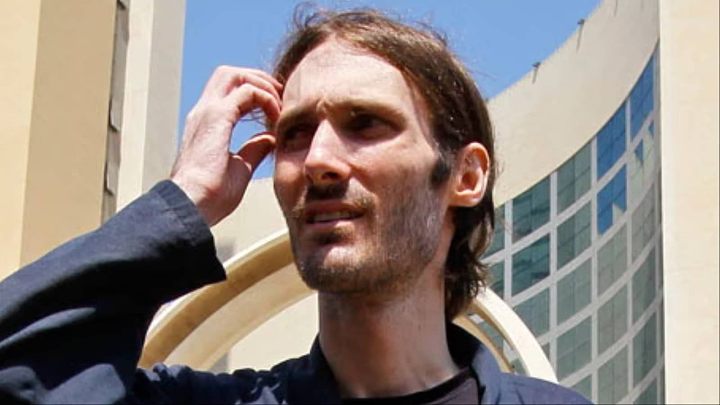
American Mercenary Matthew VanDyke Granted Bail By Special NIA Court In Case Linked To Myanmar Training
American national Matthew Aaron VanDyke was granted bail by a Special National Investigation Agency (NIA) court in Delhi in a case concerning allegations of illegal entry into Myanmar and training of ethnic armed groups
Ni Vani Mehrotra··191K nabasa
American Mercenary Matthew VanDyke Granted Bail By Special NIA Court In Case Linked To Myanmar Training
American national Matthew Aaron VanDyke was granted bail by a Special National Investigation Agency (NIA) court in Delhi in a case concerning allegations of illegal entry into Myanmar and training of ethnic armed groups in drone warfare.
VanDyke had moved a bail application before the Special NIA Court at Rouse Avenue after the NIA’s latest chargesheet against him and six Ukrainian nationals did not invoke provisions of the Unlawful Activities (Prevention) Act (UAPA).
The chargesheet was filed under provisions of the Immigration and Foreigners Act (IFA).
The development comes after VanDyke’s 180-day period of judicial custody was set to expire on September 8.
In its chargesheet, the NIA invoked Sections 21 and 23 of the Immigration and Foreigners Act against the seven accused.
UAPA INVESTIGATION STILL ONGOING
The NIA maintained that the omission of UAPA provisions from the present chargesheet does not mean that the terror investigation has been dropped or closed.
According to the agency’s sources, the investigation into offences under the UAPA is continuing against all seven accused.
The NIA’s Special Public Prosecutor had also told the court that the investigation was still underway and that a supplementary chargesheet could be filed if an offence under the UAPA is made out.
The distinction between the chargesheet already filed and the investigation has been a key issue in the case.
The agency said offences under the Immigration and Foreigners Act had already been established during its investigation and that it filed the chargesheet for those offences rather than allow the applicable custody period to expire.
The chargesheet itself records that further investigation under the UAPA is continuing.
The law also permits further investigation after a chargesheet has been filed and allows a supplementary chargesheet to be submitted if additional evidence establishes further offences.
WHAT IS THE CASE AGAINST VANDYKE?
VanDyke and six Ukrainian nationals – Hurba Petro, Slyviak Taras, Ivan Sukmanovskyi, Stefankiv Marian, Honcharuk Maksim and Kaminskyi Viktor – were arrested in March in a case initially registered under Section 18 of the UAPA, along with other provisions.
The NIA had alleged that the accused entered India on tourist visas, travelled through restricted areas without the required permits and crossed into Myanmar through unauthorised points.
The agency further alleged that they were involved in training ethnic armed groups in drone warfare and other forms of warfare.
VanDyke, a self-described combat specialist and founder of security firm Sons of Liberty International (SOLI), was arrested at Netaji Subhas Chandra Bose International Airport on March 13.
DEFENCE HAD QUESTIONED NIA’S CHARGESHEET
VanDyke’s counsel, Advocate Rohit Dandriyal, had questioned the NIA’s handling of the case after the latest chargesheet did not invoke the UAPA.
Dandriyal had said VanDyke was initially booked under the UAPA but that, after 180 days, the NIA had filed charges under Sections 21 and 23 of the Foreigners Act instead.
He had argued that this raised questions about the agency’s working style and questioned how an accused could remain in custody for 180 days under a terror investigation before charges were filed under the Foreigners Act.
The omission of the UAPA provisions had also triggered political criticism, with Opposition leaders questioning whether the terror charges had been dropped following alleged pressure from the United States.
The NIA’s sources, however, maintained that the terror investigation remained active.
Sources also said that US diplomats raising the case of an American citizen detained in India was normal diplomatic practice.
India’s Ministry of External Affairs has similarly stated that Indian missions approach foreign authorities when Indians are arrested overseas for consular access, legal assistance, fair treatment and, where appropriate, speedy trial or other relief.