12 Years Of Make In India: How The Manufacturing Map Has Changed Since 2014
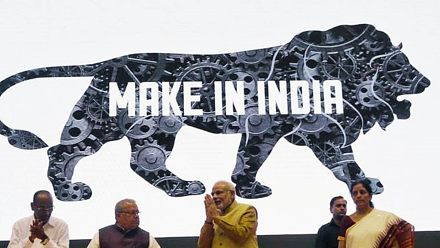
Twelve years ago, on September 25, 2014, Make in India was launched with the aim of turning the country into a global hub for manufacturing, design and innovation.
Ni News Desk··96K nabasa
12 Years Of Make In India: How The Manufacturing Map Has Changed Since 2014
Twelve years ago, on September 25, 2014, Make in India was launched with the aim of turning the country into a global hub for manufacturing, design and innovation.
Marking the initiative’s 12th anniversary on Friday, Prime Minister Narendra Modi pointed to its impact on domestic production, investment and exports. “More made in India. More investment in India. More exports from India. A transformation visible across sectors!” he said in a post on X.
More made in India.
More investment in India.
More exports from India.
A transformation visible across sectors! #12YearsOfMakeInIndia pic.twitter.com/qSzZV7RIJZ
— Narendra Modi (@narendramodi) September 25, 2026
Make in India 2.0 now covers 27 sectors — 15 in manufacturing and 12 in services. From mobile phones and automobiles to pharmaceuticals and defence, here’s how key manufacturing sectors have changed since 2014.
The Mobile Phone Boom
Few sectors have seen as sharp a rise as mobile phones.
According to a PIB press release, mobile phone production has grown from around Rs 18,900 crore in 2014-15 to approximately Rs 6.3 lakh crore in 2025-26 — an increase of about 32 times. India is now the world’s second-largest mobile phone manufacturer by volume.
The wider electronics sector has grown alongside it, with production rising nearly sevenfold from around Rs 1.9 lakh crore in 2014-15 to Rs 13.11 lakh crore in 2025-26. Electronics production grew another 15.8 per cent in the last financial year.
The electronics push has also expanded into semiconductors. ISRO and the Semiconductor Laboratory have developed VIKRAM3201 and KALPANA3201 microprocessors for space applications. VIKRAM3201 is the first fully Make-in-India microprocessor qualified for the harsh conditions of launch vehicles.
More Cars Roll Off Production Lines
Automobile production has also grown since Make in India was launched.
India produced 31.03 million vehicles in 2024-25, around 33 per cent more than in 2014-15.
The increase has continued across different categories in recent years. Compared with 2020-21, passenger and commercial vehicle production was 65 per cent higher in 2024-25, while three-wheeler production rose 71 per cent and two-wheeler production 30 per cent.
India has also developed an indigenous 30 kW electric-vehicle drive system combining a motor and inverter. Launched in March 2026, the system has been designed, fabricated and validated and is ready for commercialisation, according to the release.
Pharma Crosses Rs 5-Lakh-Crore Mark
India’s pharmaceutical industry now ranks third globally by volume and 11th by value.
Its annual turnover reached Rs 5.09 lakh crore in 2025-26, growing at an average rate of 9.2 per cent over the preceding five years. Pharmaceutical exports stood at around Rs 2.63 lakh crore during the year.
Medical-device manufacturing has expanded too, rising from around Rs 28,000 crore in 2019-20 to Rs 41,500 crore in 2024-25, according to the release.
India is also manufacturing complex pharmaceutical products, including Trastuzumab Emtansine, a biosimilar antibody-drug conjugate for breast cancer, and Docaravimab-Miromavimab, an anti-rabies monoclonal antibody combination.
Other products include Miqnaf, India’s first developed macrolide antibiotic in three decades for bacterial pneumonia, and Desidustat, a new chemical entity for treating anaemia in kidney patients.
Defence Production Nears Four Times Its 2014-15 Level
Defence production has also risen sharply over the period.
The value of indigenous defence production has risen from Rs 46,429 crore in 2014-15 to a record Rs 1.78 lakh crore in 2025-26 — an increase of around 283 per cent, according to the PIB release.
Aircraft manufacturing capacity has expanded alongside it. Hindustan Aeronautics Limited opened its third LCA Tejas Mk1A production assembly line in October 2025, taking annual capacity to 24 aircraft.
HAL also inaugurated a second production line for the HTT-40 trainer aircraft, covering major structures including fuselages, wings and control surfaces.
Railways Step Up Production
Indian Railways manufactured 54,809 coaches between 2014 and 2024. Average annual coach production rose from fewer than 3,300 during 2004-14 to 5,481 during 2014-24.
In 2025-26, Indian Railways produced 1,674 locomotives and 6,677 Linke Hofmann Busch (LHB) coaches.
The Rail Wheel Factory also produced more than 2.1 lakh wheels, 1.22 lakh axles and 1.2 lakh wheelsets during the year.
Solar Manufacturing Sees A Big Jump
India’s solar manufacturing capacity has expanded sharply over the past 12 years.
Solar-module manufacturing capacity increased from 2.3 GW in 2014 to 192 GW as of June 2026. Solar-cell manufacturing capacity rose from 1.2 GW to around 30 GW over the same period.
Rare-earth permanent magnets are another area where domestic capacity is being developed. Used in electric vehicles, renewable-energy systems, electronics and advanced manufacturing, these magnets are critical to several industries.
PLI, FDI And The Manufacturing Push
Several policy measures have been added to the manufacturing push over the years, including the Production Linked Incentive schemes, PM GatiShakti, the National Single Window System and the India Industrial Land Bank.
PLI schemes currently cover 14 sectors, including electronics, pharmaceuticals, automobiles, solar PV modules, specialty steel and textiles.
As of June 2026, the schemes had attracted Rs 2.6 lakh crore in investment and generated Rs 23.8 lakh crore in production and sales. They had also supported more than Rs 15.5 lakh crore in exports and 14.6 lakh jobs.
Cumulative foreign direct investment between 2014-15 and 2025-26 stood at $843 billion, 169 per cent higher than during the preceding 12-year period.
What’s Coming Next?
A fresh set of schemes is expanding the manufacturing push into semiconductors, mobile phones, advanced materials and industrial infrastructure.
Semicon 2.0, approved in July 2026, has been allocated Rs 1.27 lakh crore for semiconductor design and manufacturing, advanced packaging, materials, equipment, research and talent development.
The Mobile Phone Manufacturing Scheme has an allocation of Rs 62,500 crore between FY2026-27 and FY2030-31, with the aim of scaling up production and increasing domestic value addition.
The Rs 33,660-crore Bharat Audyogik Vikas Yojana, or BHAVYA, envisages the development of 100 investment-ready industrial parks with integrated infrastructure.
Another Rs 3,030 crore has been allocated under BHAVYA Rasayan for three dedicated chemical parks.