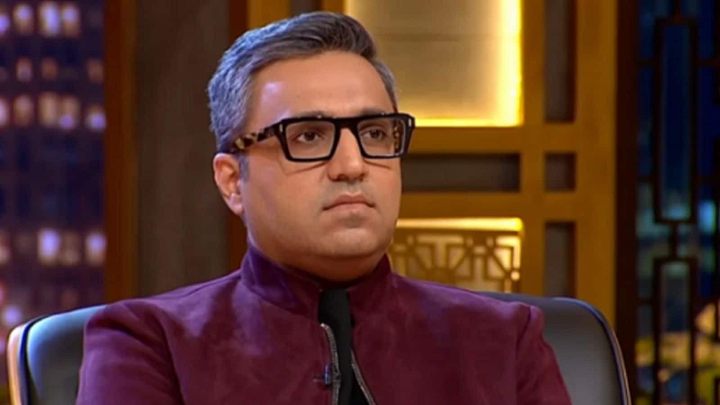
'Shut ATMs, Promote UPI': Ashneer Grover Questions Need For Possible MDR On Transactions Above Rs 2,000
BharatPe co-founder Ashneer Grover on Tuesday criticised the possibility of levying charges on Unified Payments Interface (UPI) transactions, saying that any such levy would effectively amount to tax collection. He also
Ni Saurabh Verma··11K nabasa
'Shut ATMs, Promote UPI': Ashneer Grover Questions Need For Possible MDR On Transactions Above Rs 2,000
BharatPe co-founder Ashneer Grover on Tuesday criticised the possibility of levying charges on Unified Payments Interface (UPI) transactions, saying that any such levy would effectively amount to tax collection. He also questioned what subsidy the government provides to UPI that needs to be recovered.
“Any levy on UPI is just tax collection. UPI is the one scientific achievement of India everyone acknowledges par ab tax ki bali chadhegi,” Grover said in a post on X.
His comments came after the government notified that banks and payment system providers cannot impose charges, directly or indirectly, on UPI transactions of up to Rs 2,000 or on payments made through RuPay debit cards. The notification, however, does not specify whether charges can be imposed on UPI transactions above Rs 2,000, particularly those paid by merchants.
So far, UPI transactions have not attracted a Merchant Discount Rate (MDR), irrespective of the transaction value.
Ashneer Grover Says Shut ATMs To Promote UPI
Grover compared the economics of UPI with the cost of maintaining India’s cash-based payment infrastructure.
In his post, he said the cost of running ATMs and cash logistics in India is around Rs 30,500 crore. “If you want to optimise shut ATMs and promote UPI instead,” he said.
India mein koi 5 minutes number Google kar le to doodh ka doodh paani ka paani ho jaye.
RBI surplus to Govt : ₹2.87 Lakh Crores (US$30 Bn)
Total listed bank profits : ₹4.11 Lakh Crores (US$42 Bn)
NPCI – which runs UPI pre tax ‘surplus’ : ₹ 1,888 crores (US$200 Mn)
To… https://t.co/jI1nHP0qVs
— Ashneer Grover (@Ashneer_Grover) September 15, 2026
Grover also highlighted the Reserve Bank of India’s surplus transferred to the government at Rs 2.87 lakh crore, total listed bank profits at Rs 4.11 lakh crore, and NPCI’s pre-tax surplus at Rs 1,888 crore.
“Then whose loss is happening because of UPI and what subsidy is the government giving on UPI that is hurting?” Grover asked.
What Did The Government Say On UPI Charges?
According to a gazette notification dated September 14, no bank or system provider can impose, either directly or indirectly, any charge on a person making or receiving a payment through RuPay debit cards or UPI transactions of up to Rs 2,000.
The notification follows an amendment to Section 10A of the Payment and Settlement Systems Act, 2007. The amendment creates an enabling framework for imposing MDR on UPI and other notified electronic payment modes.
The amendment Bill was passed by Parliament during the Monsoon Session, which concluded on August 13, 2026.
Following the passage of the Bill, the government said the UPI and Services Steering Committee, headed by the National Payments Corporation of India (NPCI), would decide the MDR rates.
Why Does The Government Want An MDR Framework?
The government has pointed to the rapid growth in UPI transactions and the need for continued investment in the payment ecosystem.
According to the government, exponential growth in transaction volumes requires significant and continuous upgrades in cybersecurity, fraud prevention and infrastructure.
It has also argued that charges are required to support market expansion and make the UPI ecosystem more self-sustaining. A revenue model, the government said, could encourage more companies to enter and expand in the digital payments sector, thereby increasing competition.
The government has further said that relying solely on subsidies is not viable for the next phase of UPI’s growth and that a balanced framework is needed to keep the system robust, inclusive and future-ready.
What Is UPI And How Big Is It?
UPI is operated by the National Payments Corporation of India (NPCI), an initiative of the Reserve Bank of India and the Indian Banks’ Association.
The real-time payments system allows users to transfer money directly between bank accounts and make payments to merchants.
UPI has also expanded internationally and is now accepted in 11 countries. Uzbekistan is the latest country to join the list.
The other countries where UPI is accepted include Singapore, the United Arab Emirates, France, Mauritius, Nepal, Bhutan, Qatar, Sri Lanka, Cambodia and Greece.
Launched on August 25, 2016, UPI has transformed India’s digital payments landscape. Its transaction value rose from Rs 0.07 lakh crore in FY17 to around Rs 314 lakh crore in FY26 — an increase of more than 4,000 times over the decade.
The debate over MDR now centres on how UPI can remain affordable for users while ensuring that the payment ecosystem has a sustainable revenue model to fund infrastructure, cybersecurity and innovation.