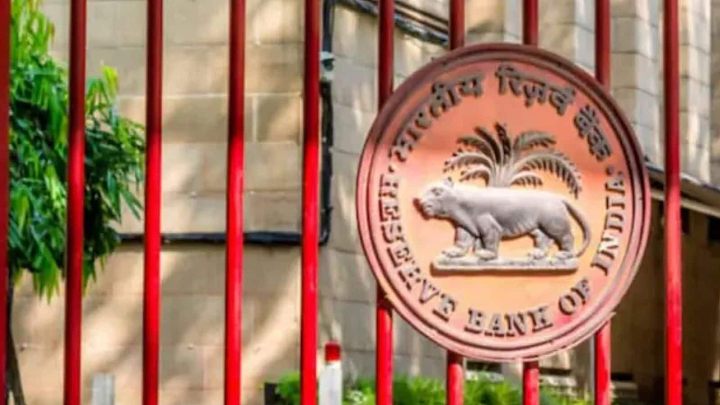
RBI MPC Meeting Begins Today: Will RBI Hike Repo Rate On Wednesday? Inflation, Crude Prices Back In Focus
The Reserve Bank of India’s (RBI) Monetary Policy Committee (MPC) begins its three-day meeting on Monday, with the central bank facing a renewed inflation challenge from rising crude oil prices, the re-escalation of the
Ni Business Desk··20K nabasa
RBI MPC Meeting Begins Today: Will RBI Hike Repo Rate On Wednesday? Inflation, Crude Prices Back In Focus
The Reserve Bank of India’s (RBI) Monetary Policy Committee (MPC) begins its three-day meeting on Monday, with the central bank facing a renewed inflation challenge from rising crude oil prices, the re-escalation of the West Asia conflict, rising global bond yields, and a shift towards tighter monetary policy among global central banks.
The MPC will meet from October 5 to 7, with its policy decision due on Wednesday. Economists and bankers expect the RBI to raise the repo rate by 25 basis points to 5.50 per cent, which would mark the first rate increase since February 2023.
The RBI has kept the repo rate unchanged at 5.25 per cent in its last four policy reviews after cutting it by a cumulative 125 basis points in 2025. A hike this week would therefore mark a reversal in the monetary policy cycle after a prolonged easing phase followed by a pause.
Why RBI may hike repo rate this week
The biggest concern for the central bank is inflation. Retail inflation rose to an eight-month high of 4.82 per cent in August, moving further above the RBI’s 4 per cent medium-term target. Inflation has now remained above the target for three consecutive months.
The renewed escalation of the West Asia crisis has added another layer of uncertainty, particularly through its impact on crude oil prices. Higher oil prices could feed into transport and fuel costs and eventually broaden price pressures across the economy.
At the same time, global central banks have been moving towards tighter monetary policy, adding to the pressure on the RBI to reassess its policy settings. A Reuters poll published ahead of the meeting showed nearly 60 per cent of economists expecting a 25-basis-point hike in October.
Kanika Pasricha, chief economic advisor at Union Bank of India, said, “Coordination with global central bank hikes, rising inflation risks and strong growth momentum provide policy space to hike.”
Dipti Deshpande, principal economist at Crisil, said inflationary pressures had mounted since the previous policy, mainly because of the renewed West Asia conflict and pressure on energy and commodity prices.
“If these pressures persist, further rate hikes are expected,” she said.
Inflation forecast likely to be revised upwards
Apart from the repo rate decision, markets will closely watch the RBI’s inflation projections. In its August policy, the central bank had projected FY27 CPI inflation at 5 per cent, with inflation estimated at 4.7 per cent in the second quarter, 5.9 per cent in the third quarter and 5.5 per cent in the fourth quarter.
Economists expect the RBI to raise some of these forecasts as crude oil prices remain elevated and food price pressures broaden.
“The recent surge in crude oil prices to above USD 100/barrel could likely lead to an increase in the retail selling price (RSP) of petrol and diesel, and further generalisation of price pressures, which would necessitate an upward revision in the CPI inflation forecasts,” said Aditi Nayar, chief economist and head of research and outreach at ICRA.
Apoorva Javadekar, chief economist at Shriram Group, expects a mild upward revision of 0.10 percentage point for the third and fourth quarters of FY27.
“In fact, the upward revision to future inflation is almost a pre-condition for a rate hike, as otherwise the inflation is progressing on the projected path,” Javadekar said.
Rajani Sinha, chief economist at CareEdge Ratings, said inflationary pressures were becoming increasingly broad-based.
Around 19 per cent of the 358 items in the CPI basket recorded inflation above 6 per cent in August, up from 13 per cent in March, she said.
Will RBI change its policy stance?
While expectations of a 25-basis-point rate hike have strengthened, there is less consensus on the policy stance. Economists are divided between a continuation of the neutral stance and a shift towards calibrated tightening. Some also expect the RBI to signal a withdrawal of accommodation if inflation risks continue to build.
The tone of the policy, however, is widely expected to be more hawkish.
A rate hike would take the repo rate to 5.50 per cent. Several economists expect the RBI to undertake at least one more hike later in the current financial year, with some forecasting two to three rate increases in FY27.
Gaura Sengupta, economist at IDFC First Bank, said, “Gradual normalisation of policy as headline inflation is higher. The rate hike is needed to ensure real rates are not negative in the coming quarters.”
However, not all economists expect a hike this week. Sachchidanand Shukla, group chief economist at Larsen & Toubro, expects the RBI to maintain the status quo, arguing that there is still no evidence of demand-led inflation or overheating in the economy.
Strong growth gives RBI room to act
The RBI’s decision will also be shaped by the strength of economic growth. India’s real GDP growth accelerated to 7.8 per cent in the April-June quarter, providing the central bank with greater room to focus on inflation without facing the immediate risk of weakening domestic demand.
In its August policy, the RBI had projected FY27 real GDP growth at 6.7 per cent. Economists now expect the central bank to revise this forecast upwards, with some seeing growth at or above 7 per cent.
Radhika Rao, senior economist and executive director at DBS Bank, expects a “slight upward revision to above 7 per cent growth.”
The combination of strong growth and rising inflation has consequently strengthened expectations that the RBI may begin gradually normalising monetary policy.
Liquidity management also in focus
Besides the repo rate and policy stance, the RBI’s liquidity-management measures will be closely watched. Economists expect the central bank to continue using tools such as variable rate reverse repo (VRRR) operations, open market operations (OMOs) and foreign exchange swap operations to manage surplus liquidity in the banking system.
For borrowers and depositors, the key takeaway from Wednesday’s policy will be whether the RBI merely delivers a one-off 25-basis-point increase or signals the beginning of a broader tightening cycle.
A 25-basis-point hike would take the repo rate from 5.25 per cent to 5.50 per cent and mark the first increase since February 2023, when the RBI last raised the rate by 25 basis points to 6.50 per cent.