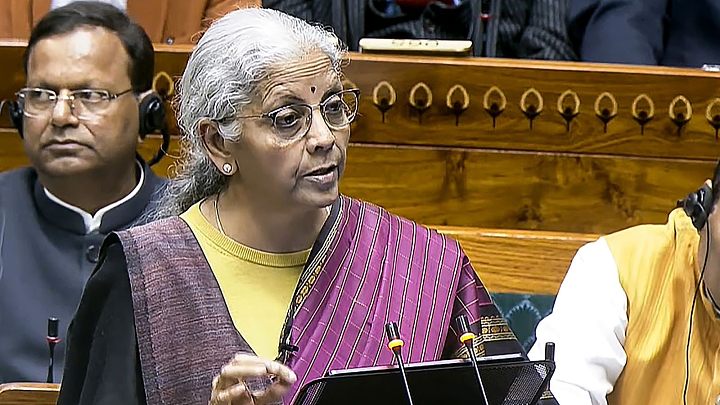
Next-Gen GST Reforms To Make Compliance Easier, Boost Businesses: FM Nirmala Sitharaman
Finance Minister Nirmala Sitharaman has said the next phase of goods and services tax (GST) reforms will focus on making compliance simpler, improving the flow of input tax credit and reducing the time and cost involved
Ni Business Desk··14K nabasa
Next-Gen GST Reforms To Make Compliance Easier, Boost Businesses: FM Nirmala Sitharaman
Finance Minister Nirmala Sitharaman has said the next phase of goods and services tax (GST) reforms will focus on making compliance simpler, improving the flow of input tax credit and reducing the time and cost involved for taxpayers.
In an article published on October 5, Sitharaman said the proposed process reforms, which are expected to come before the GST Council on October 7, will build on nine years of GST implementation and experience gained by taxpayers and states.
Next-Gen GST is delivering on its twin objectives of relief for taxpayers and greater momentum for our economy.
The next phase will focus on making compliance simpler across registration, returns, refunds, disputes and input tax credit.
A simpler, more predictable and taxpayer-friendly GST will enable enterprises of every size, across every region, to grow and contribute to Hon’ble PM Shri @narendramodi’s vision of a Viksit Bharat.
– Smt @nsitharaman writes on Next-Gen GST and India’s Next Phase of Growth
Read the article: https://t.co/nl9Qk414Sw
— Nirmala Sitharaman Office (@nsitharamanoffc) October 5, 2026
The finance minister said the Next-Gen GST reforms have two broad objectives — to reduce and rationalise rates, and to make compliance easier. While the rate changes came into effect on September 22, 2025, the next phase will focus on reforms relating to registration, returns, refunds, disputes and input tax credit.
GST Taxable Supplies Rise 25.8%
Sitharaman said the reforms have so far been accompanied by a significant expansion in reported economic activity. Between October 2025 and July 2026, the value of reported taxable supplies increased 25.8% compared with the corresponding period a year earlier.
“A lighter rate structure has been accompanied by a substantial expansion in reported economic activity,” Sitharaman said, adding that this is an encouraging foundation for a reform intended to support both enterprise and public finances.
Gross GST collections also remained strong. Between April and September 2026, GST collections reached Rs 12.46 lakh crore, registering an 11.6% year-on-year increase.
“That resilience is visible in the latest revenue figures. Gross GST collections reached Rs 12.46 lakh crore during April–September 2026, up 11.6% over the corresponding period last year. Every month from June through September recorded double-digit annual growth; together, collections for these four months accelerated by nearly 15%. Net collections, after refunds, also grew by 10.4% over the half-year. Taxpayer relief has coexisted with growth in the resources available for development,” Sitharaman said.
According to the finance minister, every month between June and September recorded double-digit annual growth, with collections during these four months rising by nearly 15%. Net GST collections, after accounting for refunds, increased 10.4% during the first half of the financial year.
B2C Sales Grow 26.7%
The expansion was also visible in consumer-facing transactions. Reported business-to-consumer (B2C) sales increased 26.7% in the post-reform comparison, Sitharaman said.
She said lower tax rates can provide households with greater purchasing power, which can subsequently support demand for goods and services. “Consumer relief and enterprise growth are closely connected,” she said, highlighting the link between household savings, consumption and business activity.
GST Registrations Rise Nearly 15%
The finance minister also highlighted the growing participation of businesses in the GST system. GST registrations across Central and State jurisdictions stood at around 1.71 crore at the end of August, nearly 15% higher than a year earlier.
Compliance has also improved. GSTR-3B returns filed by their due dates for the April-July 2026 tax periods were 12.6% higher than in the corresponding periods last year.
Sitharaman, however, said higher participation also places greater responsibility on tax authorities to provide reliable services, clear guidance and timely resolution of taxpayer problems.
“GST registrations across Central and State jurisdictions stood at approximately 1.71 crore at the end of August, up nearly 15% from a year ago. For the April–July 2026 tax periods, GSTR-3B returns filed by their due dates were 12.6% higher than for the same periods last year. These improvements place a corresponding responsibility on the administration: regular compliance must be supported by reliable service, clear guidance and timely resolution of difficulties,” Sitharaman said.
Rs 1.80 Lakh Crore Refunds Issued
Refunds and input tax credit are among the key areas targeted by the next phase of reforms. Around Rs 1.80 lakh crore was refunded to taxpayers between April and September, according to Sitharaman.
She said greater predictability in refunds would help businesses plan purchases and production with greater confidence.
The finance minister also said the post-reform data showed an increase in the share of tax liabilities discharged through input tax credit, while accumulated credit declined relative to taxable supplies.
For smaller businesses in particular, she said, efficient access to eligible input tax credit can have a direct bearing on working capital and their ability to expand operations.
States’ GST Revenue Rises 16%
The GST reforms have also strengthened state revenues, Sitharaman said. Aggregate SGST receipts of states, including their share of IGST settlements, increased by around 16% during April-September 2026. According to the finance minister, stronger state revenues can support spending on infrastructure and public services, creating a broader economic benefit from the GST system.
What Is Next-Gen GST?
The next phase of GST reforms is aimed at addressing the practical difficulties faced by taxpayers, particularly smaller businesses. The proposals expected before the GST Council on October 7 cover areas including registration, returns, refunds, disputes and the flow of input tax credit.
Sitharaman said the objective is to reduce both the time and cost of complying with GST requirements. She also stressed that taxpayer experience should remain central to implementation. The finance minister said the nine years of GST implementation have provided a stronger foundation for the next stage of reform, with the broader objective of creating a tax system that gives businesses greater clarity and certainty.
“Giving them that confidence, wherever they operate, helps build the economic strength of a Viksit Bharat,” Sitharaman said.