World's First Cancer Vaccine Cuts Risk Of Metastasis By 38%: How Personalised Shots Train The Immune System To Work?
Cancer treatment could be moving towards a more personalised approach, where the therapy is designed not just for the type of cancer a person has, but for the genetic characteristics of their individual tumour.
Ni Tanya Dutt··26K nabasa
World's First Cancer Vaccine Cuts Risk Of Metastasis By 38%: How Personalised Shots Train The Immune System To Work?
Cancer treatment could be moving towards a more personalised approach, where the therapy is designed not just for the type of cancer a person has, but for the genetic characteristics of their individual tumour.
A personalised cancer vaccine developed by Moderna and Merck has delivered strong results in a large Phase 3 trial. When given alongside the immunotherapy drug Keytruda after surgery, the vaccine reduced the risk of melanoma returning or death by 42% and lowered the risk of the cancer spreading to other parts of the body by 38%.
The findings, reported this week, mark one of the clearest signs yet that mRNA technology, the same platform used in some Covid vaccines can be adapted to train the immune system against a patient’s own tumour.
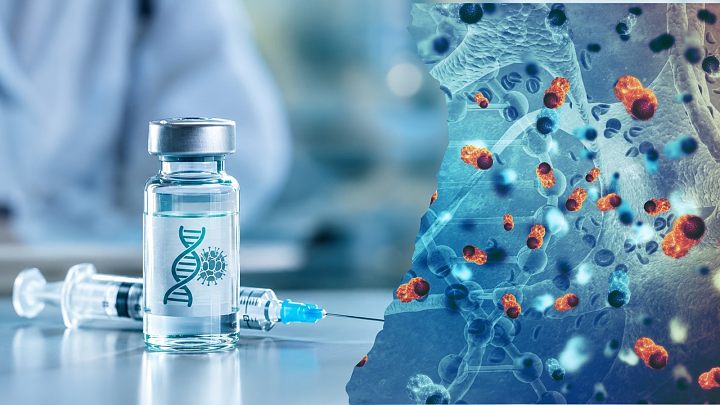
Image: Canva
What Did The Cancer Vaccine Trial Find?
The Phase 3 INTerpath-001 trial included 1,137 adults with high-risk stage IIB, IIC, III or IV melanoma following surgery. Participants received pembrolizumab, with some also receiving the personalised vaccine and others receiving a placebo.
After two years, 82.2% of people receiving the vaccine and Keytruda remained alive without their cancer returning, compared with 70% of those who received Keytruda alone. Researchers also found a 38% reduction in the relative risk of distant metastasis or death.
The vaccine did not eliminate the risk of cancer spreading, nor does a 38% reduction mean that 38% of patients were guaranteed to avoid metastasis. It refers to a reduction in relative risk compared with the trial’s control treatment.
How Does A Personalised Cancer Vaccine Work?
Unlike vaccines designed to prevent infections, this is a therapeutic cancer vaccine intended for people who already have cancer or have had a tumour removed.
The process begins with the patient’s tumour. Scientists analyse its genetic characteristics to identify mutations that distinguish cancer cells from healthy cells. These mutations can produce abnormal proteins called neoantigens, which can potentially be recognised by the immune system.
The vaccine uses mRNA to provide instructions that represent these tumour-specific targets. The aim is to train immune cells to recognise the cancer’s particular molecular fingerprints and respond if those cells appear again.
In simple terms, instead of giving the immune system a generic warning about cancer, researchers are trying to give it a personalised wanted poster.
The vaccine and immunotherapy have different roles.
The personalised vaccine is designed to teach the immune system what to look for. Pembrolizumab, meanwhile, helps immune cells maintain their ability to attack cancer by blocking a pathway that can suppress the immune response.
Researchers therefore see the two treatments as complementary rather than interchangeable. Experts at the Institute of Cancer Research described the approach as essentially training the immune system to recognise cancer cells while helping release the “brakes” on that immune response.
Can The Vaccine Prevent Cancer From Coming Back?
That is the bigger question behind the trial.
Image: Canva
The patients had already undergone surgery, but high-risk melanoma can return because microscopic cancer cells may remain in the body even when the visible tumour has been removed. Adjuvant treatment aims to reduce that risk.
The latest results suggest that adding the personalised vaccine to Keytruda can improve recurrence-free outcomes compared with Keytruda alone. However, researchers caution that longer follow-up is needed to determine whether the approach ultimately improves overall survival.
The treatment is also still experimental. Moderna and Merck are discussing the data with regulators, and potential approval will depend on regulatory review. The same personalised vaccine strategy is being studied in other cancers, including kidney, bladder and lung cancers, but the melanoma findings cannot automatically be applied to every cancer type.
Moderna and Merck have said they will engage with regulators about seeking approval. The vaccine is not yet available to patients and will require review by authorities including the US Food and Drug Administration. Cost and manufacturing logistics each dose must be made for an individual patient — will also shape how widely it can be used if approved.
The latest results are an important proof of concept, but researchers need longer-term data to understand how durable the benefit is and whether it translates into better overall survival. There are also practical challenges because each vaccine is made for an individual patient’s tumour rather than manufactured as one standard product.