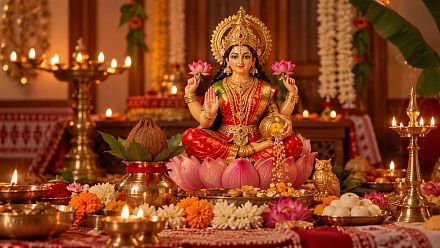
Why Do Bengalis Worship Maa Lakshmi Twice A Year? The Stories Behind Kojagari And Dipannita Puja
With the grand celebrations of Durga Puja behind them, Bengalis are not quite done with the festive season. While much of India looks ahead to Diwali after Navratri, Bengal has another beloved occasion to look forward to
Ni Lifestyle Desk··8K nabasa
Why Do Bengalis Worship Maa Lakshmi Twice A Year? The Stories Behind Kojagari And Dipannita Puja
With the grand celebrations of Durga Puja behind them, Bengalis are not quite done with the festive season. While much of India looks ahead to Diwali after Navratri, Bengal has another beloved occasion to look forward to: Kojagari Lakshmi Puja, when homes welcome Maa Lakshmi, the goddess of wealth and prosperity. And the worship does not end there for everyone. Some Bengali households also observe Dipannita Lakshmi Puja on Diwali night, giving the goddess another place in their festive calendar.
In 2026, Kojagari Lakshmi Puja falls on October 25, the full moon night of Sharad Purnima, while Dipannita Lakshmi Puja falls on November 8, the new moon night of Diwali, which is also celebrated as Kali Puja in Bengal. Though both occasions honour Maa Lakshmi, they carry distinct customs and spiritual beliefs, from Kojagari’s midnight vigil to Dipannita’s association with the glow of lamps and the hope of prosperity.
Kojagari Lakshmi Puja: Why Does Maa Lakshmi Ask, “Who Is Awake?”
The name Kojagari is traditionally linked to the Sanskrit phrase “Ko jagarti?”, which means “Who is awake?” According to popular belief, Maa Lakshmi visits the earth on the night of Sharad Purnima, moving from home to home and asking who is awake to welcome her. Those who remain awake in prayer and devotion are believed to receive her blessings. This is the story at the heart of Kojagari Lakshmi Puja, giving the occasion its association with a night-long vigil and the promise of prosperity.
For devotees, staying awake is more than simply waiting for midnight. It is an expression of faith and a way to welcome the goddess with a home prepared for her arrival. Families clean their homes, arrange offerings and recite the Lakshmir Panchali, a Bengali devotional text that narrates stories and beliefs associated with Maa Lakshmi. The rituals may differ from one household to another, but the intention remains the same: to invite good fortune, peace and abundance into the home.
One of the most recognisable traditions is drawing alpana, intricate designs made with a white rice-paste solution, on the floors of the house. Many families create small footprints leading from the entrance towards the place of worship, symbolising Maa Lakshmi’s arrival. Flowers, fruits, sweets and other customary offerings complete the puja. The home becomes a space of welcome, with every ritual expressing the hope that the goddess will bless the family in the year ahead.
Kojagari also carries a connection to the harvest and the everyday meaning of prosperity. In Bengali tradition, Maa Lakshmi is not only associated with wealth but also with food, grain and the well-being of the household. Her blessings represent the assurance that a family will have enough to eat and the means to live with dignity. That is why Lokkhi Pujo holds such a special place in Bengali homes, extending beyond material riches to encompass contentment, nourishment and domestic harmony.
Dipannita Lakshmi Puja: The Story Behind Worshipping Maa Lakshmi On Diwali
Dipannita Lakshmi Puja, also known as Dipanwita Lakshmi Puja, takes place on the new moon night of Kartik, which is Diwali night. The word is associated with the lighting of lamps, making illumination an important part of the occasion. In Bengal, the same night is devoted to Kali Puja, one of the region’s major religious celebrations. While many households focus on worshipping Goddess Kali, some also perform Lakshmi Puja as part of their Diwali observance.
Unlike Kojagari, which draws its spiritual meaning from the full moon and the belief that Maa Lakshmi asks who is awake, Dipannita is associated with the symbolism of light. Devotees light lamps, prepare their homes and pray for prosperity and auspicious beginnings. The act of illuminating the home reflects a broader Diwali tradition of welcoming good fortune and keeping darkness at bay.
For families who observe Dipannita Lakshmi Puja, the occasion is another opportunity to seek the goddess’s blessings. The prayers may centre on financial stability, success in work or business, and the well-being of loved ones. However, the customs are not uniform across Bengal. Some households observe both Kojagari and Dipannita Lakshmi Puja, while others follow Kojagari as their principal annual Lakshmi worship and devote Diwali night to Kali Puja.
The two observances therefore share a goddess but approach her through different traditions. Kojagari invites devotees to stay awake beneath the full moon, holding on to the belief that the goddess blesses those who remain devoted. Dipannita brings the focus to lamps, prayer and the hope of a fresh beginning on Diwali night.
For Bengalis, then, the festive season does not necessarily end when Durga Puja bids farewell to Maa Durga. Kojagari Lakshmi Puja keeps the celebrations going soon after, while Dipannita offers another occasion for devotion to Maa Lakshmi in households that follow the tradition.