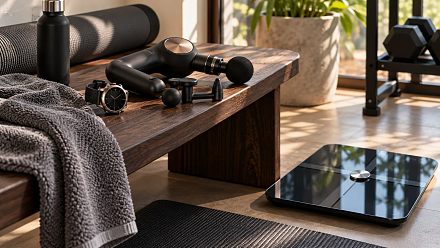
Which Fitness Gadgets Earn Their Shelf Space And Which Gather Dust
From premium recovery guns to advanced fitness trackers and smart scales, these are the expensive workout gadgets worth considering—and the ones you should think twice about buying.
Ni Consumer Trends Desk··16K nabasa
Which Fitness Gadgets Earn Their Shelf Space And Which Gather Dust
From premium recovery guns to advanced fitness trackers and smart scales, these are the expensive workout gadgets worth considering—and the ones you should think twice about buying.
There is a particular kind of optimism that comes with buying a new fitness gadget. Suddenly, recovery looks more organised, workouts seem more scientific, and the prospect of getting fitter feels a little more achievable. Then real life intervenes. The massage gun stays in its case, the smart scale becomes an expensive bathroom accessory, and the fitness tracker quietly runs out of battery.
The problem isn’t necessarily the technology. It’s whether the gadget solves a problem you actually have.
The most useful fitness technology tends to fall into four categories: equipment that helps you train consistently, devices that give you actionable feedback, tools that make recovery more convenient, and products that help you understand your progress. The least useful purchases are often those that duplicate information you already have, demand more attention than you want to give them, or promise results that no gadget can deliver on its own.
For this edit, we’re looking at premium fitness gadgets available through Amazon India, from high-end multisport watches to specialist recovery devices. The test isn’t simply how impressive the specifications look. It’s whether the product is likely to earn a regular place in your routine.
The gadgets that can earn their shelf space
1. Garmin Fenix 8 AMOLED
The serious training companion
Garmin’s Fēnix 8 is designed for people who do more than count daily steps. It combines multisport tracking, GPS navigation, training metrics and recovery-related insights in a rugged smartwatch. It’s particularly compelling for runners, cyclists, hikers and people who follow structured training plans.
Earns its shelf space if: You regularly train outdoors, want detailed performance data and will actually use it to guide your workouts.
Gather-dust risk: High if you only need basic step counts and occasional workout tracking.
2. Therabody Theragun PRO Plus
The post-workout recovery tool
The Theragun PRO Plus is a premium percussion massage device built for targeted muscle treatment. For people who train frequently, a massage gun can make self-massage more convenient and may provide short-term relief from muscle soreness or stiffness. It is a recovery accessory, not a substitute for sleep, appropriate training loads or medical care.
Earns its shelf space if: You exercise regularly, enjoy percussive massage and will use it consistently after demanding sessions.
Gather-dust risk: High if you rarely train or expect the device to compensate for inadequate recovery.
3. Withings Body Scan Smart Scale
The data-driven bathroom upgrade
Withings Body Scan is a connected scale that goes beyond displaying body weight, offering body-composition estimates and additional health measurements. It syncs data to an app, allowing users to follow trends over time instead of relying on a single weigh-in.
Earns its shelf space if: You enjoy tracking long-term trends and understand that body-composition readings are estimates that can fluctuate with hydration and other factors.
Gather-dust risk: High if you only want to know your weight—or if frequent measurements make you anxious about normal fluctuations.
4. WHOOP 5.0 One Health and Fitness Tracker
The recovery-data specialist
WHOOP 5.0 takes a screen-free approach to fitness tracking, focusing on sleep, exercise strain, recovery and personalised coaching. Its appeal lies in the longer-term patterns it can reveal, especially for people who want to understand how training, sleep and daily habits relate to their perceived readiness to exercise.
Remember that recovery scores are estimates, not medical diagnoses or definitive instructions about whether you should train.
Earns its shelf space if: You like reviewing trends, adjusting training habits and using data as one input in your decisions.
Gather-dust risk: High if you dislike subscriptions, don’t check the app or find constant health metrics distracting. Check the included membership period and renewal cost before buying.
Which fitness gadgets are most likely to gather dust?
The answer often depends less on the product itself and more on how well it fits your habits.
A gadget that solves a recurring problem
If you run four times a week, a capable GPS watch may be useful every day. If you exercise occasionally, its advanced training metrics may go largely unused.
A gadget that duplicates what you already own
Buying a second tracker to measure the same steps, heart rate and sleep patterns may add little value unless it offers a feature you genuinely need.
A gadget that requires too much upkeep
Frequent charging, complicated setup, app notifications and paid subscriptions can turn an exciting purchase into another task on your to-do list.
A gadget that promises more than it delivers
More data does not automatically mean better fitness. Smart scales estimate body composition, wearable recovery scores have limitations, and massage devices cannot replace a sound training programme.
The verdict: Buy for your routine, not your aspirational self
Premium fitness gadgets can be genuinely useful, but the best purchase is the one that fits the way you already exercise or makes a realistic new habit easier to maintain.
For structured outdoor training, the Garmin Fēnix 8 has a compelling use case. For someone who trains regularly and enjoys self-massage, the Theragun PRO Plus may justify its price. The Withings Body Scan and WHOOP 5.0 make more sense for people who actively want to follow health and recovery trends.
Before spending, ask yourself three questions: Will I use this at least several times a week? Does it offer something my existing equipment cannot? Am I comfortable with its maintenance, app requirements and ongoing costs?
If the answers are yes, the gadget has a good chance of earning its shelf space. If not, your next best fitness investment might simply be a pair of training shoes—and the habit of using them.