This Festive Season, Meet Bihar's 'Queen Of Sweets': The Delicate 'Bara' That Breaks Like Glass!
Bihar News: Every region has a special delicacy that carries the taste of its soil, traditions and history. In Bihar’s Nawada district, that sweet identity belongs to Bara, a traditional Pakribarawan preparation known fo
Ni Parishmita Saikia··21K nabasa
This Festive Season, Meet Bihar's 'Queen Of Sweets': The Delicate 'Bara' That Breaks Like Glass!
Bihar News: Every region has a special delicacy that carries the taste of its soil, traditions and history. In Bihar’s Nawada district, that sweet identity belongs to Bara, a traditional Pakribarawan preparation known for its unusual mix of crispness and softness. So delicate that it can break with the slightest pressure, yet so light that it almost melts in the mouth, this local speciality has earned a rather grand nickname: the ‘Queen of Sweets’.
Despite the growing popularity of modern desserts and confectionery, Bara has held on to its traditional appeal. Its popularity is no longer restricted to Nawada. The sweet is sold at fairs across Bihar and has also travelled to other states, with local makers taking its distinctive flavour to new audiences.
Why Is Pakribarawan’s ‘Bara’ So Special?
At first glance, Bara may look like an ordinary traditional sweet, but its texture makes it stand apart. Made using refined flour and sugar, it is known for its light, crispy exterior and delicate structure. A carefully prepared sugar solution adds sweetness, while the slow cooking process gives it its characteristic texture.
The sweet is so fragile that even a little pressure can cause it to crumble. An old saying in the region captures this unusual crispness: if a one-rupee coin falls on a Bara sweet, it will shatter.
Its delicate nature also makes handling important. From preparation and packaging to serving, the sweet requires a gentle touch. One careless movement can break it, almost like glass. Yet, this very quality has helped make Bara a distinctive local delicacy.
Rs 10 Per Piece: Nawada’s Famous Sweet Draws Crowds At Gaya Craft Fair
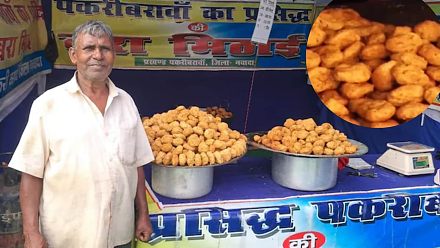
Bara’s popularity is on display at a craft fair at Azad Park in Gaya district. A stall showcasing Nawada’s famous sweet has become an attraction for visitors keen to sample the traditional delicacy.
The sweet is being sold for Rs 10 per piece, while the price per kilogram ranges from Rs 200 to Rs 300. According to the stall’s reported sales, visitors are buying as much as 40 kg of Bara every day at the fair.
Its popularity at the event reflects how traditional food products from smaller towns can find enthusiastic customers beyond their place of origin. For visitors, it is not just another sweet to try but also a taste of Nawada’s culinary heritage.
Meet Saryu Chaudhary, Who Has Sold Bara Sweet For 25 Years
Behind the growing popularity of Pakribarawan’s Bara are local sweet makers and small traders who have kept the traditional business alive. What began as a local speciality has gradually developed into a cottage industry, providing work to hundreds of people associated with its preparation and sale.
One of them is Saryu Chaudhary, who has been in the Bara sweet business for around 25 years. He regularly sets up stalls at fairs held in different districts of Bihar, introducing the sweet to people who may not have visited Nawada but are eager to try its famous delicacy.
Chaudhary says he started the business with an initial investment of just Rs 10,000. Over the years, it has grown into a source of good income for him. He says people across the districts where he sets up stalls have responded warmly to the sweet.
His journey also reflects the role of traditional food businesses in supporting local livelihoods. For traders like Chaudhary, every fair offers an opportunity to take a piece of Pakribarawan’s identity to a new audience.
How Is The Delicate Bara Sweet Prepared?
The preparation of Bara is as distinctive as the sweet itself. Refined flour is combined with sugar syrup to prepare the mixture, which is then cooked slowly in refined oil. Once the sweet has been fried and strained, a sugar solution is poured over it to give it its characteristic sweetness.
The process requires care and experience, particularly because the finished product is extremely delicate. Its crisp structure can easily break under pressure, making storage, transportation and handling just as important as the cooking itself.
The result is a sweet that combines a crisp bite with a light, delicate texture – a combination that has helped it retain its popularity over generations.
Also See This: A Makhana Twist To Your Diwali Sweets! Bihar’s New Thekua, Peda And Kalakand Are Worth A Look
From A Small Town In Nawada To A Bigger Market
Pakribarawan’s Bara has managed to preserve its traditional identity even as newer varieties of sweets continue to enter the market. Its makers and sellers have taken it to fairs across Bihar, helping the local delicacy reach customers in different districts and beyond.
The sweet has also become an important part of the area’s small-scale food economy, with hundreds of people involved in the cottage industry. However, wider market access and greater recognition remain the next big opportunities for this traditional product.
For now, every stall at a local fair helps carry the story of Pakribarawan a little further. And for anyone visiting the Gaya craft fair, a Rs 10 piece of Bara offers a chance to discover why this fragile, crispy delicacy from Nawada is fondly known as Bihar’s ‘Queen of Sweets’.