Persistent Cough, Wheezing? Experts List 8 Asthma Warning Signs Your Body May Be Giving You
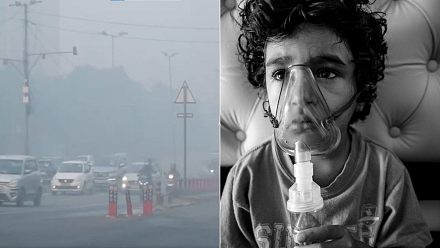
If you woke up to hazy skies, rising pollution levels and people complaining of coughing, throat irritation and difficulty breathing, you’re not alone. While some of these symptoms may be temporary reactions to smoke and
Ni Mallika Bhagat··5K nabasa
Persistent Cough, Wheezing? Experts List 8 Asthma Warning Signs Your Body May Be Giving You
If you woke up to hazy skies, rising pollution levels and people complaining of coughing, throat irritation and difficulty breathing, you’re not alone. While some of these symptoms may be temporary reactions to smoke and poor air quality, persistent or recurring respiratory problems should not automatically be dismissed as seasonal allergies. Air pollution can aggravate existing asthma and trigger symptoms in people who may not have been diagnosed with the condition. Fine particulate matter such as PM2.5 and PM10, vehicle exhaust, industrial emissions and construction dust can irritate the airways and contribute to inflammation.
“Pollution does not create trouble out of nowhere, but it is a powerful trigger. Fine particles, smoke and chemical fumes travel deep into the lungs and irritate the airways. In response, the airways swell, produce extra mucus and tighten,” says Dr Akshay Budhraja, Senior Consultant and HOD, Respiratory and Sleep Medicine, Aakash Healthcare Super Speciality Hospital.
According to Dr Aditya Nag, Assistant Professor, Department of Respiratory Medicine, Noida International Institute of Medical Sciences (NIIMS) College and Hospital, Greater Noida, air pollutants contribute to airway irritation, lung inflammation and the worsening of existing respiratory conditions.
8 asthma warning signs you should not ignore
A cough that refuses to go away
A persistent cough, particularly one that continues after other cold symptoms have settled, deserves attention. It may become more noticeable at night or in the early hours of the morning. “The most common mistake is people dismissing early symptoms as just the season. A cough that refuses to leave after a cold has gone is one of the earliest signs. If you find yourself coughing at night or in the early morning, especially when you lie down, your airways may be inflamed,” says Dr Budhraja.
Wheezing or a whistling sound while breathing
A whistling sound, particularly when breathing out, can be a sign that the airways have narrowed. Some people notice it while walking, climbing stairs or exercising, while others experience it at night. “Another sign to take seriously is a whistling or wheezing sound when you breathe out. Some people notice it only during a walk or while climbing stairs. Others hear it at night, when the house is quiet,” explains Dr Budhraja.
Tightness in the chest
A sensation of pressure or tightness in the chest can be another asthma symptom. If it recurs or accompanies coughing and breathlessness, it should not be ignored. “Alongside it, a feeling of tightness in the chest, as if a band is wrapped around your ribs, should never be brushed aside,” says Dr Budhraja.
Breathlessness during everyday activities
Struggling to climb a flight of stairs, walk at a usual pace or complete activities that were previously comfortable can indicate a respiratory problem. “Breathlessness that appears with activities you managed easily a few months ago is also a signal. If you are stopping to catch your breath on a flight of stairs you once climbed without thinking, your lungs are telling you something,” he adds.
Coughing after spending time outdoors
Pay attention to whether respiratory symptoms worsen after spending time in areas with heavy traffic, near construction sites or in places with visibly poor air quality. “If there is worsening of symptoms near highways, construction sites, or in other locations with heavy traffic, it is possible that environmental factors can provoke the occurrence of problems with the respiratory system,” says Dr Nag.
Burning eyes, runny nose and repeated sneezing
Air pollution can irritate the eyes and upper respiratory tract, leading to burning eyes, a runny nose and repeated sneezing. These symptoms do not, by themselves, confirm asthma. However, when they occur alongside persistent coughing, wheezing or chest tightness, it is worth getting checked. “Watch your eyes and nose too. Burning eyes, a constantly runny nose and repeated sneezing during high-pollution days often go hand in hand with airway irritation,” says Dr Budhraja.
Children tiring quickly while playing
Asthma symptoms in children may not always be obvious. A child who coughs after running, struggles to keep up with other children during play or wakes up repeatedly at night may need a respiratory assessment. “In children, the signs can be subtler. A child who tires quickly while playing, coughs after running, or wakes up repeatedly at night may have asthma that no one has named yet,” says Dr Budhraja.
Breathlessness that keeps recurring
Repeated episodes of breathing difficulty, even if they settle after some time, should not be treated as a normal response to pollution. People without a previous asthma diagnosis should also pay attention to recurring symptoms. “Even those who have no previous asthma conditions can develop serious inflammation in their lungs from continued exposure to tiny polluted particles in the air,” says Dr Nag. Dr Budhraja also cautions that pollution-related respiratory symptoms can affect people who have never previously been diagnosed with asthma. A recurring pattern, particularly during periods of poor air quality, warrants medical attention.
When should you seek immediate medical help?
Not every cough or episode of breathlessness is an emergency, but certain symptoms require urgent attention. Severe difficulty breathing, an inability to speak in complete sentences, bluish lips or fingertips, confusion, or symptoms that do not improve with prescribed reliever medication are warning signs that should not be waited out at home.
“Some signs mean you should not wait at all. If you cannot speak a full sentence without pausing for breath, if your lips or fingertips look bluish, if your reliever inhaler gives little or no relief, or if the wheezing keeps getting worse, please get to a hospital immediately,” says Dr Budhraja. “An asthma attack can escalate faster than most people expect,” he adds.
Dr Nag also stresses the importance of following prescribed treatment and seeking medical advice rather than repeatedly treating symptoms on one’s own. “Recurring coughing, wheezing or breathlessness should never be treated through self-medication or repeatedly ignored,” he says. You may be recommended spirometry, a lung function test that measures how well a person breathes, when clinically indicated. This can help identify asthma and assess its severity.