Navratri 2026 Ghatasthapana: Date, Time, Muhurat And Puja Vidhi
Navratri 2026 Ghatasthapana Date, Time: Shardiya Navratri 2026 will begin on Sunday, October 11, with devotees observing Ghatasthapana, also known as Kalash Sthapana, to mark the beginning of the nine-day festival dedica
Ni Nibandh Vinod··22K nabasa
Navratri 2026 Ghatasthapana: Date, Time, Muhurat And Puja Vidhi
Navratri 2026 Ghatasthapana Date, Time: Shardiya Navratri 2026 will begin on Sunday, October 11, with devotees observing Ghatasthapana, also known as Kalash Sthapana, to mark the beginning of the nine-day festival dedicated to Goddess Durga. The ritual is traditionally performed on Shukla Pratipada of the Ashwin month and marks the ceremonial invocation of Goddess Shakti.
According to Drik Panchang, the Pratipada Tithi begins at around 9:19 PM on October 10 and ends at around 9:30 PM on October 11, making October 11 the first day of Shardiya Navratri.
The auspicious muhurat for Ghatasthapana is 6:31 AM to 10:27 AM, while Abhijit Muhurat falls around 12:02 PM to 12:49 PM.
Navratri 2026 Ghatasthapana Date
Ghatasthapana is one of the most important rituals associated with the beginning of Shardiya Navratri.
Ghatasthapana Date: Sunday, October 11, 2026
Tithi: Ashwin Shukla Pratipada
Pratipada begins: October 10, around 9:19 PM
Pratipada ends: October 11, around 9:30 PM
Ghatasthapana: October 11, 2026
Navratri begins with Ghatasthapana and continues with the worship of the nine forms of Goddess Durga.
Ghatasthapana Muhurat 2026
For Mumbai, the morning Ghatasthapana window is 6:31 AM to 10:27 AM
Abhijit Muhurat: 12:02 PM to 12:49 PM
For other cities in Maharashtra, the timing may vary by a few minutes. For example, Drik Panchang lists 6:13 AM to 10:08 AM for Amravati, followed by an Abhijit Muhurat of 11:42 AM to 12:29 PM.
Read More: When Is Dussehra 2026: Date, Time, Significance And Vijayadashami Muhurat
Why is Ghatasthapana performed?
Ghatasthapana is one of the most important rituals associated with the beginning of Shardiya Navratri. A sacred Kalash is installed and worshipped as part of the invocation of Goddess Shakti.
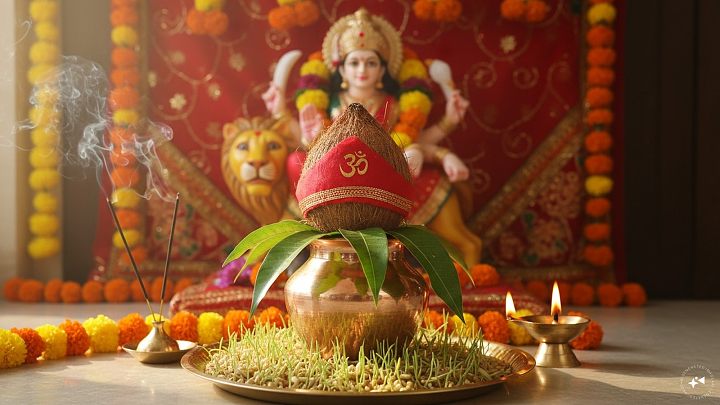
The ritual commonly includes a Kalash filled with water, sacred leaves and a coconut, along with barley seeds sown in an earthen vessel. The sprouting of the barley during Navratri is traditionally associated with growth and prosperity.
Ghatasthapana is performed during Pratipada and gives specific importance to performing the ritual within the prescribed period.
Read More: Durga Puja 2026 Calendar: Dates, Schedule, Sandhi Puja Time And Significance
Ghatasthapana Puja Vidhi: Step-by-Step
1. Clean and prepare the puja area
Begin by cleaning the place of worship. After bathing, devotees traditionally prepare a clean space for the Navratri puja. Place an image or idol of Goddess Durga on a decorated chowki, preferably covered with a clean red or yellow cloth.
2. Prepare the barley bed
Take a clean earthen pot and fill it with soil. Sow barley (jau) seeds in the soil. The vessel is placed at the designated spot for Ghatasthapana, and the barley is nurtured throughout Navratri.
3. Prepare the Kalash
Take a clean copper, brass or earthen Kalash and fill it with water. Gangajal may also be added according to family tradition.
Traditional offerings placed in or around the Kalash may include:
Akshat (uncooked rice)
A coin
Betel nut
Kumkum
Sacred thread or Mauli
Read More: When Is Mahalaya 2026? Date, City-wise Timings, Significance And Rituals
4. Arrange the leaves and coconut
Place five fresh mango leaves, or leaves traditionally used in the local custom, around the mouth of the Kalash. A coconut wrapped in a red cloth is then placed on top.
The Kalash is decorated as part of the ceremonial setup and is placed over or near the prepared barley bed.
5. Perform Sankalpa
Once the Kalash has been installed, devotees can take the Sankalpa, stating their intention to observe Navratri and perform the worship with devotion.
6. Light the diya and incense
Light a ghee lamp and incense before beginning the main worship. Offer flowers, fruits and other traditional naivedya to Goddess Durga.
Perform the Navratri puja according to family or regional tradition. Devotees may recite Durga mantras, Durga Saptashati or other prayers traditionally followed in their household.
8. Perform Aarti
Conclude the worship with Goddess Durga Aarti and seek the blessings of Devi Maa. The Kalash and barley are generally kept in the puja area for the duration of Navratri according to household tradition.
Navratri 2026: What happens next?
Shardiya Navratri will be observed from October 11 to October 19, 2026, followed by Vijayadashami or Dussehra on October 20. This year, Ashtami and Navami fall on the same date, October 19.
The nine forms of Goddess Durga traditionally worshipped during Navratri are: