From Measles Resurgence To Plague Fears: Expert Explains Why Diseases We Thought Were 'Dead' Keep Returning
A disease can disappear from the headlines without disappearing from the world. That difference has come into focus after the death of a laboratory worker in Siberia sparked fresh concern about pneumonic plague. The 28-y
Ni Mallika Bhagat··21K nabasa
From Measles Resurgence To Plague Fears: Expert Explains Why Diseases We Thought Were 'Dead' Keep Returning
A disease can disappear from the headlines without disappearing from the world. That difference has come into focus after the death of a laboratory worker in Siberia sparked fresh concern about pneumonic plague. The 28-year-old worker at the Irkutsk Anti-Plague Research Institute died on October 2 after developing pneumonia. Russian authorities have said the cause remains undetermined and have not confirmed plague, while the World Health Organization has sought additional information from Moscow. Around 200 people were reportedly placed under medical observation as a precaution.
The case has also arrived against the backdrop of a wider infectious-disease story. Measles, a disease that vaccination had pushed into the background in many parts of the world, has been resurging in several countries. In the US, Pennsylvania has reported more than 1,000 cases this year, while New York declared a statewide disaster emergency after recording 108 cases by October 3.
So, why are diseases that once seemed almost consigned to history making headlines again? According to Dr. Darshana Gopal Patil, Department Head and Consultant Pediatric ICU, Surya Hospitals, Chembur, the first thing to understand is that being uncommon is not the same as being eradicated.
A disease becoming rare does not mean it is gone
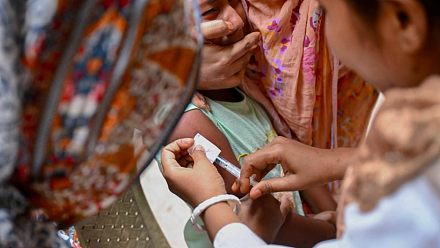
“It is important to distinguish a disease becoming uncommon from its being eradicated worldwide. Neither measles nor plague has been eradicated,” Dr. Patil says. She explains that measles can return when communities develop gaps in immunity. “Measles outbreaks occur when gaps in vaccination leave enough people susceptible for the virus to spread. When vaccination coverage falls or remains inadequate, community protection is reduced.”
That difference is important because a resurgence does not necessarily mean a vaccine has stopped working. “This should not be confused with the vaccine becoming ineffective,” she says. The recent measles numbers illustrate the problem. WHO and UNICEF reported that Europe and Central Asia recorded 33,998 measles cases in 2025, down sharply from 127,412 in 2024, but warned that the conditions behind the resurgence remain. WHO says 95% coverage with two doses is needed in every community to prevent outbreaks. The Americas are also experiencing a major resurgence. WHO’s Pan American Health Organization reported more than 22,000 confirmed measles cases and 39 deaths in the first half of 2026 across 17 countries and territories.
Plague is a different story
Plague is not a vaccine-coverage story in the same way measles is. “The bacterium that causes it, Yersinia pestis, persists in some regions among small mammals and their fleas,” Dr. Patil explains. “People can become infected through infected flea bites, contact with infected animals or, in pneumonic plague, inhalation of infectious respiratory droplets.” In other words, the bacterium never disappeared. WHO says human plague remains endemic in several countries, with most cases reported between 2019 and 2025 occurring in the Democratic Republic of the Congo and Madagascar.
And while the word “plague” immediately evokes the Black Death, modern medicine has changed the picture. The disease can be treated effectively with antibiotics when it is diagnosed early. Pneumonic plague, however, can progress rapidly and can spread through respiratory particles from an infected person. A CDC report published on October 1 also documented a fatal pneumonic plague case in Coconino County, Arizona, from July 2025. It was the state’s first pneumonic plague death since 2007.
That does not mean plague has suddenly returned as a widespread disease. Rather, it shows that the organism continues to exist in nature and that occasional human infections remain possible. As Dr. Patil puts it: “An isolated plague case and a measles resurgence therefore have different explanations. Both show why prevention and surveillance need to continue even when a disease becomes uncommon.”
Irkutsk Antiplague Research Institute specialists work in a laboratory. (AFP file image)
How much of measles’ return is about vaccines and misinformation?
Vaccination gaps are central to the measles story because the virus is exceptionally contagious. “Gaps in vaccination coverage are a major driver of measles outbreaks. Because measles is exceptionally contagious, at least 95% coverage with two doses of a measles-containing vaccine is needed in every community to prevent outbreaks,” Dr. Patil says. But she cautions against reducing every outbreak to vaccine misinformation alone. “Misinformation can contribute by undermining confidence in vaccination, but it is not the only explanation. Difficulty accessing services, missed appointments and disruptions to immunisation programmes can also leave children unprotected.”
The reason this matters is that falling vaccination coverage can create pockets of susceptible people. Once the virus enters one of those communities, its extreme contagiousness can allow transmission to accelerate. WHO and UNICEF have similarly pointed to both vaccination gaps and misinformation as factors behind the recent measles resurgence.
Dr. Patil says the response should be practical rather than panic-driven: “Parents should use reliable health information and discuss vaccine concerns with their paediatrician. Vaccination records should be checked so that recommended doses are given on time and missed doses are addressed.”
Should the Russia reports worry us?
Not in a way that calls for panic, Dr. Patil says. “They call for vigilance, rather than panic.” That is particularly important given the uncertainty surrounding the Siberian case. As of October 6, the death of the laboratory worker had not been confirmed as pneumonic plague. Reuters reported that Russian health officials had not linked the death to plague or laboratory work, while WHO was seeking further information. Dr. Patil says the situation should therefore be described carefully. “The confirmed Arizona case occurred in July 2025 and was described in a CDC report published in October 2026. It illustrates that rare human infections can still occur in regions where plague persists in animals.”
“The Siberian reports must be described separately. Based on information available as of 6 October 2026, a laboratory worker’s death from pneumonia of undetermined cause was being investigated; it should not be presented as a confirmed pneumonic-plague outbreak. Plague is a serious bacterial infection, and pneumonic plague, which affects the lungs, can progress rapidly and spread through close exposure to infectious respiratory droplets,” Dr. Patil says, adding, “Prompt treatment with appropriate antibiotics can save lives; suspected cases require urgent medical assessment.”
For most people in India, the Russia reports do not mean that a plague outbreak is underway here. “The relevance for India is the need to maintain vaccination coverage, disease surveillance and readiness to investigate unusual infections,” Dr. Patil says. “Reports from another country do not, by themselves, establish that an outbreak is occurring in India.”
For measles, that means staying on top of childhood vaccination and addressing missed doses rather than waiting for an outbreak. “For measles, the practical message is to keep children’s vaccinations up to date. Parents should have their child’s vaccination record reviewed and arrange any catch-up doses advised under the applicable immunisation schedule.”