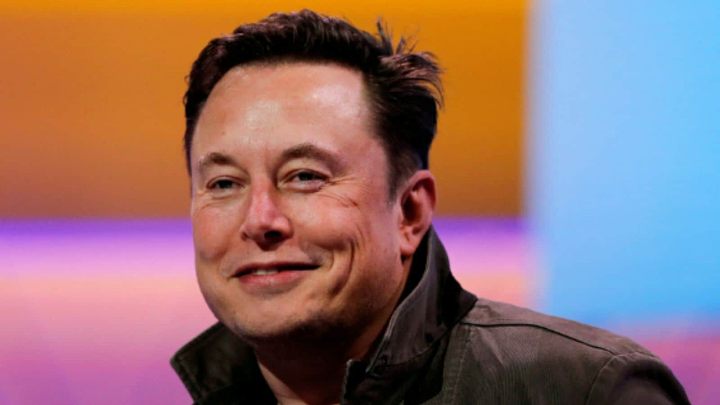
Elon Musk’s Advice To 20-Year-Olds In The AI Era: Don’t Put All Your Skills In One Basket
In a world where AI can master multiple fields, one career skill may matter most: adaptability. For decades, young people have been encouraged to pick a field, specialise in it and become exceptionally good at one thing.
Ni Swati Chaturvedi··30K nabasa
Elon Musk’s Advice To 20-Year-Olds In The AI Era: Don’t Put All Your Skills In One Basket
In a world where AI can master multiple fields, one career skill may matter most: adaptability. For decades, young people have been encouraged to pick a field, specialise in it and become exceptionally good at one thing. But as artificial intelligence begins to reshape everything from coding and design to research, finance and content creation, that formula is starting to look less certain.
Elon Musk’s advice to young people takes aim at precisely this problem: don’t limit yourself to one narrow area of knowledge. Learn broadly, stay curious and understand how different fields connect.
It is advice that sounds almost counterintuitive in an era obsessed with expertise. But in the AI economy, knowing how to move between disciplines could become one of the most valuable skills of all.
Why being a specialist may no longer be enough
AI systems are becoming increasingly capable across completely different domains. Musk has argued that the technology is advancing faster than many people realise, with AI potentially becoming highly capable across virtually every field.
That changes the calculation for someone entering the workforce at 20. If a person’s entire professional value is built around performing a particular set of repetitive tasks, increasingly capable AI could eventually perform some of those tasks faster and more cheaply.
That doesn’t mean expertise is irrelevant. Quite the opposite. Deep knowledge can still give someone an enormous advantage. But combining that expertise with knowledge of other disciplines could make a person far more adaptable.
A technology professional who understands psychology, for instance, may approach products differently. A marketer who understands data and AI can work differently from someone who only knows traditional advertising. A designer who understands business can think beyond aesthetics. The advantage lies in the overlap.
Learn across disciplines
Musk’s broader philosophy has often been associated with first-principles thinking—breaking complicated problems down to their fundamentals instead of accepting conventional assumptions.
For someone in their twenties, that can translate into a surprisingly simple learning strategy: don’t just study the subject that your degree or job title tells you to study.
Read outside your field. Learn how businesses operate. Understand technology even if you aren’t an engineer. Follow science. Study history. Learn about human behaviour. Develop financial literacy. Write. Build. Experiment.
You don’t need to become an expert in all of these areas. The point is to develop enough understanding to connect ideas that normally live in separate boxes.
Elon’s advice to 20-year-olds on surviving the AI era:
Get as broad-based an education as possible: arts, sciences, engineering, and wide general knowledge.
Why?
AI and robots will fulfill almost any request immediately.The edge won’t be doing the work. It will be knowing what… pic.twitter.com/3wJmcaQtXo
— Lark Davis (@LarkDavis) September 28, 2026
The AI era rewards people who can connect the dots
Some of the most interesting opportunities created by AI are appearing at the intersection of existing industries. AI is not simply a technology story. It is changing healthcare, education, entertainment, manufacturing, finance, retail and media.
That means the people who understand both the technology and the problem it is being used to solve can have an advantage.
A person who knows everything about AI but understands nothing about a particular industry may struggle to identify the problems worth solving. Someone who understands an industry deeply but refuses to learn how AI is changing it could eventually find their expertise becoming less relevant.
The sweet spot may be somewhere between the two.
Don’t confuse learning everything with knowing everything
There is, of course, a difference between being a generalist and being superficial. “Learn everything” shouldn’t mean collecting random information without developing any real competence. Instead, it can mean building a strong foundation in several areas while developing deeper expertise in one or two.
Think of it as a T-shaped skill set: broad knowledge across many subjects, combined with serious depth in a particular area.
That approach may also make it easier to change direction when industries evolve.
Your first career doesn’t have to be your final one
For someone who is 20 today, predicting the perfect career for the next 30 years may be almost impossible. The jobs that look secure now could change dramatically. Entirely new roles could emerge. Existing professions could be transformed by AI rather than eliminated.
That makes adaptability particularly valuable.
Instead of asking only, “What should I become?”, young people may benefit from asking: “What can I keep learning?”
Because the strongest advantage in an unpredictable job market may not be knowing exactly what the future holds.
It may be having the confidence and curiosity to learn your way into it.
The real lesson: stay curious
Musk’s advice ultimately points towards a broader idea: don’t let a job title become the boundary of your education. Specialisation can make you valuable. But curiosity can keep you relevant.
In an AI era where machines are increasingly capable of mastering individual tasks, humans may have to become better at doing something different, bringing together knowledge, asking better questions, spotting connections and deciding what is actually worth solving.
For today’s 20-year-olds, that could mean the smartest career move isn’t choosing one narrow lane and staying there forever.
Learn widely. Go deep where it matters. Keep experimenting. And never stop being curious.