Durga Puja 2026 Calendar: Dates, Schedule, Sandhi Puja Time And Significance
Durga Puja 2026 Calendar: Durga Puja is one of the most important festivals in the Bengali cultural calendar, bringing together devotion, art, music, food and community celebrations. In 2026, the main Durga Puja observan
Ni Nibandh Vinod··23K nabasa
Durga Puja 2026 Calendar: Dates, Schedule, Sandhi Puja Time And Significance
Durga Puja 2026 Calendar: Durga Puja is one of the most important festivals in the Bengali cultural calendar, bringing together devotion, art, music, food and community celebrations. In 2026, the main Durga Puja observances in Kolkata and across Bengal will culminate on Wednesday, October 21, with Vijaya Dashami.
Maha Shashthi: October 16
Maha Saptami: October 18
Maha Ashtami: October 19
Maha Navami: October 20
Vijaya Dashami: October 21.
Durga Puja 2026 takes place from October 16 to October 21, 2026, with the main 5 days of worship running from Maha Shashthi through Bijoya Dashami.
Mahalaya 2026: October 10
Although the five principal days of Durga Puja begin with Shashthi, Mahalaya marks an important beginning to the festive period. In Bengali tradition, it marks the conclusion of Pitri Paksha and the beginning of Devi Paksha.
Mahalaya is closely associated with the recitation and broadcast of Mahishasura Mardini, while devotees also perform tarpan to pay homage to their ancestors. In the traditional understanding of the festival, the day marks the beginning of Maa Durga’s arrival.
Maha Shashthi 2026: October 16
Maha Shashthi falls on Friday, October 16, 2026.
Shashthi marks the formal beginning of the main Durga Puja celebrations. Important rituals associated with this phase include Bilva Nimantran, Kalparambha, Bodhan, Amantran and Adhivas, depending on the particular tradition followed.
In Bengal, the evening of Shashthi is especially significant because it is associated with the ceremonial awakening and invocation of Goddess Durga.
The festival is not only a religious celebration but also a major cultural occasion. Pandal construction, idol-making, lighting and community preparations typically reach their peak around this time.
Maha Saptami 2026: October 18
Maha Saptami falls on Sunday, October 18.
One of the most recognisable rituals of Saptami is the Nabapatrika Snan, during which a bundle of nine plants is ceremonially bathed and worshipped. The Nabapatrika is traditionally associated with the divine feminine and the abundance of nature.
The ritual is followed by Prana Pratishtha, the ceremonial invocation of divine presence into the idol.
The Bengali tradition surrounding Saptami combines religious observance with the distinctive community atmosphere of the puja, as pandals begin drawing large crowds for darshan and celebrations.
Maha Ashtami 2026: October 19
Maha Ashtami falls on Monday, October 19, 2026.
Ashtami is among the most significant days of Durga Puja. Devotees traditionally participate in Pushpanjali, offering flowers and prayers to Goddess Durga.
Kumari Puja, where a young girl is worshipped as a manifestation of the divine feminine, is another important observance associated with Ashtami in many traditions.
The day is also particularly important because of the Sandhi Puja, which takes place at the transition between Ashtami and Navami.
Sandhi Puja 2026
The Sandhi Puja will take place on Monday, October 19, from 10:27 AM to 11:15 AM.
Sandhi Puja represents the junction of the final 24 minutes of Ashtami and the first 24 minutes of Navami. In Hindu tradition, this period is associated with Goddess Chamunda’s manifestation to defeat Chanda and Munda.
The ritual is traditionally marked by intense devotional observance, including the lighting of lamps and offerings to the Goddess. Many puja committees also observe the occasion with special dhak performances and other ceremonial rituals.
Maha Navami 2026: October 20
Maha Navami falls on Tuesday, October 20.
Navami marks the final major day of worship before Vijaya Dashami. Devotees participate in Navami Puja, offerings, bhog and other concluding rituals.
In many Bengali pujas, the atmosphere on Navami combines intense religious observance with the festive energy of the final evening. Cultural performances, dhak beats and Dhunuchi Naach are among the traditions associated with the celebrations.
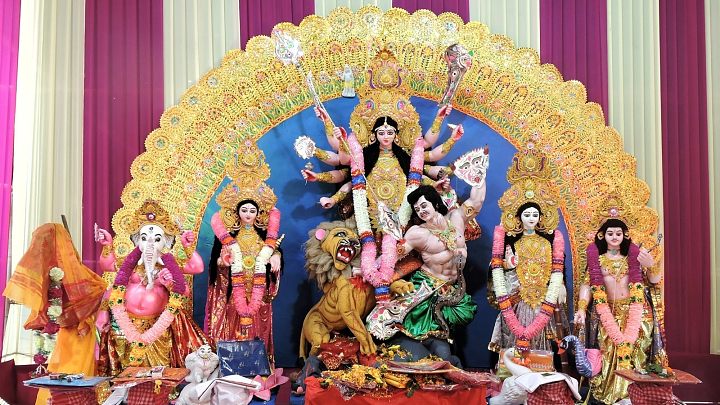
Navami also represents the final stage of the mythological battle between Goddess Durga and Mahishasura, leading to the victory celebrated on Dashami.
Vijaya Dashami 2026: October 21
Vijaya Dashami falls on Wednesday, October 21, 2026.
Dashami marks the conclusion of the principal Durga Puja observances. Among the traditional rituals are Darpan Bisarjan, Sindoor Khela and the immersion of Durga idols.
Sindoor Khela is particularly associated with Bengali celebrations, with married women traditionally applying vermilion to the Goddess and to one another before the immersion.
The immersion, or Durga Visarjan, marks Maa Durga’s departure after her annual visit. The farewell is accompanied by the traditional exchange of Bijoya greetings, when people seek blessings from elders and visit friends and relatives.
For this reason, the final day carries both celebration and emotion: devotees bid farewell to the Goddess while looking forward to her return the following year.
Why Durga Puja Is Celebrated
Durga Puja celebrates the victory of Goddess Durga over Mahishasura, the buffalo demon. The story represents the triumph of good over evil and the victory of righteousness over destructive forces.
The symbolism goes beyond a single mythological battle. Goddess Durga represents Shakti, or divine feminine power, and her victory is traditionally understood as a reminder that righteousness and truth ultimately prevail over adharma.
The Bengali Tradition of Maa Durga’s Homecoming
Durga Puja has a distinctive emotional character in Bengali culture because Maa Durga is often regarded as a daughter returning to her parental home.
The Goddess is imagined as visiting her mother and family for a few days before returning to her husband’s home in Mount Kailash. This interpretation gives the festival an intimate, familial dimension.
It is why the final farewell can feel particularly emotional. The immersion is not simply the end of a religious ceremony; culturally, it is a daughter’s departure after a brief homecoming.
Durga Puja as Culture, Art and Community
Durga Puja extends far beyond temple worship. Kolkata’s celebrations bring together idol-making, pandal architecture, lighting, music, traditional drumming, food and community participation.
UNESCO inscribed “Durga Puja in Kolkata” on the Representative List of the Intangible Cultural Heritage of Humanity in 2021. UNESCO describes the festival as a major public expression combining religion and art, with temporary installations, traditional drumming and community participation forming an important part of the celebration.
The recognition also underlines why the festival is significant beyond its religious dimension. Artists, craftsmen, designers, performers, organisers and local communities all contribute to the experience.