Choti Diwali 2026: Date, Significance, Naraka Chaturdashi Puja And Rituals
Chhoti Diwali 2026 will witness an unusual calendar alignment, with Naraka Chaturdashi, popularly known as Chhoti Diwali, and Badi Diwali, the main festival of Deepavali, falling on the same date, Sunday, November 8. Whi
Ni Nibandh Vinod··13K nabasa
Choti Diwali 2026: Date, Significance, Naraka Chaturdashi Puja And Rituals
Chhoti Diwali 2026 will witness an unusual calendar alignment, with Naraka Chaturdashi, popularly known as Chhoti Diwali, and Badi Diwali, the main festival of Deepavali, falling on the same date, Sunday, November 8. While the two occasions are traditionally observed on separate days, the timing of the Hindu lunar tithis has brought their celebrations together this year.
Read More: Happy Chhoti Diwali 2026: 50+ Wishes, Messages, Images And Quotes To Share With Loved Ones
According to Drik Panchang, Krishna Chaturdashi will end at approximately 11:27 AM on November 8, after which Amavasya, the new moon tithi, will begin. This allows devotees to observe the traditional Naraka Chaturdashi rituals in the morning and perform Lakshmi Puja during the evening Pradosh period on the same day.
Read More: Happy Diwali Wishes 2026: 55+ Best Corporate Wishes For Employees, Colleagues And Clients
The unusual alignment has raised questions about why Chhoti Diwali and Badi Diwali share a date in 2026 and whether the festival should be observed on November 7 or 8.
Here is everything to know about the date, significance, Panchang timings, Naraka Chaturdashi puja vidhi and traditional rituals associated with Chhoti Diwali.
Chhoti Diwali 2026: Date And Important Tithi Timings
Chhoti Diwali, also known as Naraka Chaturdashi, will be observed on Sunday, November 8, 2026.
The important dates and tithi timings are:
Chhoti Diwali (Naraka Chaturdashi): Sunday, November 8, 2026
Badi Diwali (Lakshmi Puja): Sunday, November 8, 2026
Krishna Chaturdashi Tithi Begins: November 7, 10:47 AM
Krishna Chaturdashi Tithi Ends: November 8, 11:27 AM
Amavasya Tithi Begins: November 8, 11:27 AM
Amavasya Tithi Ends: November 9, 12:31 PM
The tithi timings are based on the Drik Panchang calendar. Local sunrise, sunset and auspicious ritual muhurats vary by city.
Read More: Choti Diwali 2026: Is It On November 7 Or 8? Check Correct Date
Why Do Chhoti Diwali And Badi Diwali Fall On The Same Day In 2026?
The Hindu calendar follows lunar tithis rather than fixed Gregorian dates. Unlike a regular calendar day, a tithi can begin or end at any time, depending on the Moon’s position relative to the Sun.
In 2026, Krishna Chaturdashi begins on Saturday, November 7, at 10:47 AM and ends on Sunday, November 8, at 11:27 AM.
The traditional Naraka Chaturdashi Abhyang Snan is associated with the pre-dawn period when Chaturdashi is prevailing. Since the tithi continues into the early morning of November 8, the main morning observance of Chhoti Diwali falls on Sunday.
The Amavasya Tithi begins immediately after Chaturdashi ends on November 8. Since Amavasya remains active during the evening Pradosh Kaal, the main Diwali celebrations and Lakshmi Puja also take place on Sunday.
This is why both festivals are listed on November 8, 2026.
Read More: Diwali 2026: What Is Chopda Pujan? Significance And Business Traditions
City-wise Diwali 2026 Lakshmi Puja Muhurat
Lakshmi Puja is generally performed during Pradosh Kaal, the period after sunset.
Why Is Chhoti Diwali Celebrated? Significance Of Naraka Chaturdashi
Chhoti Diwali, also known as Naraka Chaturdashi, Narak Chaudas and Roop Chaudas, is celebrated on Krishna Chaturdashi, the fourteenth day of the waning lunar fortnight.
The festival commemorates the victory of Lord Krishna over the demon Narakasura and symbolises the triumph of good over evil.
According to Hindu mythology, Narakasura was a powerful demon who caused suffering and terror. Lord Krishna defeated him and freed those held captive by the demon. His defeat is remembered as the victory of righteousness over evil and the restoration of peace.
The occasion is also associated with the removal of negativity, spiritual purification and the beginning of festive celebrations ahead of the main Diwali festival.
One of the most important traditions associated with Naraka Chaturdashi is Abhyang Snan, a ritual oil bath performed before sunrise.
Read More: Diwali 2026: Last-Minute Home Decoration Ideas With Diyas, Lights And Flowers
Chhoti Diwali 2026: Significance Of Abhyang Snan
Abhyang Snan is considered one of the most important rituals of Naraka Chaturdashi. Devotees traditionally wake up before sunrise and apply oil to their bodies before taking a ceremonial bath.
Sesame oil and ubtan are traditionally used in the ritual, which is associated with purification and the removal of negativity.
According to Hindu customs, devotees take the traditional bath during the prescribed pre-dawn period while Chaturdashi Tithi is prevailing. The ritual is believed to cleanse the body and mind and symbolically help devotees move away from negative thoughts and influences.
In several Indian households, the day begins with traditional bathing rituals, prayers, the lighting of diyas and festive preparations.
The occasion also recalls the legend of Narakasura’s defeat by Lord Krishna, which is why Naraka Chaturdashi is regarded as a celebration of freedom from darkness and negativity.
Naraka Chaturdashi 2026: Puja Vidhi And Rituals
Naraka Chaturdashi is observed through several traditional rituals, with Abhyang Snan being one of the most important. Devotees also offer prayers, light earthen lamps and remember Lord Krishna’s victory over Narakasura.
Some of the important rituals associated with Chhoti Diwali include:
Abhyang Snan: Devotees wake up before sunrise and apply sesame oil to their bodies before taking a traditional bath. Ubtan and other customary bathing preparations may also be used. The ritual is believed to cleanse the body and remove negativity.
Prayers To Lord Krishna: Devotees offer prayers to Lord Krishna, who is associated with the defeat of Narakasura. The occasion commemorates the end of the demon’s tyranny and the restoration of peace.
Lighting Diyas: Earthen lamps are lit in and around homes. In several traditions, lamps are also offered in remembrance of Yama, the god of death, as part of the observance of Yama Deepam.
Offering Prayers And Sweets: Families offer flowers, sweets, fruits and other customary offerings during prayers. Regional customs and family traditions determine the specific offerings.
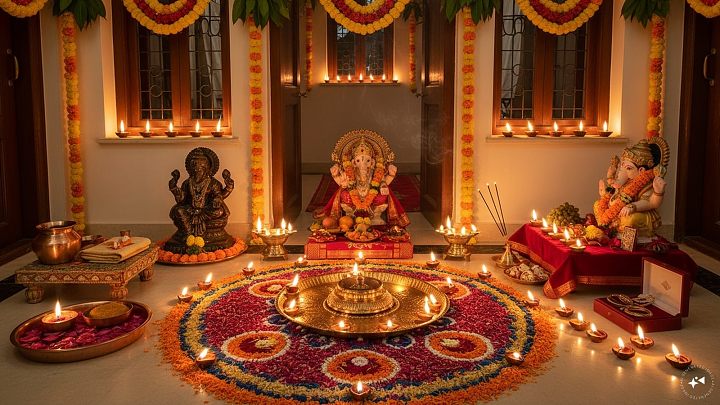
Cleaning And Decorating Homes: Homes are cleaned and decorated with rangoli, flowers and diyas. These preparations mark the festive occasion and welcome prosperity and positivity.
The exact timing of the morning bath and other observances should be checked against the local Panchang, as sunrise and auspicious periods vary by location.
Badi Diwali 2026: Why Is Lakshmi Puja Also On November 8?
Badi Diwali, or the main Diwali festival, is celebrated on Amavasya, the new moon day of the Hindu lunar calendar.
The most important ritual of the occasion is Lakshmi Puja, during which devotees worship Goddess Lakshmi for wealth, prosperity and good fortune. Lord Ganesha is also worshipped during the puja.
The ritual is performed during the evening Pradosh period when Amavasya Tithi is prevailing.
In 2026, Amavasya begins at approximately 11:27 AM on November 8 and continues until 12:31 PM on November 9.
Although the tithi extends into Monday afternoon, it is present during the Sunday evening Pradosh period. Therefore, November 8 is the appropriate date for the main Diwali Lakshmi Puja.
Another common question is whether Diwali should be celebrated on November 9 because Amavasya continues until that afternoon.
The answer lies in the traditional timing of Lakshmi Puja.
The main Diwali puja is associated with the evening Pradosh period, and Amavasya must be prevailing during that time.
In 2026, Amavasya begins on November 8 at approximately 11:27 AM and continues until November 9 at approximately 12:31 PM.
This means Amavasya is present during the evening of November 8 but ends before the evening of November 9.
Consequently, Lakshmi Puja is observed on Sunday, November 8, and not Monday, November 9.
How The Diwali 2026 Timeline Works
The festival calendar becomes easier to understand when the rituals are viewed according to their respective timings.
Saturday, November 7, 2026
10:47 AM: Krishna Chaturdashi Tithi begins.
Evening: Preparations for the upcoming festival and regional Chaturdashi-related observances.
Sunday, November 8, 2026
Before sunrise: Naraka Chaturdashi Abhyang Snan and morning rituals.
11:27 AM: Chaturdashi Tithi ends and Amavasya begins.
Evening: Badi Diwali celebrations and Lakshmi-Ganesha Puja during Pradosh Kaal.
Late night: Kali Puja and Mahanishita Kaal observances in traditions that follow these timings.
The schedule shows how the morning rituals of Naraka Chaturdashi and evening celebrations of the main Diwali festival fall on the same calendar date.
Chhoti Diwali And Badi Diwali: What Should Devotees Remember?
Although both festivals fall on November 8 in 2026, their religious significance and prescribed rituals remain different.
Naraka Chaturdashi is associated with Krishna Chaturdashi, Lord Krishna’s victory over Narakasura and the pre-dawn Abhyang Snan. Badi Diwali, on the other hand, is associated with Amavasya and the evening Lakshmi-Ganesha Puja.
Devotees should follow their city-specific Panchang timings for the rituals because sunrise, sunset and auspicious muhurats vary across locations.
Chhoti Diwali 2026 FAQs
When Is Chhoti Diwali 2026?
Chhoti Diwali, also known as Naraka Chaturdashi, will be observed on Sunday, November 8, 2026.
Why Are Chhoti Diwali And Badi Diwali On The Same Day In 2026?
Both festivals fall on November 8 because Krishna Chaturdashi ends at approximately 11:27 AM, after which Amavasya begins. This allows Naraka Chaturdashi rituals to take place in the morning and Lakshmi Puja during the evening Pradosh period.
What Is The Significance Of Naraka Chaturdashi?
Naraka Chaturdashi commemorates Lord Krishna’s victory over the demon Narakasura. The festival symbolises the triumph of good over evil and the removal of negativity.
What Is Abhyang Snan On Chhoti Diwali?
Abhyang Snan is a traditional oil bath performed before sunrise on Naraka Chaturdashi. It is associated with purification and the removal of negativity.
Is Chhoti Diwali On November 7 Or November 8 In 2026?
The main Naraka Chaturdashi morning observance falls on November 8, 2026. Krishna Chaturdashi Tithi begins on November 7 at approximately 10:47 AM and ends on November 8 at 11:27 AM.
Why Is November 9 Not The Main Diwali Date In 2026?
Although Amavasya continues until approximately 12:31 PM on November 9, it is present during the evening Pradosh period on November 8. Therefore, the main Lakshmi Puja is observed on November 8.
Chhoti Diwali and Badi Diwali will both be observed on Sunday, November 8, 2026. While Chhoti Diwali is associated with Lord Krishna’s victory over Narakasura and the traditional pre-dawn Abhyang Snan, Badi Diwali marks the celebration of Amavasya and the evening Lakshmi-Ganesha Puja.
The unusual calendar alignment has brought the two important festival observances together on the same date this year. Devotees should follow their local Panchang for the exact Abhyang Snan and Lakshmi Puja timings, as auspicious periods vary across cities.