Chhath Puja: Are There 4 Types? Know About Kartik, Chaiti And More
Chhath Puja is one of the most significant Hindu festivals dedicated to the worship of Lord Surya, the Sun God, and Chhathi Maiya. Deeply rooted in the cultural traditions of Bihar, Jharkhand and eastern Uttar Pradesh, t
Ni Nibandh Vinod··23K nabasa
Chhath Puja: Are There 4 Types? Know About Kartik, Chaiti And More
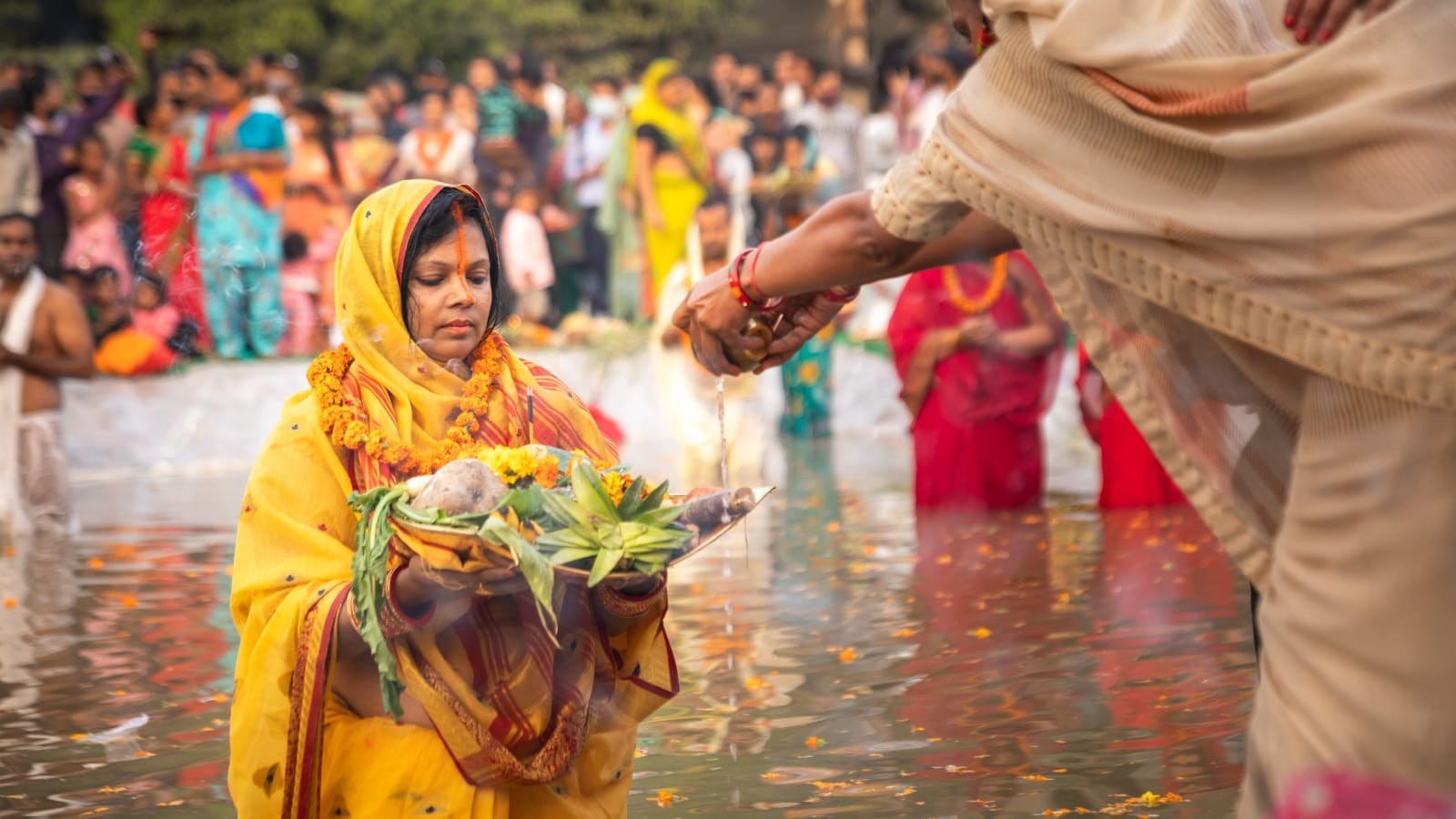
Chhath Puja is one of the most significant Hindu festivals dedicated to the worship of Lord Surya, the Sun God, and Chhathi Maiya. Deeply rooted in the cultural traditions of Bihar, Jharkhand and eastern Uttar Pradesh, the festival is observed with fasting, prayers and offerings to the setting and rising Sun.
Most devotees are familiar with the two major Chhath celebrations held every year: Kartik Chhath, observed after Diwali, and Chaiti Chhath, celebrated during the spring month of Chaitra.
Read More: Chhath Puja 2026: Why Devotees Worship The Setting And Rising Sun
However, a discussion by Batkuchanwale, a Bhojpuri and Purvanchali cultural platform, draws attention to two other seasonal observances associated with Sun worship: Bhado Chhath and Maghi Chhath.
The platform’s four-type classification includes Kartik, Chaiti, Bhado and Maghi Chhath. While the first two are widely recognised as the principal annual Chhath celebrations, the other two have regional and traditional associations with Surya worship. Here’s a closer look at these four observances and their significance.
View this post on Instagram
A post shared by Batkuchan (@batkuchanwale)
The discussion offers an interesting perspective on lesser-known traditions associated with the festival. However, these four observances do not have the same level of recognition or identical rituals across all regions.
What Are the Four Types of Chhath Puja?
In its discussion of Chhath traditions, Batkuchanwale highlights four seasonal observances associated with Sun worship. These include the two widely celebrated forms of Chhath Puja, Kartik and Chaiti, along with Bhado and Maghi.
The four observances mentioned in the discussion are:
Kartik Chhath (Dala Chhath): The main and most widely celebrated Chhath festival, observed during Kartik.
Chaiti Chhath: The spring-season celebration observed during Chaitra.
Bhado Chhath: Associated in regional traditions with Lolark Shashthi and Surya worship.
Maghi Chhath: A lesser-known observance mentioned in some regional traditions during Magha.
Kartik Chhath (Dala Chhath)
Kartik Chhath is the most widely celebrated and prominent form of Chhath Puja. It is observed during the Hindu month of Kartik, generally in October or November, six days after Diwali.
The festival is celebrated with great devotion across Bihar, Jharkhand, eastern Uttar Pradesh and other parts of India where people from these regions have settled.
Read More: Chhath Puja 2026: Date, Calendar, Shashthi Tithi, Sunrise And Sunset Timings
Kartik Chhath is known for its elaborate preparations, traditional bamboo baskets, homemade prasad and gatherings at rivers, ponds and other water bodies.
Devotees observe a strict fast and offer arghya to both the setting and rising Sun. In many families, the main fasting period after Kharna lasts approximately 36 hours without food or water.
The four-day festival follows this sequence:
Nahay Khay: Devotees take a ritual bath, clean their homes and prepare a traditional meal.
Kharna: A day-long fast is observed, followed by an evening offering of kheer and roti.
Sandhya Arghya: Devotees offer prayers and arghya to the setting Sun.
Usha Arghya: The festival concludes with offerings to the rising Sun, followed by Parana.
Kartik Chhath is particularly significant because of its large-scale community participation, traditional folk songs and family rituals passed down through generations.
It is also commonly known as Dala Chhath, a name associated with the traditional bamboo baskets used to carry the offerings.
Chaiti Chhath
Chaiti Chhath is the spring-season observance of Chhath Puja. It is celebrated during the Hindu month of Chaitra, generally in March or April, on the sixth day of the Shukla Paksha.
Unlike Kartik Chhath, which takes place after Diwali, Chaiti Chhath is observed around the time of Chaitra Navratri.
The festival follows the same basic four-day sequence as the Kartik observance, including Nahay Khay, Kharna, Sandhya Arghya and Usha Arghya.
Devotees worship Surya Dev and Chhathi Maiya and seek blessings for the health, happiness and prosperity of their families.
Read More: Chhath Puja 2026: Complete Samagri List – What Items Are Required For Worship?
Chaiti Chhath is generally observed on a smaller scale than Kartik Chhath. The warmer weather during this season can also make the rigorous fasting period more challenging for devotees.
However, its religious significance remains important among families who follow the spring Chhath tradition.
The main rituals include preparing traditional prasad, observing the prescribed fast and offering arghya to the setting and rising Sun.
Bhado Chhath (Lolark Shashthi or Surya Shashthi)
In the four-part classification highlighted by Batkuchanwale, Bhado Chhath is associated with Lolark Shashthi, also known as Lolark Chhath or Surya Shashthi.
It is observed during the Hindu month of Bhadrapada, generally in August or September, on Shukla Paksha Shashthi.
The observance is particularly associated with Varanasi in Uttar Pradesh, where devotees visit the famous Lolark Kund to worship the Sun God.
Lolark Kund, situated near Tulsi Ghat in Varanasi, is an important religious site associated with Surya worship. On Lolark Shashthi, devotees gather at the kund for ritual bathing and prayers.
The observance is especially associated with prayers for children, fertility and family well-being. Couples seeking blessings for parenthood also visit the sacred water body.
Read More: Chhath Puja 2026: Who Is Chhathi Maiya? Know The Story, History And Significance
Unlike the main Kartik and Chaiti Chhath festivals, Lolark Shashthi has its own distinct regional rituals and should not automatically be described as following the complete four-day Chhath sequence.
The observance reflects the importance of Sun worship in the religious traditions of eastern Uttar Pradesh and the wider Purvanchal region.
Maghi Chhath
Batkuchanwale’s discussion also mentions Maghi Chhath as a seasonal observance associated with Sun worship.
It is linked to the Hindu month of Magha, which generally falls in January or February.
The observance is associated with prayers to Surya Dev for good health, prosperity and family well-being. It is described in some local traditions as a relatively quieter or household-based observance compared with the large public celebrations of Kartik Chhath.
Magha is also an important period for religious bathing, charity and Sun worship in several Hindu traditions.
However, Maghi Chhath is not as widely documented or universally recognised as a separate major Chhath festival as Kartik and Chaiti Chhath. Its specific rituals and observance can vary by region and family tradition.
Devotees following this custom may observe prayers and fasting according to their local panchang and family practices.
What Is the Difference Between Kartik, Chaiti, Bhado and Maghi Chhath?
Although all four observances are discussed in connection with seasonal Sun worship, their timing, scale and regional practices differ.
Observance
Hindu Month
Approximate Period
Key Association
Kartik Chhath
Kartik
October–November
Main four-day Chhath festival
Chaiti Chhath
Chaitra
March–April
Spring-season Chhath
Bhado Chhath
Bhadrapada
August–September
Lolark Shashthi and Surya worship
Maghi Chhath
Magha
January–February
Regional Sun-worship traditions
The main distinction is that Kartik and Chaiti Chhath are widely recognised as the two annual seasonal celebrations of the festival. Bhado’s Lolark Shashthi is a distinct regional Sun-worship observance, while Maghi Chhath is mentioned in some local traditions.
Why Is Chhath Puja Celebrated Twice a Year?
Chhath Puja is primarily observed twice a year, during Kartik and Chaitra.
The festival is dedicated to Surya Dev, who is worshipped as the source of light, energy and life. Devotees also worship Chhathi Maiya and seek blessings for their children and families.
The two annual celebrations fall in different seasons but follow similar traditional rituals.
Kartik Chhath is the larger and more widely observed celebration, while Chaiti Chhath is the spring observance.
The practice of offering arghya to both the setting and rising Sun is one of the most distinctive aspects of the festival.
Devotees believe that the rituals express gratitude towards nature and seek divine blessings for health, prosperity and family happiness.
Who Is Batkuchanwale?
Batkuchanwale is a Bhojpuri and Purvanchali cultural content platform that discusses regional traditions, folklore, festivals and cultural practices. Its discussion on Chhath Puja highlights four seasonal observances: Kartik, Chaiti, Bhado and Maghi.
According to the Instagram profile, Batkuchanwale had approximately 56.1K followers as of November 10, 2026.